
Families of Air India Flight 171 crash victims sue Boeing and Honeywell for negligence and faulty part, alleging it led to the 1978 tragedy.
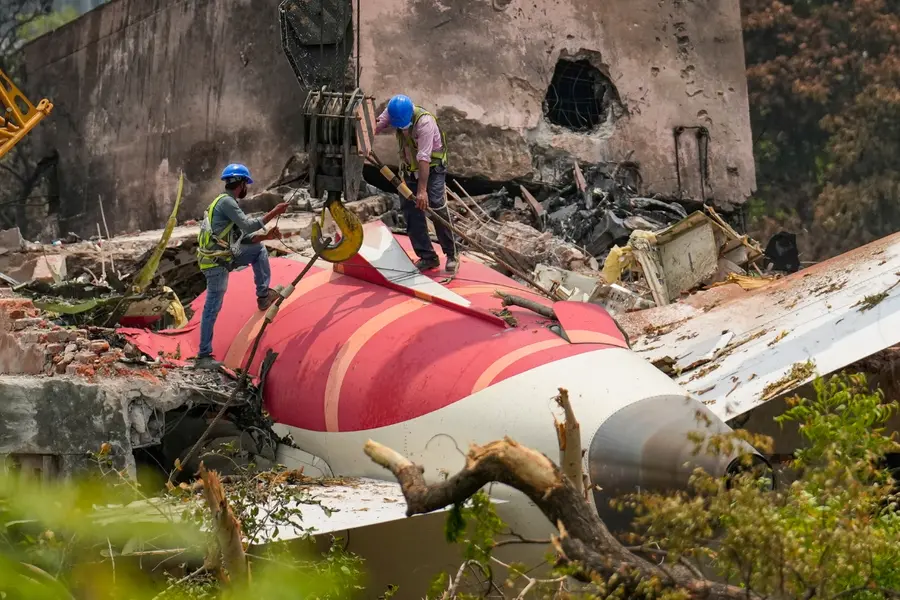
The families of four people who died in the Air India Flight 171 crash in Ahmedabad have filed a lawsuit in the Delaware Superior Court, USA, against aircraft maker Boeing and technology company Honeywell, Reuters reports. They claim that negligence and a faulty part led to the 1978 tragedy, which killed 260 people.
The complaint says that Boeing installed a fuel cutoff switch and Honeywell manufactured it, but the part was defective. According to the families, the switch’s locking system could either be missing or accidentally disengaged, which would cut off fuel supply to the engines. This, in turn, could stop the thrust needed for take-off.
The lawsuit highlights that both companies knew about the risks. In 2018, the US aviation regulator, the Federal Aviation Administration (FAA), had already issued a warning about this problem on some Boeing aircraft.
The families further argue that Boeing’s design made the problem worse. They said the switch was placed directly behind the thrust levers in the cockpit, meaning that normal pilot activity could easily trigger it by mistake.
The complaint states: “By putting the switch directly behind thrust levers, Boeing effectively guaranteed that normal cockpit activity could result in inadvertent fuel cutoff. What did Honeywell and Boeing do to prevent the inevitable catastrophe? Nothing.”
The families are seeking damages for the deaths of Kantaben Dhirubhai Paghadal, Naavya Chirag Paghadal, Kuberbhai Patel, and Babiben Patel, who were among the 229 passengers killed in the crash. The victims’ relatives live in India and the UK.
This is said to be the first lawsuit filed in the United States over the Air India Flight 171 crash.
Authorities in India, the UK, and the US have not yet determined a definitive cause of the crash. In July, India’s Aircraft Accident Investigation Bureau (AAIB) released a preliminary report, which found that both fuel control switches that are critical for regulating engine fuel flow moved to the ‘cutoff’ position just seconds after take-off. This abruptly cut off fuel to both engines.
Although the pilots moved the switches back to ‘run’ within 10 seconds, the engines did not regain thrust in time.
Cockpit voice recordings revealed that during the crisis, one pilot asked the other whether they had moved the fuel switches. The other denied it. The AAIB is still examining whether the switch movement was caused by human error, miscommunication, or a system malfunction.
In July, US FAA Administrator Bryan Bedford said investigators had found no conclusive evidence of a mechanical fault in the fuel control system. He noted that there were no signs of malfunction in the fuel control unit or indications of unintentional manipulation of the switches.
Air India Flight 171, a London Gatwick–bound Boeing 787-8 Dreamliner with 242 people on board, crashed minutes after take-off into a medical college in Ahmedabad’s Meghani Nagar area. The accident killed 241 passengers and crew, along with 19 people on the ground.
The sole survivor was 28-year-old Vishwash Kumar Ramesh, a British national of Indian origin, who escaped through a damaged emergency exit from seat 11A.
Published: 18 Sept 2025, 02:21 pm IST
Related Topics
Disclaimer: Kindly avoid objectionable, derogatory, unlawful and lewd comments, while responding to reports. Such comments are punishable under cyber laws. Please keep away from personal attacks. The opinions expressed here are the personal opinions of readers and not that of Mathrubhumi.
