
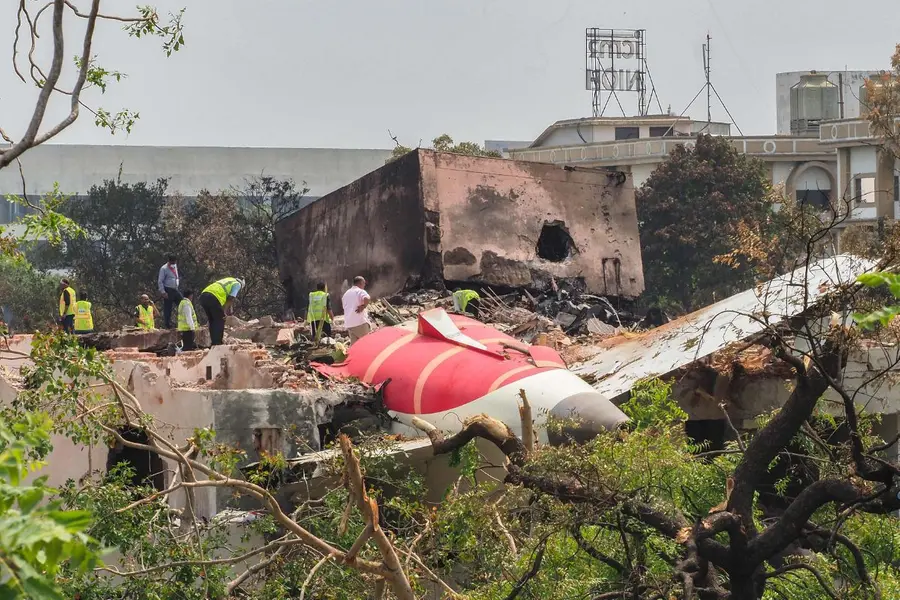
Following the tragic crash of Air India Flight 171, a Boeing 787 Dreamliner that claimed over 240 lives in Ahmedabad on June 12, 2025, the US Federal Aviation Administration (FAA) has confirmed it is actively supporting the investigation as part of its international responsibility
Operating under ICAO Annexe 13, India leads the inquiry through its AAIB, while the FAA, in coordination with the NTSB, provides crucial technical aid.
The FAA’s announcement states that it remains “in contact with the NTSB regarding Air India flight AI171” and is “prepared to launch a team immediately.” This engagement becomes even more significant given that Boeing designed the 787 and GE Aerospace supplied its engines. FAA personnel are poised to offer expertise in systems analysis, data recorder interpretation, materials engineering, and flight operations.
What Role Does the FAA Actually Play?
The FAA does not lead foreign investigations; that mantle rests with India’s AAIB, but it often offers technical advisors under the Annexe 13 framework. Working under the watchful eye of the NTSB, the official US delegate
FAA experts may assist in:
•Decoding flight data recorder (FDR) and cockpit voice recorder (CVR) outputs
• Analysing aircraft systems like the flight controls, engines, and avionics
•Evaluating maintenance logs and compliance documentation
•Advising on regulatory and certification frameworks
FAA Order 8020.11 outlines that in international events involving US-built or designed aircraft, investigators serve under an FAA Investigator-in-Charge, in close liaison with the NTSB and local authorities.
Why the FAA’s Support Matters
1. Proprietary Expertise
The 787’s fly-by-wire architecture and composite fuselage are highly specialised. FAA engineers are uniquely equipped to interpret anomalies in these critical areas.
2. Regulatory Cohesion
The FAA’s Flightsafe insights, combined with NTSB recommendations, can shape future Indian airworthiness directives or DGCA safety regulations, ensuring global standards align.
3. Public Confidence
By involving US regulators and Boeing in a transparent investigation, India demonstrates a commitment to cross-border safety protocols, valuable amid increasing international air travel scrutiny.
Implications for India’s MRO Ecosystem & Regulatory Framework
With the investigation now a multi-national endeavour, Indian technical teams from the DGCA to leading MRO providers must prepare for detailed audits of their documentation, compliance procedures, and maintenance regimes. The FAA’s involvement signals that future certification pathways and airworthiness approvals may require adherence to enhanced international standards, including digital traceability, parts authentication, and predictive maintenance metrics.
Broader Message
FAA Administrator Chris Rocheleau emphasized: “As we proceed down this road... if there's any information that becomes available to us regarding any risk, we will mitigate those risks” This dovetail with US Transportation Secretary Sean Duffy’s reassurance that “safety is paramount” and that any resulting recommendations will be “implemented immediately.”
The FAA’s proactive engagement in the Ahmedabad 787 crash probe is not merely procedural; it is a vital assurance of technical depth, regulatory rigour, and international collaboration. For India’s aviation ecosystem, especially MRO providers, the implication is clear: compliance will be measured not just by DGCA standards, but by the collective scrutiny of global regulators. As the investigation progresses, stakeholders must prepare for rigorous oversight, adaptive safety measures, and a realignment of quality systems to truly uphold the mantra: “Safety above all.”
Published: 13 Jun 2025, 05:33 pm IST
Disclaimer: Kindly avoid objectionable, derogatory, unlawful and lewd comments, while responding to reports. Such comments are punishable under cyber laws. Please keep away from personal attacks. The opinions expressed here are the personal opinions of readers and not that of Mathrubhumi.
