
While other Election Commissioners can be removed on the CEC's recommendation, the CEC himself has significant protection against removal, ensuring the Election Commission's independence.
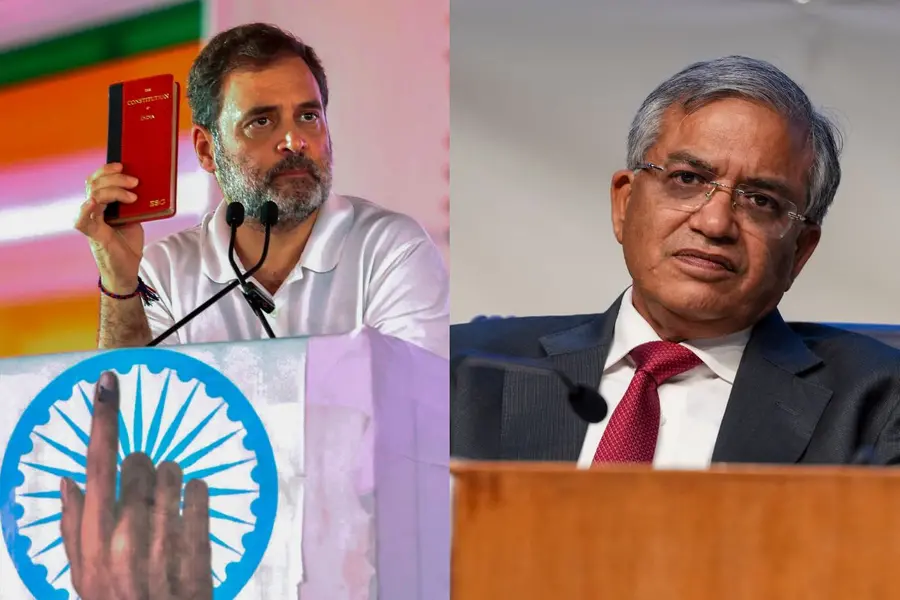
New Delhi: The removal of the Chief Election Commissioner (CEC) of India is protected by a constitutionally rigorous process to preserve the office’s independence. The CEC can only be removed by the President after both Houses of Parliament, the Lok Sabha and the Rajya Sabha, pass a resolution with a special majority. This requires at least two-thirds of members present and voting, along with more than half of the total membership in each house. In practical terms, this means about 364 votes in the 543-member Lok Sabha and 160 votes in the 240-member Rajya Sabha are needed to pass the resolution. The grounds for removal are strictly limited to “proved misbehaviour or incapacity,” the same standard used for Supreme Court judges, highlighting the role’s high level of safeguarding.
The CEC serves a fixed term of six years or until the age of 65, whichever is earlier, with a status and remuneration equivalent to a Supreme Court judge. Unlike the CEC, other Election Commissioners can only be removed on the recommendation of the CEC. This impeachment-like procedure ensures the Election Commission remains an independent constitutional body, shielded from political interference.
The INDIA bloc’s alleged move to impeach CEC Gyanesh Kumar comes amid accusations of bias and controversy over recent voter fraud allegations as well as voter list revisions in Bihar, which the opposition claims favour the ruling party.
However, the INDIA bloc lacks the two-thirds majority required in both the Lok Sabha and Rajya Sabha to successfully pass an impeachment motion against the CEC. With the ruling alliance holding a majority, the bloc faces a challenging road ahead to garner the necessary parliamentary support, particularly for a motion demanding a high constitutional threshold.
Published: 18 Aug 2025, 11:47 am IST
Disclaimer: Kindly avoid objectionable, derogatory, unlawful and lewd comments, while responding to reports. Such comments are punishable under cyber laws. Please keep away from personal attacks. The opinions expressed here are the personal opinions of readers and not that of Mathrubhumi.
