
Parliament is in session, and the government's attention is fixed on defending itself against multiple political attacks. Public discourse is crowded, and every issue competes for oxygen
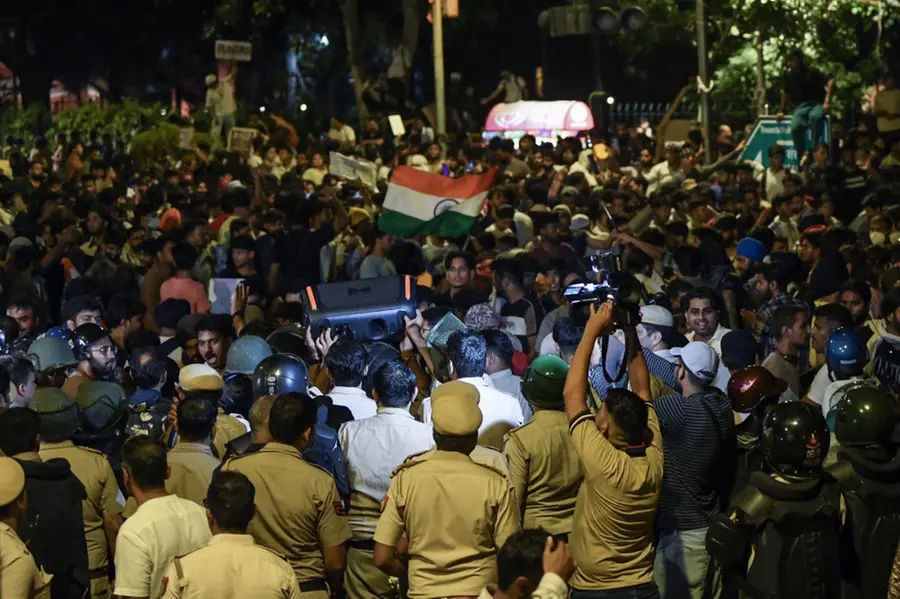
Politics is often less about what is happening than about what people are persuaded to look at. Governments understand this instinctively. They know that public attention is finite and that every controversy competes with another for space in the national conversation. As Parliament convenes, therefore, the timing of events outside its walls becomes as politically significant as the debates within them. That is what makes the developments of the past few days so intriguing.
A student movement that had begun gathering national attention suddenly finds one of its most visible faces, Sonam Wangchuk, ending his fast after receiving largely half-baked assurances from the government, despite none of the movement's headline demands having been decisively met. And almost simultaneously, the Prime Minister appears in a selfie-style video speaking (or reading out) about the seriousness of examinations and the aspirations of students. Whether by design or coincidence, the combined effect is unmistakable. The movement loses some of its moral intensity and the national conversation begins to shift.
The question here is not whether governments attempt to shape narratives. That is a given, and every government does it. The real question is whether this particular movement has now lost the momentum required to become something larger than itself. That question assumes even greater significance because Parliament is meeting against the backdrop of serious allegations surrounding financial irregularities linked to the Ayodhya temple project. Those allegations are politically explosive precisely because Ayodhya is not merely another public works project. It is the emotional and ideological centrepiece of the BJP's political journey over several decades. If investigations were ultimately to establish significant financial wrongdoing involving individuals closely associated with the project, the political consequences could be profound. Equally, if those allegations are not substantiated, they will lose much of their force. At this stage, they remain allegations that require thorough investigation rather than predetermined conclusions.
Yet politics rarely waits for judicial finality. It operates on perception as much as proof, and the BJP is a party that has long relied on, thrived on, and indeed built much of its political edifice on carefully cultivated perceptions. That is why one cannot entirely dismiss the suspicion, expressed by many observers, that the sudden cooling of the student agitation serves the political interests of the government at a particularly convenient moment. Suspicion, however, is not evidence. It is entirely legitimate to ask questions about the origins of the movement, about the allegations surrounding some of its prominent faces, and about the noticeably restrained official response during its early stages. It is another matter altogether to claim that the movement itself was conceived or orchestrated by the establishment. That is a proposition for which there is, at least in the public domain, no conclusive evidence. Even if one were to assume that some political actors initially saw utility in the agitation, history offers a cautionary lesson. Political forces are remarkably adept at lighting sparks. They are not always successful in controlling the fires that follow. The BJP itself would understand this better than most. Much of its own rise was built upon the patient transformation of isolated grievances into powerful mass movements. A spark becomes an ember, the ember is carefully fanned into a flame, and the flame grows into such a raging fire that even violence begins to appear justified in the eyes of many before it eventually alters the political landscape of the country. That is not merely strategy, but it has been one of the defining characteristics of Indian politics over the last four decades.
The irony is that this student movement has not yet followed that trajectory. It has generated enormous sympathy but lacks the organisational architecture that transforms public anger into sustained political pressure. It has no clearly identifiable chain of command, no universally accepted negotiating authority and no obvious mechanism to decide when to escalate, compromise or withdraw. Those are not minor deficiencies, but structural weaknesses. Movements without coherent leadership often face two equally dangerous possibilities. They simply dissipate once the initial emotional surge subsides, or they become vulnerable to infiltration, provocation and hijacking by interests far removed from their original cause. Wangchuk's decision to end his fast may therefore become a defining moment, not because it resolves anything, but because it changes the emotional rhythm of the agitation. Fasts carry immense symbolic power in India, and ending one without securing the movement's principal objectives inevitably raises difficult questions about momentum.
It is here that the timing becomes impossible to ignore. Parliament is in session, and the government's attention is fixed on defending itself against multiple political attacks. Public discourse is crowded, and every issue competes for oxygen. Whether by coincidence or careful political management, the student movement suddenly finds itself struggling for that oxygen.
There is another political lesson worth remembering. Temple controversies have often carried consequences far beyond the immediate scandal. The recent Kerala elections demonstrated how allegations involving institutions of deep public faith can produce political anger that extends well beyond the legal questions involved. Uttar Pradesh presents an even greater challenge. No state matters more to the BJP's national fortunes than UP, and any controversy touching Ayodhya would therefore carry a significance unlike any other political issue in contemporary India. And that is precisely why the coming weeks deserve close attention.
The student movement has not become another 1974; at least, not yet. It remains suspended in what can only be described as political no man's land. It is no longer a local protest, yet it has not matured into the kind of disciplined national mobilisation capable of fundamentally altering the political balance. Perhaps Wangchuk's decision marks the beginning of its decline. Perhaps the underlying anger over examinations and opportunities is deep enough to outlive its most recognisable faces. Or perhaps one unforeseen event will rekindle the embers and transform them into something no one can control. For now, the fire has not been extinguished. But someone has certainly poured water on it.
(The author is a National Award winner for Best Narration and an independent political analyst. Views expressed are personal)
Published: 24 Jul 2026, 11:19 am IST
Related Topics
Disclaimer: Kindly avoid objectionable, derogatory, unlawful and lewd comments, while responding to reports. Such comments are punishable under cyber laws. Please keep away from personal attacks. The opinions expressed here are the personal opinions of readers and not that of Mathrubhumi.
