
Aviation engineers warn Delhi ATC failure stems from outdated technology & neglect. Learn about the deep-rooted issues and proposed solutions for safer air travel
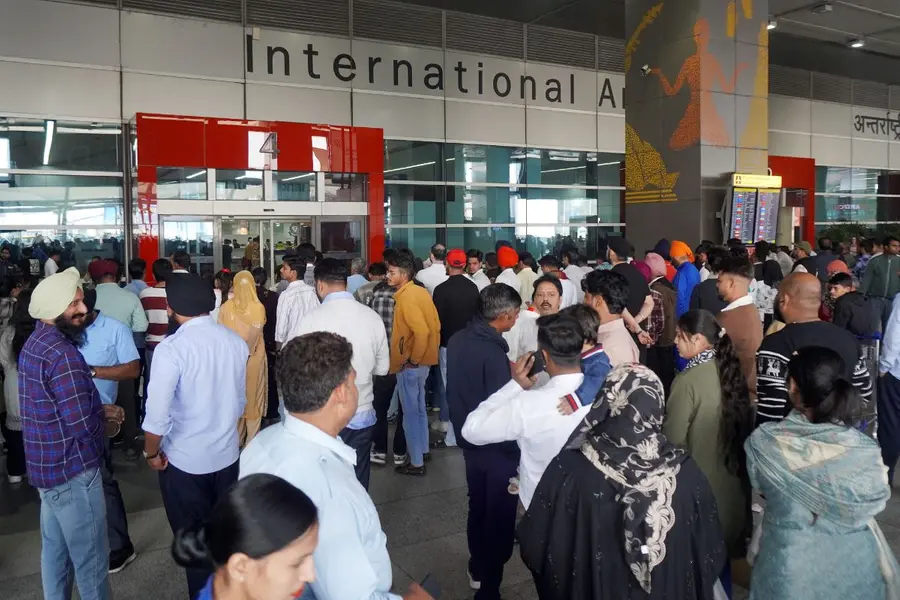
Days after a major Air Traffic Control (ATC) failure at Delhi’s Indira Gandhi International Airport (IGIA) disrupted more than 800 flights, aviation engineers have written to the Ministry of Civil Aviation, warning that the incident was not a one-off glitch but a result of long-term neglect and outdated technology.
Gautam Yogendra, Chief Coordination Member of the Air Traffic and Safety Electronics Personnel Association (ATSEPA–India), which represents Communication, Navigation, and Surveillance (CNS) engineers said in a letter to Ram Mohan Naidu, MoCA, that the breakdown exposed deep-rooted issues within the Airports Authority of India (AAI).
Also Read

The engineers’ association said that the crisis should not be blamed on Air Traffic Controllers (ATCOs) or staff shortages. Instead, it called the Delhi incident a “technology failure” caused by old and unreliable systems that have not been upgraded in time.
“The latest disruption once again highlights what we have been warning about for years, the neglect of CNS infrastructure and the sidelining of engineers’ inputs,” the letter stated.
The engineers pointed to systems such as the ATS Message Switching System (AMSS), which they said lack proper redundancy and modern features. “Despite repeated proposals and warnings, there has been no serious effort to modernise these systems or deploy trained engineers where they are needed most,” the association added.
ATSEPA–India also raised concerns about what it described as the over-reliance on automation within India’s air traffic management system.
According to the letter, when the automated systems fail, ATC operations struggle to switch smoothly to manual procedures. “During recent disruptions, manual fallback was either resisted or poorly executed, which caused more confusion and operational delays,” the engineers said.
They explained that this situation has developed because the system depends too heavily on computers and automation without adequate backup processes or training for manual handling.
Another major concern raised in the letter is the misuse of skilled manpower. The association alleged that AAI has been assigning highly trained CNS engineers to non-technical or administrative posts, while critical airports and systems face staff shortages.
“For a modern aviation system, CNS engineers must be deployed strictly for CNS work. Their inputs should be part of all system upgrades and procurement decisions,” the engineers urged.
They also emphasised the need to prioritise training, skill development, and modernisation to bring India’s air traffic systems up to global standards.
In its concluding section, ATSEPA–India made four formal appeals to the Ministry of Civil Aviation. First to modernise CNS systems immediately across major airports with dedicated funding, include CNS engineers’ inputs in the planning and procurement of new systems, ensure proper utilisation of engineers by avoiding their diversion to non-technical roles and review air traffic management practices that discourage manual fallback or depend too much on outdated automation.
In closing, the association reminded the Ministry that aviation safety depends on strong technology, skilled manpower, and reliable systems, not on expanding supervisory posts or shifting the blame to staff.
“Aviation safety today requires strong technology and modern systems, not narratives that distract from the real causes. ATSEPA–India remains committed to supporting the Ministry in building a safe, modern, and resilient aviation network for the country,” the letter concluded.
Published: 10 Nov 2025, 05:34 pm IST
ABOUT THE AUTHOR
Related Topics
Disclaimer: Kindly avoid objectionable, derogatory, unlawful and lewd comments, while responding to reports. Such comments are punishable under cyber laws. Please keep away from personal attacks. The opinions expressed here are the personal opinions of readers and not that of Mathrubhumi.