
The Supreme Court on Tuesday questioned the manner in which notices were issued to voters, observing that they appeared to have been issued “mechanically” and asking the ECI whether additional filters could be used in the process.
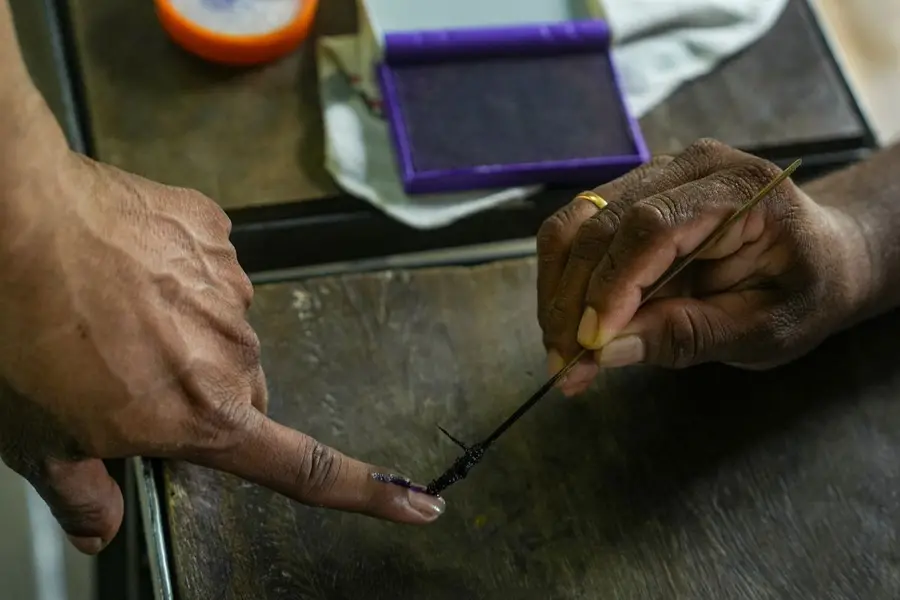
New Delhi: More than half of Delhi’s existing voters have either been removed from the draft electoral roll or served notices asking them to establish their eligibility to vote, according to an investigation by The Reporters’ Collective.
The investigation found that 79.2 lakh of the 1.45 crore voters on Delhi’s electoral roll before the ongoing Special Intensive Revision (SIR) have either been deleted or are facing scrutiny by the Election Commission of India (ECI).
Also Read

The ECI initially removed 47.6 lakh electors classified as absent, shifted, dead or duplicate (ASDD). Another 31.6 lakh voters whose names appeared on the draft roll were subsequently served notices over discrepancies in their records.
According to The Reporters’ Collective, those who received notices have been given until October 29 to establish their eligibility and right to vote in Delhi.
The investigation examined booth-level data and carried out ground reporting in areas affected by demolitions and displacement. It found that the impact of voter deletions was particularly significant in several slum and Jhuggi Jhopri (JJ) settlements.
The ECI's guidelines state that deletion rates exceeding two per cent at a polling booth should be treated as suspicious and personally cross-verified by the Electoral Registration Officer. However, The Reporters’ Collective's analysis found that only 51 of Delhi's 14,947 polling booths remained within the two per cent benchmark.
At 639 booths, more than half of the registered voters were deleted, the investigation found.
The report identified 29 booths where more than 70 per cent of voters had been removed. Nine of these were located in areas where government agencies had demolished homes. Across those nine booths, 8,800 of the 10,015 registered voters - 87.87 per cent were deleted, according to the investigation.
The report also examined voters who had been relocated following demolitions and found cases where people were living in government-provided housing but had nevertheless been classified as absent or untraceable.
In Wazirpur, for instance, 991 voters were deleted from a booth covering part of the Jailorwala Bagh JJ cluster, where homes were demolished in June 2025. More than 80 per cent of the voters registered at the booth were removed from the draft roll.
The families affected by the demolition had subsequently received government-provided housing. The Reporters’ Collective reported that many of those voters were nevertheless classified as absent or untraceable.
In East Delhi's Patparganj, 1,057 of the 1,199 voters registered at a booth covering a demolished settlement were deleted. The booth-level officer, Sovindra Kumar Gautam, told the publication that names were removed because officials could not map families to the 2002 electoral rolls.
The investigation also followed displaced residents from Madrasi Camp in south Delhi's Jangpura. The Delhi Development Authority demolished homes there in June 2025, affecting hundreds of families.
Of the 1,093 voters registered at the polling booth covering the settlement before the SIR, 934, or around 85 per cent, were deleted from the draft roll, according to the report.
The investigation also found cases where residents who had remained at their original locations were classified as absent or untraceable.
The Reporters’ Collective reported that some residents in Wazirpur said booth-level officers had asked them to register as new voters using Form 6, despite the ECI having clarified that voters displaced by demolitions could use Form 8 to update their addresses.
The report highlighted concerns over the loss of electoral history for people who are forced to register again.
According to the investigation, a new Form 6 application would result in a new Electoral Photo Identity Card (EPIC) number. This could break the documentary trail linking residents to their previous addresses and potentially affect their eligibility for government rehabilitation schemes.
The report cited cases where electoral records had previously been used to establish how long residents had lived in demolished settlements while assessing their eligibility for housing under government rehabilitation schemes.
The investigation comes amid legal scrutiny of the Delhi SIR.
The Supreme Court on Tuesday questioned the manner in which notices were issued to voters, observing that they appeared to have been issued “mechanically” and asking the ECI whether additional filters could be used in the process. The court also sought the poll panel's response on concerns over the notices.
The Reporters’ Collective's investigation was published on September 21 and is part of its wider reporting on the ECI's electoral-roll revisions.
Published: 23 Sept 2026, 10:36 am IST
ABOUT THE AUTHOR
Disclaimer: Kindly avoid objectionable, derogatory, unlawful and lewd comments, while responding to reports. Such comments are punishable under cyber laws. Please keep away from personal attacks. The opinions expressed here are the personal opinions of readers and not that of Mathrubhumi.