
El Nino has officially returned, reviving fears of a weaker monsoon, hotter days and stress on India's farms. But weather experts say there is one reason not to panic yet: a developing Indian Ocean pattern that has previously helped rescue rainfall during El Nino years.
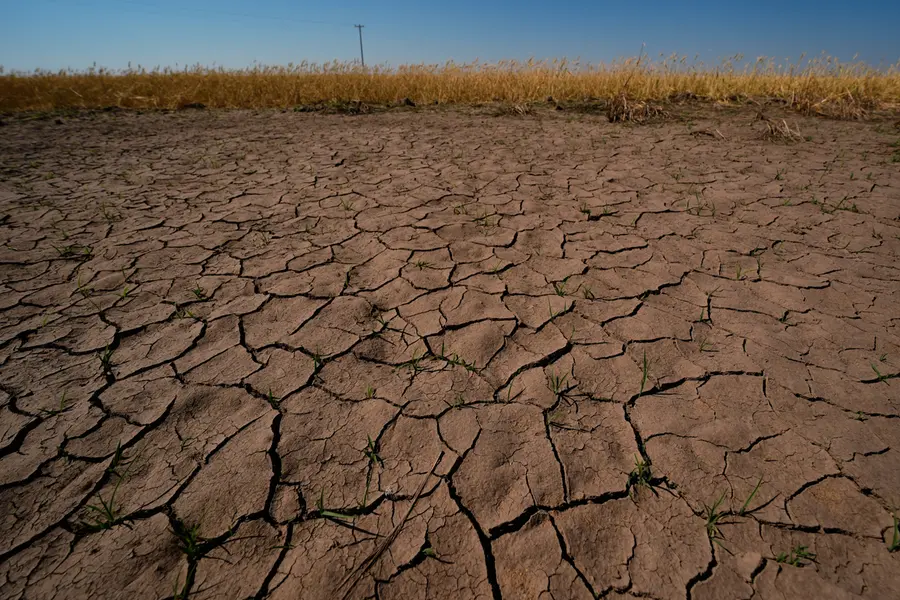
India's monsoon may be facing its biggest climate test of the season.
Japan's weather agency has officially declared the arrival of El Niño, reviving concerns that the climate phenomenon could disrupt rainfall, intensify heatwaves and put pressure on agriculture across the country. But just as anxiety over a weaker monsoon begins to build, scientists say there is another weather pattern that could help India avoid the worst-case scenario.
The Japan Meteorological Agency (JMA) on June 11 announced that El Niño conditions have developed in the Pacific Ocean and are likely to persist through the Northern Hemisphere autumn. For India, where the southwest monsoon has already witnessed delays and uneven progress in some regions, the timing could hardly be more worrying.
Yet, meteorologists are not sounding the alarm bells just yet.
The reason is the possible emergence of a positive Indian Ocean Dipole (IOD) around July, a phenomenon that has, in the past, helped counter the drying influence of El Niño and boosted rainfall during the latter half of the monsoon season.
Is El Nino a concern for India?
El Nino is a naturally occurring climate pattern characterised by unusually warm sea surface temperatures in the central and eastern Pacific Ocean.
While it forms thousands of kilometres away from India, its effects can be felt across the subcontinent. El Niño often weakens the moisture-laden winds that drive the southwest monsoon, increasing the risk of below-normal rainfall, prolonged dry spells and above-average temperatures.
Historically, several El Niño years have coincided with weak monsoons in India, affecting farm output, water availability and food prices.
The World Meteorological Organisation (WMO) has already warned that El Nino is expected to emerge from mid-2026 and influence weather patterns across different parts of the world.
The twist: Why experts are watching the Indian Ocean
Even though El Niño has a reputation for disrupting India's monsoon, it does not act alone.
A report by India Today suggested that weather scientists are closely tracking the Indian Ocean Dipole, another major climate driver that can shape rainfall patterns over South Asia.
The IOD refers to the difference in sea surface temperatures between the western and eastern parts of the Indian Ocean.
A positive IOD develops when waters near eastern Africa become warmer than normal while waters near Indonesia turn cooler. These conditions tend to support stronger monsoon activity over India and can partially offset the adverse effects of El Niño.
Can a positive IOD save India's monsoon?
Not entirely. But it can make a significant difference.
Climate experts have long observed that when a positive IOD develops alongside El Niño, rainfall during August and September often improves. This is particularly important because the latter half of the monsoon season is crucial for supporting kharif crops and replenishing reservoirs.
In several past years, a favourable IOD has helped cushion the impact of El Niño, preventing severe rainfall deficits that many had feared.
That possibility is now offering a measure of optimism.
For now, uncertainty remains.
Much will depend on how strong El Nino becomes and whether the anticipated positive IOD develops as expected. The interaction between these two ocean-atmosphere systems will ultimately determine the monsoon's trajectory.
The immediate outlook suggests that India cannot afford complacency. A stronger El Niño could still weigh on rainfall distribution and increase the likelihood of heat extremes.
At the same time, the prospect of a positive IOD means the monsoon may not be doomed.
For millions of farmers waiting for timely showers, policymakers monitoring water reserves and households bracing for another spell of intense heat, the next few weeks will be crucial.
Published: 13 Jun 2026, 06:52 am IST
Related Topics
Disclaimer: Kindly avoid objectionable, derogatory, unlawful and lewd comments, while responding to reports. Such comments are punishable under cyber laws. Please keep away from personal attacks. The opinions expressed here are the personal opinions of readers and not that of Mathrubhumi.
