
The BJP secured 89 seats, while the JD(U) won 85, ensuring a smooth path for Kumar’s return to the top post and reaffirming his long-standing edge over the Rashtriya Janata Dal in state politics.
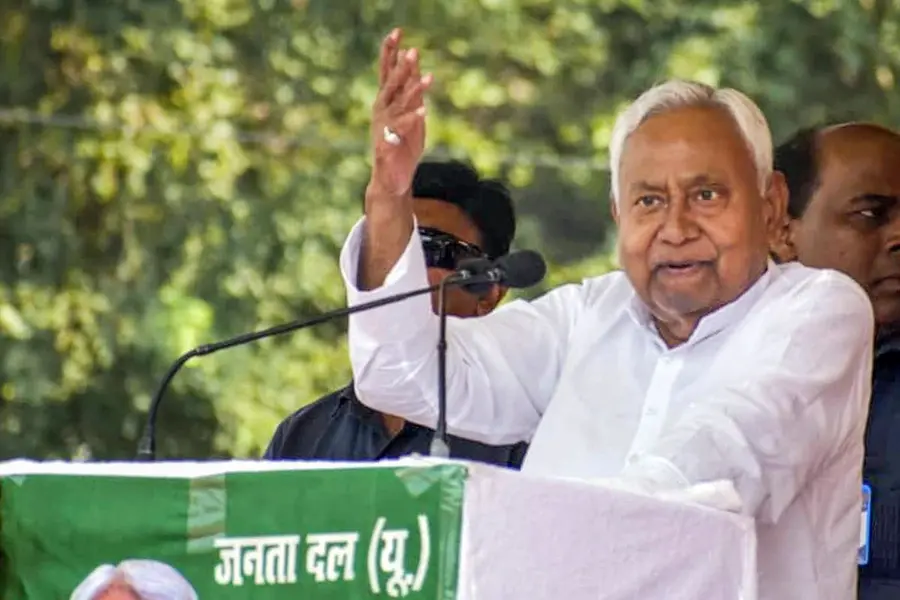
Nitish Kumar, the JD(U) chief, was sworn in as Bihar chief minister for the 10th time on Thursday, capping a political career defined by sharp turns and shifting alliances.
The NDA returned to power with a decisive mandate in the 2025 assembly elections, winning 202 of 243 seats.
Also Read

The BJP secured 89 seats, while the JD(U) won 85, ensuring a smooth path for Kumar’s return to the top post and reaffirming his long-standing edge over the Rashtriya Janata Dal in state politics.
But Kumar’s first stint as chief minister was far from stable. His first stint as chief minister came in 2000, in the aftermath of the February assembly polls that produced a hung House. The RJD, led by Lalu Prasad Yadav, emerged as the single-largest party with 124 seats in the then 324-member assembly, while the BJP–Samata Party-led NDA won 122 seats, both short of the majority mark of 163.
Despite the numbers, Governor Vinod Chandra Pande invited Nitish Kumar, then a Union minister and the NDA’s newly projected face in Bihar, to form the government. Backed by 151 MLAs from the NDA and allies, he was sworn in on March 3, 2000. Senior NDA leaders, including L.K. Advani and George Fernandes, were instrumental in pushing his candidature.
The RJD, which controlled 159 MLAs and was still short of a majority but numerically stronger than the NDA, mounted a fierce protest against the governor’s decision. This triggered a week of frenetic political manoeuvring, with both camps attempting to defect-proof their lawmakers and bring new ones into the fold.
However, neither camp was able to secure the majority needed to prove its strength. With the numbers slipping further out of reach, Nitish Kumar stepped down on March 11, ending one of the shortest chief ministerial terms in Bihar’s history. In the ensuing political churn led by Lalu Prasad Yadav, Rabri Devi was once again sworn in as chief minister.
Published: 20 Nov 2025, 11:42 am IST
Related Topics
Disclaimer: Kindly avoid objectionable, derogatory, unlawful and lewd comments, while responding to reports. Such comments are punishable under cyber laws. Please keep away from personal attacks. The opinions expressed here are the personal opinions of readers and not that of Mathrubhumi.