
The merger of 20 rebel Trinamool Congress MPs with the NCPI has triggered a political storm, but the bigger impact could be felt in Parliament, where the NDA may gain crucial support ahead of key legislative battles.
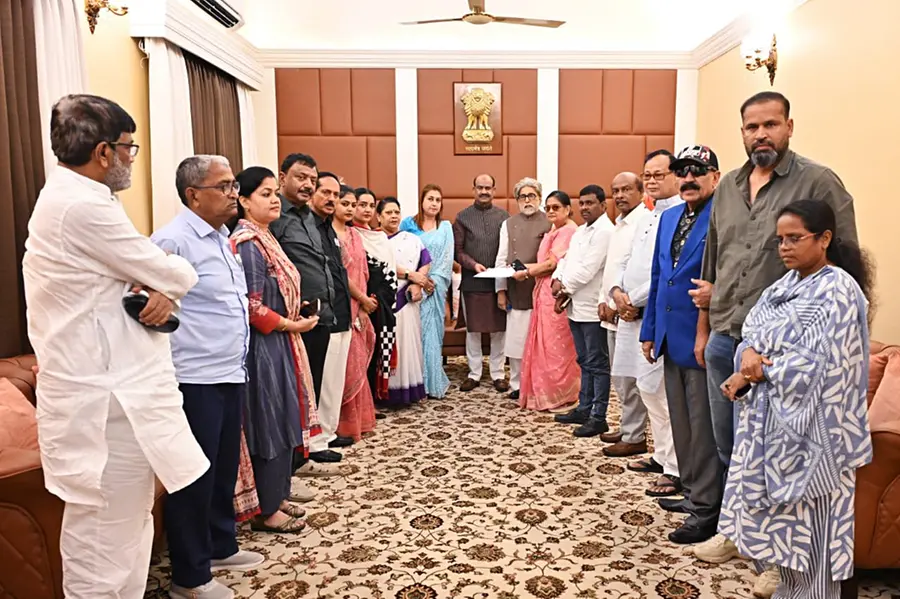
The decision of 20 rebel Trinamool Congress (TMC) MPs to merge with the relatively unknown Nationalist Citizens Party of India (NCPI) has added a fresh layer of uncertainty to West Bengal politics.
But beyond the state’s political boundaries, the development could have significant implications for the Bharatiya Janata Party-led National Democratic Alliance (NDA) at the Centre, particularly as Parliament prepares for a crucial Monsoon Session.
The rebel MPs, who have been locked in a confrontation with the leadership of Mamata Banerjee and Abhishek Banerjee since the post-election turmoil within the TMC, have now taken their rebellion to a new stage.
By choosing to merge with another political party rather than immediately seeking recognition as the ‘real TMC’, the dissident lawmakers have altered the political calculations in New Delhi.
While the legal validity of the merger remains contested and may ultimately be decided by courts, the political message behind the move is unmistakable: a sizeable section of Trinamool MPs is signalling its willingness to move closer to the NDA.
A potential boost to the NDA’s parliamentary arithmetic
The timing of the merger is particularly significant. Parliament’s Monsoon Session is scheduled to begin next month, and the NDA is expected to pursue several politically important legislative initiatives, including constitutional amendment proposals that require support well beyond a simple majority.
Constitutional amendments demand the backing of at least two-thirds of members present and voting.
Recent legislative experiences have demonstrated that achieving such numbers is not always straightforward, even for a government with a comfortable majority. As a result, every additional vote becomes politically valuable.
The support of 20 MPs may not automatically guarantee the passage of contentious legislation, but it substantially improves the NDA’s room for manoeuvre.
More importantly, it reduces the government’s dependence on issue-based support from opposition parties or regional formations whose backing can never be taken for granted.
Political observers believe that this explains why the rebellion has attracted so much attention in national political circles.
The emergence of a parliamentary bloc sympathetic to the NDA could strengthen the government’s position during negotiations over major bills and help it navigate difficult legislative battles.
The rebels themselves have indicated their intention to support the NDA in Parliament.
If that support materialises consistently, it could provide the ruling alliance with a strategic advantage at a time when numbers are likely to matter more than ever.
BJP’s fingerprints and the legal hurdles ahead
The developments have also intensified speculation about the BJP’s role in the unfolding crisis within the TMC.
Questions have been raised because several key meetings involving the rebel MPs took place in the presence of senior BJP leaders. The dissident lawmakers met at the residence of Union Minister Bhupender Yadav before approaching Lok Sabha Speaker Om Birla.
Senior BJP figures, including Nishikant Dubey and CM Ramesh, were reportedly associated with discussions surrounding the rebels’ next steps.
Adding to the speculation was the visibility of West Bengal Chief Minister Suvendu Adhikari during the political developments.
Given Adhikari’s history within the TMC and his current role as one of the BJP’s most prominent faces in Bengal, his presence naturally fuelled theories that the BJP may have played a facilitating role in the rebellion.
The BJP, however, has publicly denied engineering the split. Party leaders have maintained that the crisis is an internal Trinamool matter and not the result of any external intervention.
Yet even if the BJP benefits politically, the path ahead is far from straightforward.
The biggest challenge lies in the legal arena. The TMC leadership has already approached Speaker Om Birla, arguing that the rebel MPs cannot claim protection under merger provisions merely by joining another party.
The party has relied on judicial precedents that emphasise the supremacy of the original political organisation over its legislative wing.
According to this interpretation, a valid merger requires the political party itself, not merely a group of legislators, to merge with another organisation.
If that argument is accepted, the dissident MPs could face disqualification proceedings under anti-defection provisions.
Legal experts have also pointed out that joining a different political party without authorisation from the parent organisation may expose the rebels to significant legal risks.
This places the spotlight firmly on Speaker Om Birla, who must decide whether to recognise the merger and how to treat the breakaway group within the Lok Sabha.
Whatever decision emerges is almost certain to face judicial scrutiny, making a prolonged legal battle likely.
For the BJP and the NDA, therefore, the Trinamool rebellion represents both an opportunity and a challenge. Politically, it offers the possibility of strengthening parliamentary numbers at a crucial moment.
Legally, however, the durability of that advantage depends on decisions yet to be taken by constitutional authorities and, potentially, the courts.
For now, the rebellion has transformed a Bengal-centric political crisis into a development with national consequences.
Whether it ultimately reshapes parliamentary equations or becomes mired in litigation will determine how much the NDA can truly gain from the biggest revolt within the TMC in recent years.
Published: 15 Jun 2026, 03:48 pm IST
Related Topics
Disclaimer: Kindly avoid objectionable, derogatory, unlawful and lewd comments, while responding to reports. Such comments are punishable under cyber laws. Please keep away from personal attacks. The opinions expressed here are the personal opinions of readers and not that of Mathrubhumi.
