
The final regulatory hurdle has been cleared for the Noida International Airport (NIA) as the DGCA officially granted its aerodrome licence.
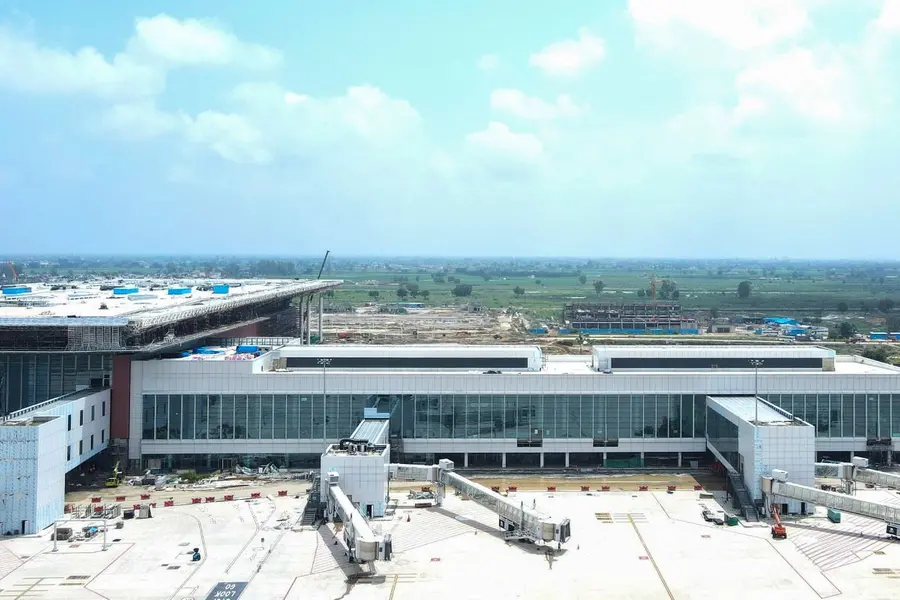
Directorate General of Civil Aviation (DGCA) has granted an aerodrome licence to the upcoming Noida International Airport, clearing the final regulatory requirement before the airport begins operations.
The licence confirms that the airport meets the safety, infrastructure and operational standards required for commercial aviation. The approval is considered a major milestone for the new airport project, which is expected to serve the rapidly growing aviation demand in the Delhi-NCR region.
According to an official statement, the airport has been licensed under the “Public Use” category, which means it can operate flights for passengers and cargo. It is also approved for all-weather operations, allowing aircraft to take off and land throughout the year.
The airport has a 3,900-metre-long runway with a width of 45 metres and an orientation of 10/28. It is equipped with an Instrument Landing System (ILS) and an Aeronautical Ground Lighting (AGL) system. These technologies help pilots land safely even during low visibility conditions such as fog or heavy rain, enabling the airport to function 24 hours a day.
The facility also has parking stands for 24 Code C aircraft and two Code D/F aircraft, which means it can handle both narrowbody and widebody planes. In addition, the airport has Aircraft Rescue and Fire Fighting (ARFF) Category 9 capability, allowing it to accommodate large aircraft such as the Boeing 777-300ER.
Officials said the development of Noida International Airport is part of the broader vision of the Ministry of Civil Aviation to strengthen the country’s aviation infrastructure and build a more robust aviation ecosystem.
Also read: India–UK air corridor airfares skyrocket with escalating tensions in Middle East
The DGCA approval came a day after the airport received mandatory security clearance from the Bureau of Civil Aviation Security (BCAS).
With the required regulatory approvals now in place, cargo and domestic flight operations are expected to begin within the next 45 days, in line with the project’s operational plan.
Earlier, the BCAS had raised several concerns that delayed the airport’s opening. One of the main issues involved the Doppler Very High Frequency Omnidirectional Range (DVOR) navigation system, which helps aircraft determine their position relative to a ground station during flight.
Authorities were worried that certain structures near the DVOR could interfere with its signals. In particular, a steel wall built close to the navigation equipment was flagged as a potential safety risk for aircraft during landing and take-off.
Also read: India and US strengthen aviation safety cooperation with new DGCA–FAA agreement
The security regulator asked the airport operator to replace the temporary steel barrier with a permanent structure to avoid any possible disruption to navigation signals and ensure safe flight operations.
With these concerns addressed and approvals granted, the Noida International Airport project has moved closer to becoming operational, marking an important step in expanding aviation capacity in northern India.
Published: 06 Mar 2026, 08:05 pm IST
Related Topics
Disclaimer: Kindly avoid objectionable, derogatory, unlawful and lewd comments, while responding to reports. Such comments are punishable under cyber laws. Please keep away from personal attacks. The opinions expressed here are the personal opinions of readers and not that of Mathrubhumi.
