
Driven by West Asian geopolitical tensions, Brent crude prices remain above $100 per barrel, prompting the government to prioritize sustainable energy consumption and economic resilience.
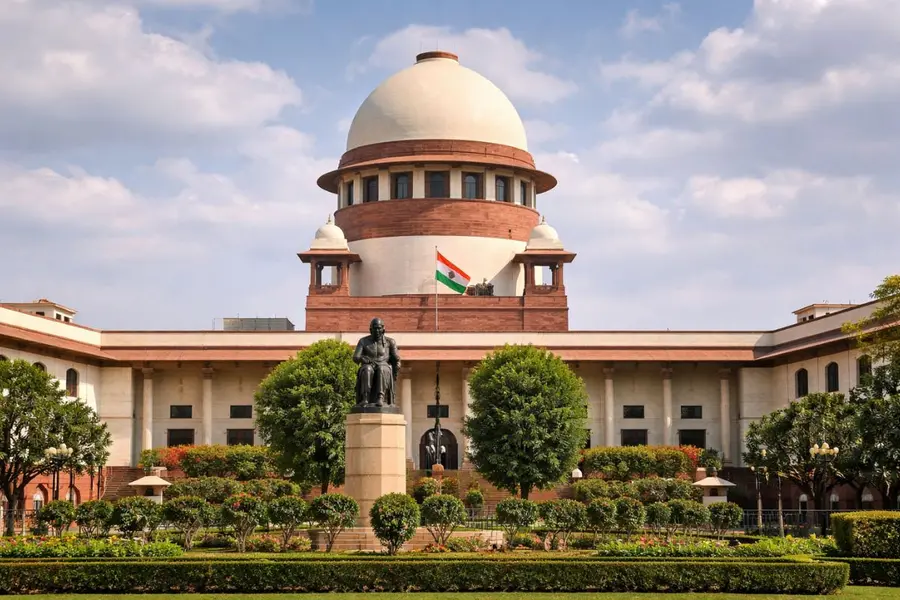
New Delhi: The Supreme Court of India has mandated that all legal proceedings listed for miscellaneous days, including Mondays and Fridays, as well as partial working days, will be conducted exclusively via video conferencing until further notice.
The directive aligns with a Central Government advisory on fuel conservation prompted by the escalating energy crisis in West Asia. In addition to the shift to virtual hearings, the high court has recommended car-pooling among its judges to maximise fuel efficiency.
The administrative changes extend to court personnel, with up to 50 per cent of the Registry staff permitted to work from home for two days each week on a rotational basis. These arrangements are contingent upon the continued and seamless operation of the court, with Registrars maintaining the authority to adjust or limit remote work based on the essential requirements of specific departments.
ALSO READ: BJP defends first fuel price hike in 4 years
The court’s decision follows a public appeal by Prime Minister Narendra Modi, who urged the nation to curb fuel consumption and adopt sustainable habits to bolster economic resilience during the current period of global instability.
Fuel Prices Surge Amid Regional Conflict
Coinciding with the court’s announcement, the Union Government increased the prices of petrol and diesel by Rs 3 per litre. The price hike comes as Brent crude oil maintains a position above $100 per barrel, driven by persistent tensions in West Asia.
In the capital, the revision pushed petrol prices from Rs 94.77 to Rs 97.77 per litre, while diesel climbed from Rs 87.67 to Rs 90.67 per litre.
Market analysts attribute the volatility to significant disruptions in the Strait of Hormuz, a critical maritime artery for global oil transit. Crude prices have remained elevated since February, following the expansion of the regional conflict involving the United States, Israel, and Iran. As several nations in the region serve as primary energy exporters, the broadening hostilities have exerted sustained pressure on international fuel markets.
With inputs from ANI
Published: 15 May 2026, 10:03 pm IST
Related Topics
Disclaimer: Kindly avoid objectionable, derogatory, unlawful and lewd comments, while responding to reports. Such comments are punishable under cyber laws. Please keep away from personal attacks. The opinions expressed here are the personal opinions of readers and not that of Mathrubhumi.
