
Prime Minister Indira Gandhi addressed the nation shortly after midnight, describing the assault as a “declaration of war”. Her words set the tone for what was to follow.
Every year, December 3 brings back memories of one of the most defining nights in India’s military aviation history, a night when the Indian Air Force (IAF) rose to the moment with precision and courage.
In a post on X on Wednesday, IAF revisited that dramatic beginning of the 1971 war, recounting how it responded within hours to Pakistan’s surprise air strikes.
“Following Pakistan's pre-emptive strike on 03 Dec 1971, the IAF answered with precision and fury.
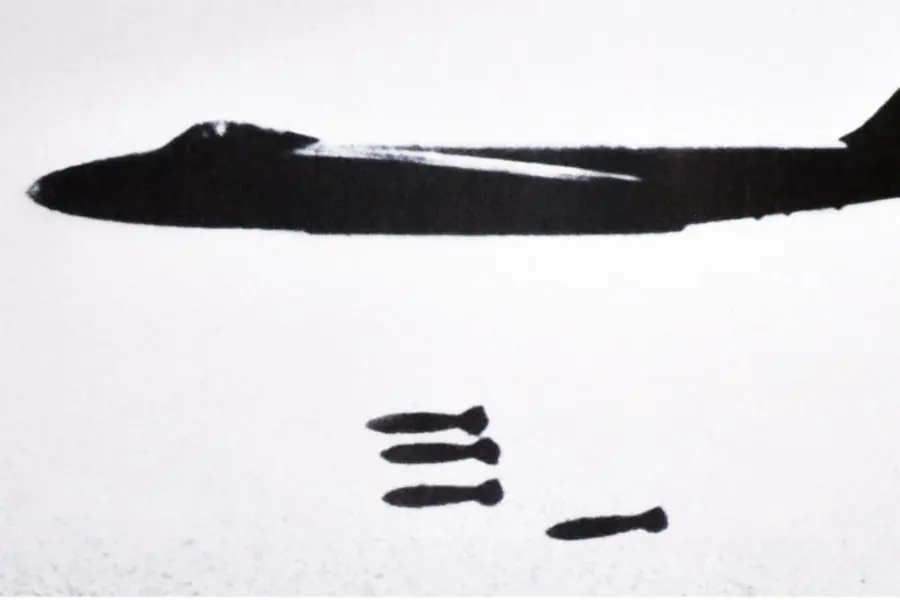
Through the night, Canberra crew flew 23 deep-strike missions, hitting enemy airfields at Murid, Mianwali, Sargodha, Chander, Risalewala, Shorkot and Masrur (Karachi). Runways were cratered, installations shattered, and the adversary's early move was blunted within hours.
Air-Land Ops also kicked off with a thunderous reminder of the IAF's reach.
An-12s dropped 48 x 500 lb bombs over Changa Manga, triggering a massive fire in the enemy supply dump,” IAF wrote in X.
Those hours marked the unravelling of Operation Chengiz Khan, Pakistan’s codename for its coordinated air assault on Indian forward airbases and radar units. The attack was intended to cripple India’s air power even before a full-scale war could begin. But the plan didn’t go as Pakistan expected.
Prime Minister Indira Gandhi addressed the nation shortly after midnight, describing the assault as a “declaration of war”. Her words set the tone for what was to follow.
Within minutes, squadrons across the country snapped into action. By 9 p.m., Canberra bombers from No. 35 and No. 106 Squadrons, alongside aircraft from No. 5 and No. 16 Squadrons, were armed, fuelled, and ready for deep penetration strikes into West Pakistan.
One after another, the bombers roared into the night sky. Their targets were among Pakistan’s most crucial airbases like Murid, Mianwali, Sargodha, Chandhar, Risalewala, Rafiqui, and Masroor. Over 23 sorties were flown under the cover of darkness. By dawn, the Sargodha and Masroor bases had suffered heavy damage, their runways ripped open, their infrastructure battered.
Meanwhile, in the east, the IAF hit Tejgaon and later Kurmitola airfields in what would become a decisive push in the eastern theatre. Reinforcements moved steadily toward forward bases as India prepared for a broader offensive.
The tempo hardly slowed. Within days, Indian pilots had achieved absolute air superiority. The skies belonged to India, and the war’s outcome would soon reflect that dominance.
Published: 03 Dec 2025, 08:18 am IST
Related Topics
Disclaimer: Kindly avoid objectionable, derogatory, unlawful and lewd comments, while responding to reports. Such comments are punishable under cyber laws. Please keep away from personal attacks. The opinions expressed here are the personal opinions of readers and not that of Mathrubhumi.
