
CJI Surya Kant said authorities recover only Re 1 for every Rs 100 laundered, highlighting gaps in global cooperation, extradition and illicit asset recovery.
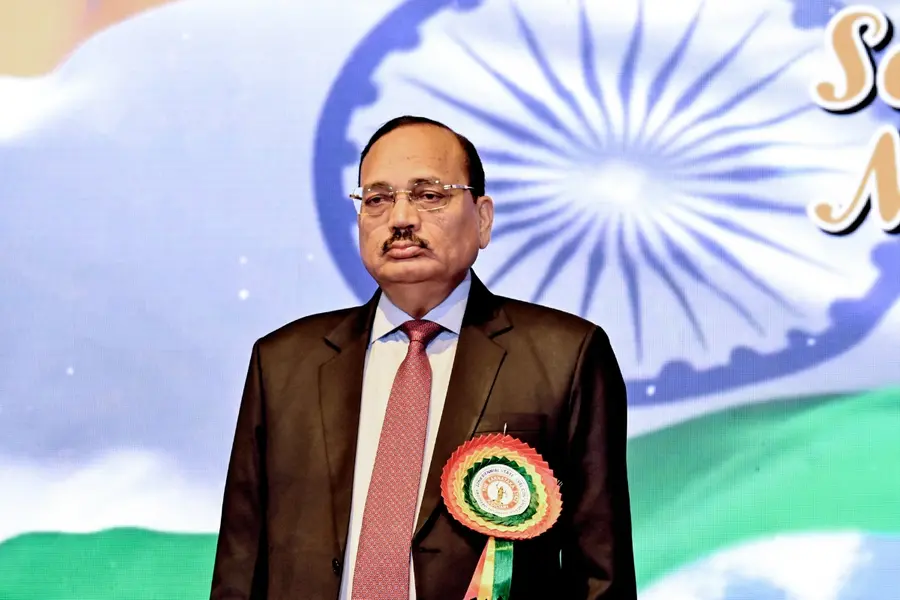
New Delhi: For every Rs 100 laundered, authorities recover only about Re 1, Chief Justice of India Surya Kant said at an economic crime symposium in Cambridge. He warned that economic offenders can move illicit wealth faster than countries can coordinate, while pointing to slow extradition and asset recovery as major challenges.
The CJI also cited the cases of Vijay Mallya and Nirav Modi and called for stronger international cooperation.
Also Read

Only Re 1 recovered for every Rs 100 laundered
Chief Justice of India Surya Kant has raised concerns over the limited recovery of illicit wealth, saying that for every Rs 100 laundered, authorities and law enforcement agencies manage to recover only about Re 1.
The CJI made the remarks at the 43rd International Symposium on Economic Crime in Cambridge, where he spoke about the growing challenge posed by economic offences and the difficulties countries face in tracing, freezing and recovering illicit assets.
He said the problem was not simply a lack of laws or enforcement tools. According to him, economic offenders are increasingly able to move illicit wealth across borders faster than governments can coordinate their response.
Why does so much laundered money remain unrecovered?
CJI Surya Kant pointed to two major problems: the ingenuity of economic offenders and inadequate international cooperation, particularly in cases involving fugitives and assets held overseas.
He noted that India has entered into extradition and mutual legal assistance treaties with foreign jurisdictions, but said the amount of property actually recovered remains “underwhelming”.
The challenge becomes particularly complicated when illegally acquired wealth is transferred across multiple jurisdictions. Investigators may identify suspicious assets in one country while the people connected to them, companies holding them or money trails linked to them are located elsewhere.
This means that action in one jurisdiction often needs cooperation from another country before assets can be frozen, traced or ultimately confiscated.
‘Economic crimes move faster than treaties’
The CJI said illicit wealth and economic crimes move faster than the pace at which countries ratify treaties and establish mechanisms for cooperation.
He argued that no jurisdiction can effectively pursue sophisticated economic offenders on its own, regardless of how well-resourced or determined it may be.
He pointed to several tools already available to governments, including non-conviction-based forfeiture, unexplained wealth orders, beneficial ownership registers and financial intelligence sharing.
The problem, he said, is not necessarily the absence of these tools but the failure to use them collectively and quickly across borders.
What did CJI Surya Kant say about international cooperation?
The CJI stressed that countries need to act together rather than treating financial crimes as separate domestic cases.
He gave the example of a forfeiture order issued in one country needing to be acted upon promptly by authorities or registries in another country. Similarly, a financial intelligence tip needs to result in an actual asset freeze instead of remaining unused.
His broader argument was that international cooperation has to move at the same speed as the financial networks used by economic offenders.
Vijay Mallya and Nirav Modi cases highlight the problem
India's experience with high-profile economic offenders illustrates some of the difficulties involved.
India initiated extradition processes involving Vijay Mallya with the UK authorities in 2017 and Nirav Modi with the US in 2018, according to the report.
However, neither process has resulted in their extradition to India.
The cases demonstrate how legal proceedings can continue across jurisdictions for years when accused persons, assets and evidence are spread across countries.
CJI invokes Kautilya's Arthashastra
The CJI also drew a historical connection with Kautilya's Arthashastra, which addressed corruption and the misuse of public revenue.
He referred to the ancient text's observation that it was difficult for an official handling the king's revenue to avoid taking something for themselves.
The Arthashastra, he noted, proposed mechanisms such as audits, cross-verification and confiscation of ill-gotten gains.
The reference was used to underline that the problem of financial wrongdoing is not new, even though modern economic crimes operate through far more complex financial and international systems.
Global scale of money laundering
CJI Surya Kant also highlighted the enormous scale of illicit wealth circulating globally.
He said the amount of money laundered globally in a year was large enough to buy every person on Earth a modest laptop.
The comparison was intended to illustrate the scale of the economic crime challenge and the enormous amount of wealth that can remain outside effective recovery mechanisms.
What this means for India's fight against economic crime
The CJI's remarks point to a central difficulty in tackling financial crime: identifying illegal wealth is not the same as recovering it.
Authorities may trace assets or identify suspicious transactions, but recovery can require court orders, cooperation from foreign governments, access to financial records and recognition and enforcement of legal orders across borders.
The problem becomes even more complicated when offenders use layers of companies, nominees, trusts or accounts in different jurisdictions to obscure who ultimately owns or controls assets.
For India, this makes international cooperation particularly important in cases involving economic offenders who allegedly moved abroad after financial wrongdoing.
Why the recovery gap matters
The reported recovery gap has implications beyond individual financial crime cases.
When large amounts of illicit wealth cannot be recovered, victims, banks and public institutions may remain unable to recoup significant losses. It can also make economic crime appear financially worthwhile if offenders believe that only a small proportion of illegally acquired wealth will ultimately be seized.
The CJI's comments therefore shift the focus from simply catching economic offenders to ensuring that illegally acquired wealth can be identified, frozen and returned or confiscated through an effective international system.
Analysis
The central message from CJI Surya Kant's Cambridge address is that money laundering has become a global problem requiring a global enforcement response.
Countries already have many of the legal mechanisms required to pursue illicit assets. However, those mechanisms often operate within national boundaries, while money can move between jurisdictions almost instantly.
This creates a mismatch: investigators may need weeks or months to obtain information, secure court orders or establish international cooperation, while financial transfers can take place within minutes.
The CJI's reference to Mallya and Nirav Modi also highlights the practical consequences of this problem for India. Extradition and asset-recovery proceedings can involve several legal systems and remain unresolved for extended periods.
The key challenge, therefore, is not merely creating more laws. It is making existing systems faster, better coordinated and capable of following money across borders.
The Re 1 recovery figure cited by the CJI is particularly striking because it illustrates the gap between the scale of illicit wealth and the portion ultimately recovered by authorities. His broader warning is that unless international agencies act together, sophisticated economic offenders can continue to exploit differences between national legal systems.
Published: 31 Aug 2026, 03:35 pm IST
ABOUT THE AUTHOR
Disclaimer: Kindly avoid objectionable, derogatory, unlawful and lewd comments, while responding to reports. Such comments are punishable under cyber laws. Please keep away from personal attacks. The opinions expressed here are the personal opinions of readers and not that of Mathrubhumi.