
Chetan Bhagat's column on the Siya Goyal-Ketan Agarwal case has triggered intense debate online, with critics accusing him of shifting focus from the alleged crime while supporters say he raised important questions about family pressure and personal choice.
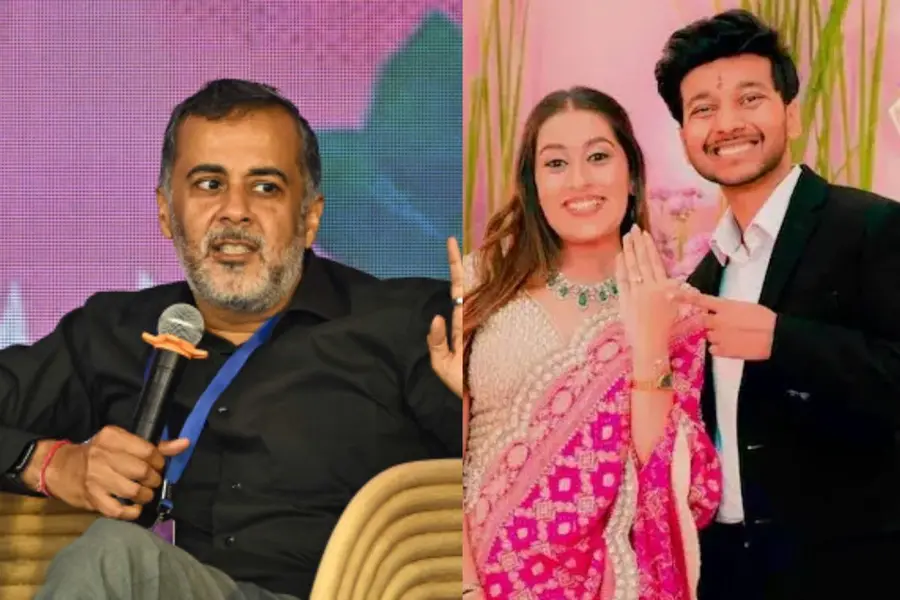
Author Chetan Bhagat has found himself at the centre of a heated social media debate after a column he wrote in the wake of the Pune Siya Goyal-Ketan Agarwal case went viral, drawing both support and criticism from readers, activists, commentators and public figures.
The discussion erupted after Bhagat shared his article on X, where he argued that the case had opened up a larger conversation about parental control, family pressure, arranged marriages and the challenges many young adults face when making personal life choices.
While Bhagat repeatedly stated that the criminal case remains under investigation and that anyone found guilty should face punishment, many social media users accused him of appearing sympathetic to the accused by focusing on societal pressures rather than the alleged crime itself.
One widely shared response criticised the author for what the user viewed as an attempt to portray the accused woman as a victim despite allegations against her.
“She was partying, drinking, and sleeping around since the age of 18. She was going on trips with her boyfriend and staying in hotels. But sure, she was oppressed and forced? Why did she take ₹1 crore from Ketan? Simps like you are one of the reasons why men suffer. If your son and brother go through the same, show this article to your family. Clown,” the user wrote, questioning Bhagat’s interpretation of the situation.
Another commenter argued that murder could never be justified under any circumstances and challenged the broader premise of the article.
“No matter what, murder can never be justified,” the user wrote. “If a father kills his daughter or son because they married against his wishes to protect family honour, would that be justified too?”
Several others said they understood the larger point about family pressure but felt Bhagat had overlooked the personal responsibility of those involved.
“True, but the courage she used to murder could've been used to elope or say no,” one comment read.
Another user wrote: “Transferring the entire blame on the parents and exonerating the younger generation — both are incorrect inferences.”
The criticism quickly gained traction online as users debated whether Bhagat was highlighting a genuine social issue or shifting attention away from the seriousness of the allegations.
Responding to the backlash, Bhagat clarified that his article was not intended as a defence of any individual connected to the case.
“Have no interest in defending anyone and it is irresponsible as a columnist to comment on a sub-judice case,” Bhagat wrote on X. “I do mention that if they did it it’s pure evil. However some cases are an opportunity to bring out broader discussions about society, which this incident does, and hence that's what I have done.”
What Chetan Bhagat wrote about the Siya Goyal-Ketan Agarwal case
"If someone did kill Ketan, they deserve punishment. It is as simple as that," Bhagat wrote.
However, Bhagat argued that the case had reignited a conversation familiar to many young Indians: the extent to which parents continue to influence the personal decisions of their adult children.
Referring to reports that Siya allegedly feared bringing "shame" upon her family by calling off her engagement, Bhagat questioned why some young adults still feel unable to openly reject marriage arrangements despite being legally free to do so.
The author criticised what he described as excessive parental control over relationships, marriage, lifestyle choices and career decisions. He was particularly critical of affluent business families, arguing that social status, family image and extravagant weddings are often prioritised over the individual wishes of sons and daughters.
Bhagat also linked the issue to financial dependence, arguing that many second-generation business heirs struggle to oppose their parents because they rely on them for financial support and lifestyle comforts.
At the same time, he did not place the blame entirely on parents. Bhagat wrote that if the allegations in the case are proven, choosing violence instead of confronting family expectations would be "weak, lame and borderline evil." He also argued that young people often enable regressive practices by agreeing to marriage discussions and family arrangements they do not genuinely support.
The column concluded with a call for wider debate on consent, family honour, parental control and changing social values in India.
Published: 01 Jul 2026, 04:22 pm IST
Related Topics
Disclaimer: Kindly avoid objectionable, derogatory, unlawful and lewd comments, while responding to reports. Such comments are punishable under cyber laws. Please keep away from personal attacks. The opinions expressed here are the personal opinions of readers and not that of Mathrubhumi.
