
The Bombay High Court expressed concern over mangrove felling linked to the Mumbai-Ahmedabad Bullet Train project, warning that continued loss of green cover could one day leave people dependent on oxygen cylinders.
Mumbai: The Bombay High Court on July 15 expressed concern over the steady decline of Mumbai's green cover while hearing a petition seeking permission to fell 847 mangrove trees in Maharashtra's Palghar district.
The tree felling has been sought to facilitate the construction of a transmission line linked to the Mumbai-Ahmedabad Bullet Train Project.
Also Read

During the hearing, Acting Chief Justice Ravindra Ghuge made a stark observation about the long-term environmental consequences of unchecked deforestation. "A day may not be far when people will carry oxygen cylinders to take intermittent shots of oxygen, one shot of oxygen every three hours."
The court's remarks underscored concerns about deteriorating air quality and the continued disappearance of natural ecosystems around Mumbai.
Court stresses need for compensatory afforestation
While hearing the Maharashtra State Electricity Transmission Company Limited's plea, the Bench suggested that compensatory afforestation should be undertaken near the project area instead of merely fulfilling plantation requirements elsewhere.
The judges highlighted that infrastructure development must be balanced with environmental conservation, particularly in ecologically sensitive regions such as mangrove forests.
The petition was filed because an earlier Bombay High Court order requires judicial approval before mangrove trees can be cut.
Why the trees are being cut
The proposal involves removing 847 mangrove trees to build a transmission line connecting Dahanu and Ambesari in Palghar district.
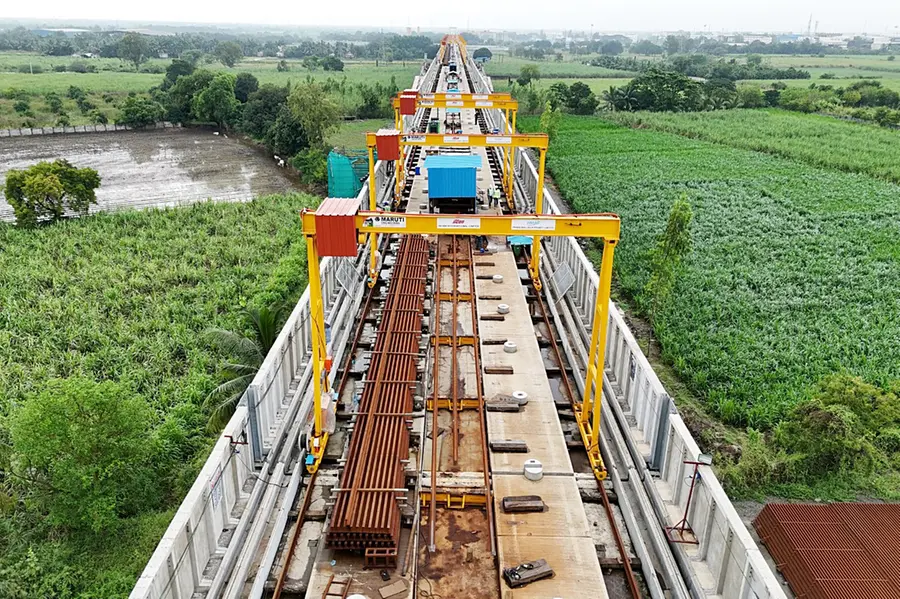
The transmission infrastructure forms part of the broader Mumbai-Ahmedabad High-Speed Rail Corridor, India's first bullet train project.
The transmission line is considered necessary to support railway operations once the corridor becomes operational.
Bullet train project has faced repeated environmental challenges
The latest case is not the first time the bullet train project has encountered environmental scrutiny.
Previous approvals linked to the corridor include:
- Clearance to fell more than 5,000 trees across Palghar and Thane for the bullet train project and the Mumbai-Vadodara Expressway.
- Public consultations on proposals to remove nearly 1,700 trees in Mumbai's Vikhroli area.
- Permissions involving diversion of mangrove forest land for infrastructure development.
- Environmental groups have consistently raised concerns that the project could affect sensitive ecosystems in Maharashtra.
Mangrove loss remains a major concern
According to earlier assessments by the Mangrove Society of India, the Maharashtra section of the bullet train corridor could affect:
- 11 mangrove species
- More than 170 bird species
- Wildlife including otters, turtles and wild boar
Mangroves play a vital role in protecting coastal regions by reducing erosion, absorbing carbon emissions and acting as natural barriers against storms and flooding.
Experts have repeatedly warned that large-scale mangrove loss can increase the risk of flooding and biodiversity decline.
State promises compensatory plantation
The Maharashtra government has previously assured compensatory afforestation for trees removed for the project.
Last year, authorities directed the plantation of more than 60,000 new trees to offset earlier felling linked to the bullet train corridor and associated infrastructure works.
However, questions remain over where these plantations will take place and whether they can adequately compensate for the loss of mature mangrove ecosystems.
The Bombay High Court did not halt the bullet train project during the hearing. Instead, the Bench emphasised the need to carefully balance infrastructure development with environmental protection.
The court's "oxygen cylinder" observation reflected wider concerns about shrinking green cover, air quality and the long-term ecological impact of large infrastructure projects, rather than opposition to the high-speed rail corridor itself.
Published: 15 Jul 2026, 10:38 am IST
Disclaimer: Kindly avoid objectionable, derogatory, unlawful and lewd comments, while responding to reports. Such comments are punishable under cyber laws. Please keep away from personal attacks. The opinions expressed here are the personal opinions of readers and not that of Mathrubhumi.