
DGCA officials are expected to oversee detailed testing in Seattle after concerns emerged over switch behaviour during another Air India Dreamliner flight earlier this year
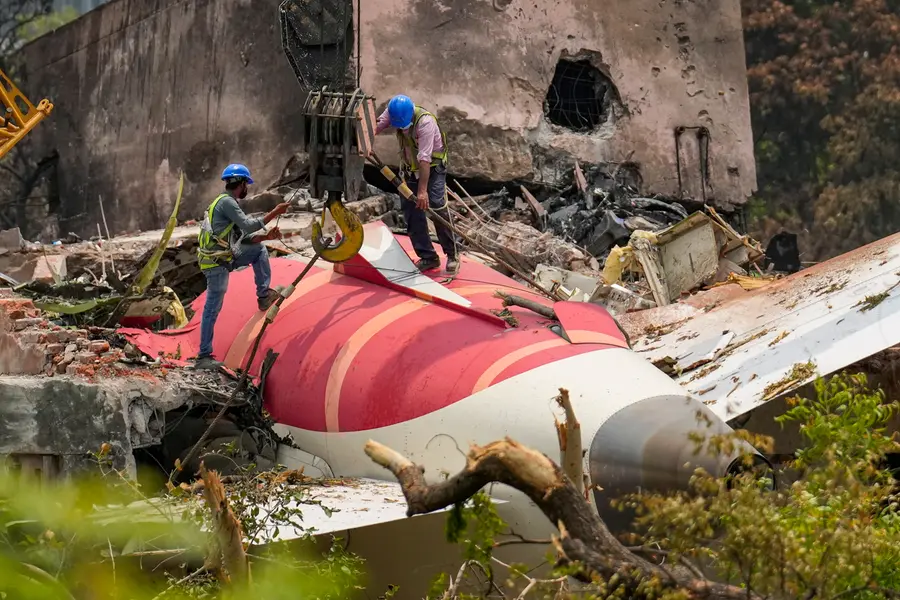
Nearly a year after the tragic Air India Ahmedabad Boeing 787 Crash that claimed 260 lives, Indian aviation authorities are once again turning their attention to one critical aircraft component, the Boeing 787 Dreamliner’s fuel-control switches.
According to a Reuters report, officials from India’s Directorate General of Civil Aviation (DGCA) are expected to travel to Seattle next month to personally observe detailed testing of a fuel-switch module removed earlier this year from another Air India Boeing 787 aircraft following a technical concern reported by pilots during a London-Bengaluru flight.
The move highlights how seriously Indian authorities are treating every possible lead connected to one of the world’s deadliest aviation accidents in recent years.
The switches might lead to actual cause of crash
The fuel-control switches on a Boeing 787 are designed to regulate the flow of fuel into the aircraft’s engines. These switches are intentionally built with locking mechanisms to prevent accidental movement during flight.
However, investigators became concerned after preliminary findings from the Ahmedabad crash indicated that both fuel switches had reportedly moved to the cutoff position almost simultaneously, starving the engines of fuel shortly after take-off.
That discovery immediately raised difficult and highly sensitive questions within the global aviation community because such switches are not supposed to move unintentionally.
Now, Indian investigators want to thoroughly examine whether any technical vulnerability however unlikely, could have contributed to the sequence of events.
The February Air India incident triggered new questions
The renewed focus on the switches follows an incident in February involving an Air India Boeing 787 operating between London and Bengaluru.
During engine startup, pilots reportedly noticed that the fuel-control switches did not consistently remain fixed in the “run” position when light upward pressure was applied. According to previously released DGCA findings, the switches stabilized only on the third attempt before the aircraft was cleared for departure.
Although the flight eventually operated safely, the incident was considered serious enough for the switch module to be removed and examined.
Initial inspections reportedly concluded that the system was “serviceable,” meaning no obvious defect was found. However, Indian authorities decided additional laboratory testing was necessary due to the sensitivity of the issue and its possible relevance to the Ahmedabad crash investigation.
DGCA wants to witness the testing
According to reports, the DGCA has directed Air India to ensure that the detailed examination at Boeing’s Seattle facility takes place in the presence of Indian aviation officials.
The regulator reportedly wants engineers to specifically test whether external pressure applied at particular angles could potentially move the switches even while they are in the locked position. While such technical examinations are not unusual in aviation investigations, the regulator’s decision to directly oversee the process reflects the seriousness surrounding the case.
Sources familiar with the matter have described the testing as “sensitive,” especially because investigators continue working toward the final accident report expected from India’s Aircraft Accident Investigation Bureau (AAIB).
FAA Says No Immediate Sign of Mechanical Failure
The investigation has also drawn international attention because the Federal Aviation Administration (FAA) has previously indicated that the crash does not currently appear to have been caused by a mechanical fault.
Reports last year suggested that cockpit voice recordings indicated fuel flow to the engines may have been manually cut off during flight. However, those claims triggered strong reactions from pilot associations and aviation experts in India, who argued that conclusions should not be drawn before the full investigation is completed.
The captain’s family and pilot unions have also demanded a completely independent and transparent inquiry into all possible causes.
Boeing, Air India and a High-Stakes Investigation
Boeing has reportedly informed Air India that the switch module removed after the February London incident was found to be fully functional. Air India has also stated that additional testing is being carried out purely as a precautionary step to ensure a “thorough and conclusive evaluation.”
The airline emphasized that the examination will take place in a controlled laboratory environment to verify the integrity and performance of the component.
Boeing has since issued a service bulletin to Dreamliner operators worldwide reminding crews about existing operational procedures, although no new technical directives have been introduced so far.
The case has become larger than a single technical investigation. For many aviation experts, the issue highlights the enormous complexity of modern aircraft systems and the importance of maintaining public confidence in air safety investigations.
India today represents one of the world’s fastest-growing aviation markets, with airlines rapidly expanding fleets and international operations. As air traffic increases, aviation regulators are also under growing pressure to demonstrate transparency, technical competence and global-level investigative standards.
The DGCA’s decision to physically monitor the Boeing testing in Seattle sends a clear message that Indian authorities intend to leave no question unanswered.
As the aviation world awaits the final investigation report, the focus now remains firmly on whether the fuel-switch system behaved exactly as designed or whether investigators may uncover a deeper technical mystery at the heart of the Ahmedabad tragedy.
Published: 19 May 2026, 09:28 pm IST
Disclaimer: Kindly avoid objectionable, derogatory, unlawful and lewd comments, while responding to reports. Such comments are punishable under cyber laws. Please keep away from personal attacks. The opinions expressed here are the personal opinions of readers and not that of Mathrubhumi.
