
A software issue identified on some Boeing 737 MAX aircraft has raised questions among Indian passengers, particularly because Air India Express and Akasa Air operate a sizeable number of the aircraft. The issue is linked to automated flight guidance following a go-around, rather than a general loss of aircraft control.
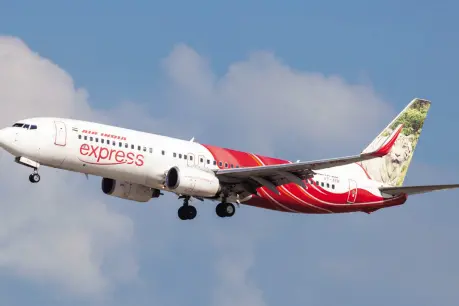
A software issue identified by Boeing on some 737 MAX aircraft has raised an obvious question for thousands of Indian air travellers, is it safe to fly on the aircraft? The answer, based on the information available so far, is that this is not a general loss-of-control problem or a grounding situation. But the issue is significant enough for Boeing to alert operators and work on a permanent software fix.
The problem involves a very specific situation, what happens to the aircraft's automated flight guidance following a go-around, when pilots abandon a landing and prepare for another approach.
Also Read

That makes the story particularly relevant to India. Air India Express and Akasa Air together operate around 96 Boeing 737 MAX aircraft, making the aircraft an important part of India's rapidly expanding narrow-body fleet.
For passengers, the immediate message is reassuring, airlines have procedures to manage the situation, pilots can continue to fly the aircraft without the affected automation, and Akasa Air has said the issue has no impact on the safety of its operations.
But there is a bigger story behind the software glitch, one that goes beyond Boeing and the 737 MAX.
As modern aircraft become increasingly dependent on software and automation, aviation safety is no longer only about engines, landing gear and physical components. Software behaviour, updates, configuration control and the ability of pilots to manage unexpected automation changes are becoming equally important.
What happened on the 737 MAX?
The issue relates to the aircraft's automated flight guidance system during a particular go-around scenario. Imagine an aircraft approaching a runway. For any number of reasons another aircraft on the runway, changing weather, an unstable approach or a runway-related issue the pilots may decide not to land. They execute a go-around.
The aircraft climbs away and the crew prepares for another approach.
According to reports, Boeing has identified a software condition in which automated flight guidance may disengage if, following the missed approach, the subsequent approach path differs from the one originally programmed.
In practical terms, the pilots could find themselves with less automation than expected during the subsequent approach.
It is important to understand what that does and does not mean. The aircraft does not suddenly become uncontrollable. The pilots remain in control and can fly the aircraft manually using established procedures.
Why is Boeing asking airlines to take action?
Boeing has already informed operators about the issue. The company said pilots may experience a reduction in automation during a particular landing scenario and that it had provided operators with information reinforcing existing procedures for safely handling such cases.
At the same time, Boeing's engineers are working on a software update intended to permanently address the issue. As an interim precaution, operators have also been advised on procedures to reset the system following a missed approach in the circumstances covered by the guidance.
That two-step approach is familiar in aviation: manage the operational issue safely while engineers and regulators work through the permanent technical solution.
So, is it safe to fly on a 737 MAX?
This is perhaps the most important question for passengers. Based on the information currently available, there is no indication that passengers should regard every Boeing 737 MAX flight as unsafe because of this software issue. The problem affects a specific operating scenario rather than normal flight operations.
More importantly, commercial aircraft are designed around multiple layers of safety. Pilots are trained to manage situations in which automation becomes unavailable, and aircraft can be flown using other control modes and established procedures.
Akasa Air has specifically said it is coordinating with Boeing and that there is no impact on the safety of its operations. The airline said its aircraft continue to operate safely in accordance with established procedures and applicable regulatory requirements. The airline has not, however, publicly specified how many of its aircraft may carry the particular software configuration involved.
Air India Express operates around 53 Boeing 737 MAX aircraft, while Akasa Air has around 43, taking their combined fleet to approximately 96.
Why should Indian passengers pay attention?
There is a simple reason. The Boeing 737 MAX is becoming an increasingly important aircraft in India's aviation growth story.
Air India Express and Akasa Air are both expanding their fleets, while India's wider airline market is preparing for a substantial increase in aircraft numbers over the coming years.
That means a software issue affecting a particular aircraft system is not merely a Boeing story. It also highlights the increasing importance of software management and digital airworthiness for Indian airlines.
An aircraft today is a sophisticated flying computer as much as it is a machine of engines, structures and mechanical systems. Maintenance teams inspect components. Engineers monitor aircraft systems. Airlines track software configurations. Manufacturers issue service information. Regulators oversee changes. All of these pieces have to work together.
The new reality of aircraft maintenance
For decades, passengers associated aircraft maintenance primarily with physical work, checking engines, replacing components, inspecting structures and repairing aircraft.
That picture is changing. Modern aircraft contain thousands of software-controlled functions. A problem may not involve a cracked component or a worn-out part. It can involve how different systems interact under a particular sequence of commands.
In the Boeing issue there is no broken physical component that passengers can see. Instead, engineers have identified a specific software behaviour that could affect the availability of automation under a particular flight condition.
The response therefore requires engineering analysis, operational procedures, software development, testing, certification and implementation across the affected fleet.
A go-around is not an emergency
There is another point passengers should understand. Hearing that a software issue can occur after a "missed approach" or "go-around" may sound alarming. But a go-around is actually a normal safety procedure in commercial aviation.
Pilots are trained to discontinue a landing whenever they determine that conditions are not suitable. An aircraft may go around because of weather, runway occupancy, traffic, an unstable approach or a simple decision by the flight crew that the landing should not continue. The safest landing is sometimes the landing that does not happen.
Therefore, the fact that Boeing's issue involves a go-around does not mean go-arounds themselves are unsafe.
What happens if the automation disengages?
This is where pilot training becomes important. Airline pilots are trained for different levels of aircraft automation and for situations in which automated systems may not be available.
If the affected automated guidance disengages, the aircraft does not lose its fundamental ability to fly. The crew can continue using established procedures and alternative modes of aircraft control. Boeing's communication to operators specifically reinforced those existing procedures while the permanent software solution is being developed.
For passengers the issue concerns an automated function, not the fundamental ability of the aircraft to remain under pilot control.
What about DGCA?
There was no immediate public response from DGCA on whether it was conducting a separate review or issuing an additional advisory at the time of the latest reports. That regulatory oversight will nevertheless be important as Boeing moves towards the permanent software update.
Boeing's 737 MAX comes under the spotlight again
The latest software issue also arrives against the backdrop of the 737 MAX's history. The aircraft was grounded globally following two fatal crashes the Lion Air 737 MAX 8 accident in Indonesia in October 2018 and the Ethiopian Airlines 737 MAX 8 crash in March 2019.
Those accidents involved the aircraft's MCAS flight-control system and resulted in significant changes to aircraft design, pilot training, certification and regulatory oversight. The current software issue is different from the system involved in those crashes.
However, because of the MAX's history, technical issues involving the aircraft naturally attract heightened attention from regulators, airlines and passengers. That makes transparent communication especially important.
For India as airlines introduce hundreds of new-generation aircraft, the definition of aircraft maintenance is becoming broader.
The engineers maintaining tomorrow's aircraft will need to understand not only engines, structures and components, but also software, avionics, aircraft data and increasingly complex interactions between systems.
For airlines, that means keeping track of software configurations and ensuring that technical instructions are implemented correctly will become just as important as traditional maintenance planning. For regulators, it means continuing to build expertise around increasingly software-driven aircraft.
And for passengers, it means understanding that a modern aircraft can report a software problem without that automatically translating into an unsafe aircraft.
So, should passengers be concerned?
For now, the available information points to a specific and manageable software issue rather than a general safety problem affecting all 737 MAX flights. Boeing has identified the condition, informed operators, reinforced existing pilot procedures and is working on a permanent software solution.
Akasa Air has said its operations remain safe, while the exact number of Indian aircraft carrying the affected software configuration has not been publicly confirmed. The next important development will be Boeing's permanent software update and the regulatory process surrounding its implementation.
For passengers boarding a 737 MAX, the takeaway is simple, the aircraft's automated guidance may be affected in a very specific go-around scenario, but pilots retain control and established procedures are already in place to manage the situation.
The episode also offers a glimpse into the future of aviation safety were keeping an aircraft safe increasingly means keeping its software, systems, people and procedures working together just as carefully as its physical components.
Published: 28 Sept 2026, 05:18 pm IST
ABOUT THE AUTHOR
Related Topics
Disclaimer: Kindly avoid objectionable, derogatory, unlawful and lewd comments, while responding to reports. Such comments are punishable under cyber laws. Please keep away from personal attacks. The opinions expressed here are the personal opinions of readers and not that of Mathrubhumi.