
A two-thirds majority would strengthen the BJP's ability to pursue major constitutional and institutional reforms.
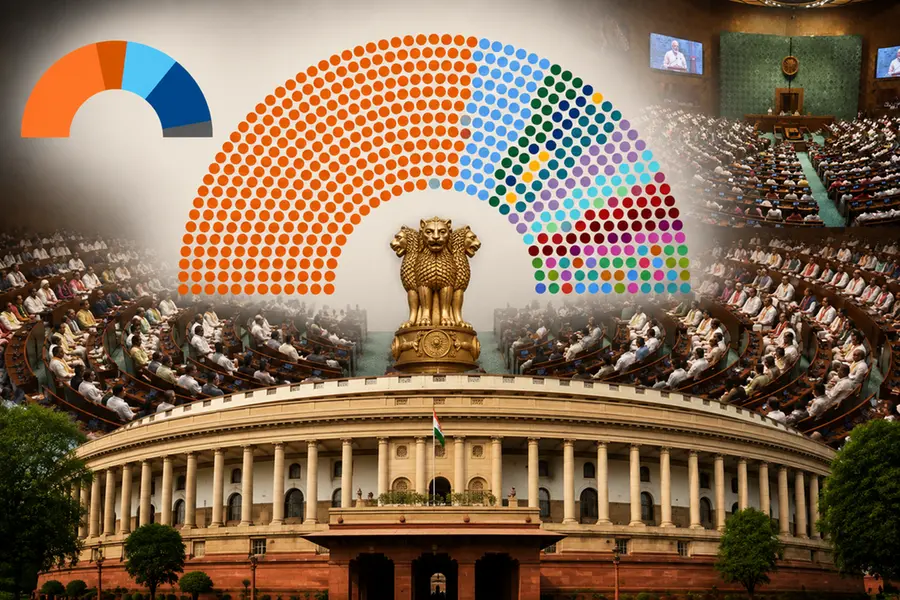
New Delhi: As political discussions intensify over the Bharatiya Janata Party's (BJP) bid to secure a two-thirds majority in Parliament, constitutional experts say such a mandate would significantly enhance the government's legislative strength, particularly in amending the Constitution.
However, it would not give the Centre unlimited powers, as constitutional safeguards and judicial oversight would continue to apply.
A two-thirds majority under Article 368 of the Constitution enables Parliament to pass constitutional amendment bills, subject to the required procedure.
Certain amendments also require ratification by at least half of the state legislatures, while all amendments remain open to judicial review under the Supreme Court's Basic Structure Doctrine.
What a BJP two-thirds majority could enable
Pass constitutional amendments more easily with the required special majority in both Houses of Parliament.
- Push 'One Nation, One Election', which requires multiple constitutional amendments before simultaneous Lok Sabha and Assembly polls can be implemented.
- Carry out delimitation of parliamentary constituencies after the Census through necessary constitutional and legal changes.
- Implement constitutional governance reforms, including changes affecting Parliament, elections and administrative structures, where constitutionally permissible.
- Restructure institutions or create new constitutional bodies, subject to constitutional procedures.
- Strengthen legislative ability to pursue reforms that have previously stalled due to the lack of a special majority.
- Amend provisions relating to Centre-State relations, where applicable, though several such changes would additionally require approval from at least half of the states.
- Enact reforms linked to judicial appointments or electoral processes, if proposed through constitutional amendments and found consistent with the Constitution.
What it cannot do automatically
Despite a two-thirds majority, the government cannot:
- Abolish democracy or cancel elections.
- Remove judicial review.
- Override the Supreme Court's Basic Structure Doctrine.
- Eliminate fundamental constitutional principles such as federalism, secularism, rule of law or free and fair elections.
- Amend provisions requiring state ratification without obtaining the necessary support from state legislatures.
The issue has also become politically contentious, with opposition parties alleging that a two-thirds majority could be used to alter reservation-related constitutional provisions.
The BJP has repeatedly denied such claims, maintaining that it remains committed to constitutional reservations.
Legal experts emphasise that while a two-thirds majority would make constitutional amendments easier, it would not place Parliament above the Constitution.
Every amendment remains subject to judicial scrutiny and the limits laid down by the Supreme Court's Basic Structure Doctrine.
Published: 28 Jun 2026, 09:55 am IST
Related Topics
Disclaimer: Kindly avoid objectionable, derogatory, unlawful and lewd comments, while responding to reports. Such comments are punishable under cyber laws. Please keep away from personal attacks. The opinions expressed here are the personal opinions of readers and not that of Mathrubhumi.
