
As Nitish Kumar faces rising anger and Tejashwi Yadav and Owaisi circle the region, the 24 Muslim-dominated seats could decide Bihar’s next power shift.
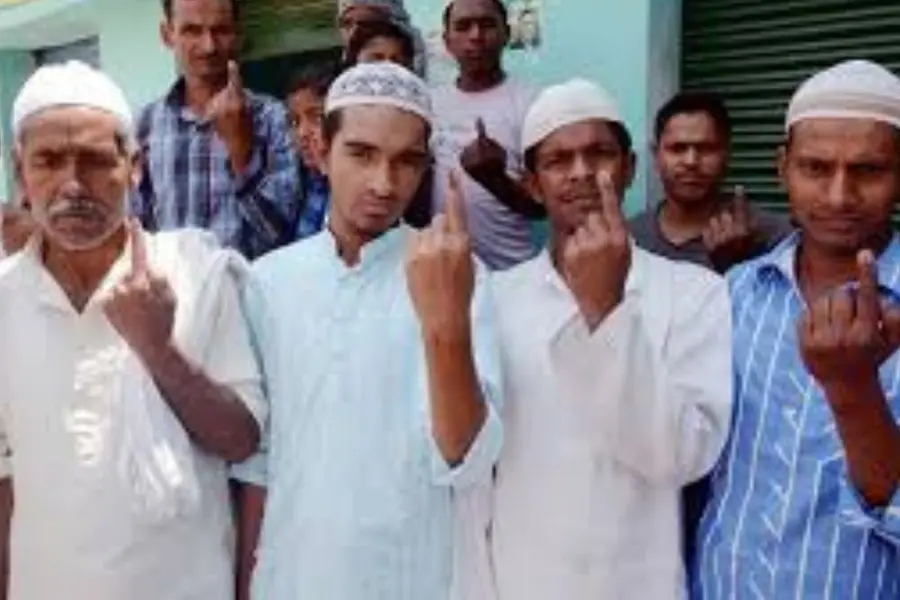
Kishanganj: “Unemployment is a greater issue than Waqf and SIR” says 55-year-old Shamshul of Chakla village in Kishanganj, his face hard with anger.
Having worked in Delhi, Mumbai, and Punjab, Shamshul says leaders remember Seemanchal only during elections. “There’s no work here, so people leave,” he adds, refusing to even discuss politics.
Whenever Kishanganj and elections are mentioned, the Muslim vote bank comes first to mind.
Kishanganj, along with Katihar, Purnia, and Araria, makes up the Seemanchal belt—home to Bihar’s densest Muslim population and 24 assembly seats.
According to the 2011 Census, Kishanganj has 68% Muslim population, Araria 43%, Katihar 45%, and Purnia 39%. The Dainik Bhaskar team visited these districts to understand what Muslim voters are thinking this election season.
And the answer was clear: employment, migration, and education — not the Waqf Act — are shaping the mood.
1. Migration: “There’s no work, so people go out.”
Mohammad Afzal Amanullah, 50, who runs a paan shop in Kishanganj’s Chudi Patti, sums up the mood with poetry: “What a doomsday this political era is. Speaking is mischievous, remaining silent is politeness.”
Afzal says migration is the biggest issue — “There’s no employment. That’s why people leave. No leader pays attention.”
2. Employment: “Everyone talks about jobs during elections, then forgets.”
Shahnawaz Alam, 23, of Russia village, says, “Unemployment is our biggest issue. Young people are desperate. Factories should open here.”
Pharmacy owner Aslam Raza agrees: “Migration and unemployment are Kishanganj’s biggest issues. There are no options for work here.”
Mohammad Naushad, 52, a labourer with four children, adds, “Inflation, no jobs, no factories—what bigger issue could there be?”
Even 73-year-old Mohammad Shamim Ansari echoes: “Unemployment is our biggest problem. There isn’t even one factory here that can employ ten people.”
3. Education: “Only one college in Kishanganj.”
Sania, a first-time voter, says, “Paper leaks are a big problem in Bihar. We need development—from traffic to safety.”
Farmer Atiq Alam adds, “No one pays attention to education. There’s only one Marwari college for higher studies.”
Mohammad Tauhid Alam, who runs a factory, says, “Private schools are rising, government ones are dying. They’re just serving khichdi.”
The Waqf Act Factor: Nitish Faces Muslim Discontent
32-year-old madrasa teacher Hasim Raza from Thakurganj says, “Youth are angry with Nitish Kumar because of the Waqf Act. But still, no CM has given us as much as he has.”
However, in Araria’s Jokihat, Mohammad Firoz Alam says, “The government disappointed Muslims by enacting this law. This is wrong.”
Despite this, women in Seemanchal continue to express faith in Nitish Kumar, calling him the “only leader who delivers.”
As Bihar heads toward elections, one question looms large:
Will Seemanchal’s Muslim voters stand by Nitish Kumar—or turn to Tejashwi and Owaisi in search of jobs and dignity?
Published: 06 Oct 2025, 12:42 pm IST
Disclaimer: Kindly avoid objectionable, derogatory, unlawful and lewd comments, while responding to reports. Such comments are punishable under cyber laws. Please keep away from personal attacks. The opinions expressed here are the personal opinions of readers and not that of Mathrubhumi.
