
The Bihar election outcome signals a deeper malaise for the Opposition, with the Congress party’s underperformance proving a major liability.
The National Democratic Alliance (NDA) has swept the Bihar Assembly elections in a resounding mandate, cementing its grip on the state. Led by Chief Minister Nitish Kumar's Janata Dal (United) and bolstered by a massive win for the Bharatiya Janata Party (BJP), the ruling coalition obliterated the majority mark of 122, securing a landslide victory.
Voter turnout was robust, rising to 67.14 per cent -- nearly 10 percentage points higher than the 2020 elections -- reflecting high stakes and strong public participation.
Why the NDA scored big in Bihar: Key factors behind Nitish Kumar's comeback
In stark contrast, the Opposition Mahagathbandhan (Grand Alliance), which included the Rashtriya Janata Dal (RJD), Congress, and Left parties, suffered a crushing defeat. The RJD, the alliance's central component, reportedly scraped through with fewer than 40 seats, while the Congress and the Communist Party of India (Marxist-Leninist) Liberation faced widespread losses.
Decisive vote share and fragmentation
The NDA's victory was propelled by superior vote consolidation, achieving a 47.2 per cent vote share. This dramatically eclipsed the Mahagathbandhan’s stagnant 37.3 per cent, a marginal rise from its 2020 performance.
Political analysts attribute the Opposition's "electoral annihilation" to a toxic mix of strategic blunders, internal discord, and the incumbent NDA's masterful counter-mobilisation.
What led to the total collapse of Prashant Kishor and his Jan Suraaj Party
A key factor in the rout was the poor performance of the Congress party. Contesting 61 seats, the Congress reportedly led in only four, marking a 79 per cent plunge from its 2020 tally of 19. Its vote share slumped to around eight per cent, dragging down the overall momentum of its allies.
The RJD, despite maintaining the highest vote share (23%) among single parties, saw its seat tally halve from 75 to 31 due to the alliance's weakness.
Internal discord and splinter votes
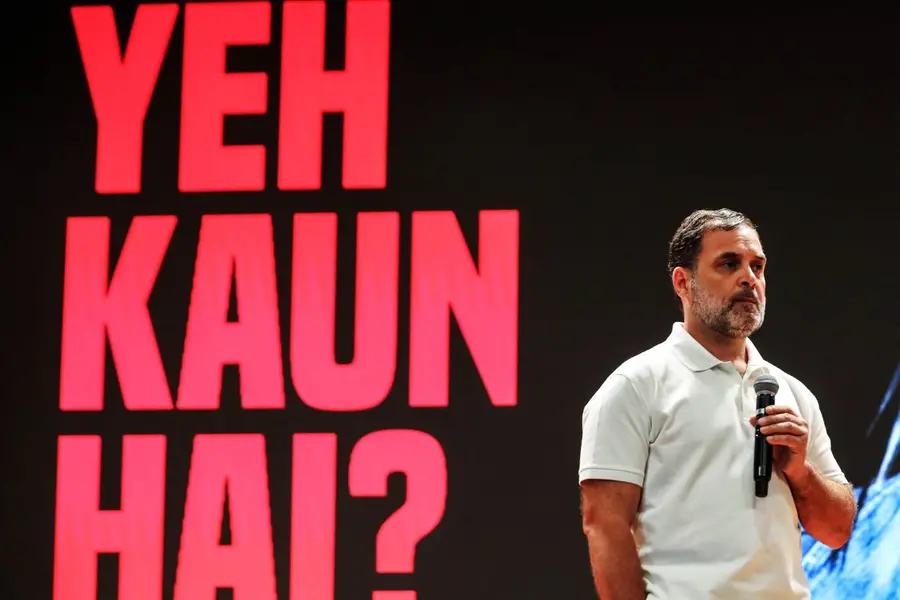
Internal disagreements over seat-sharing resulted in "friendly contests" in 11 constituencies, which sapped crucial resources and confused voters. Furthermore, the absence of key campaigners, including Rahul Gandhi, from the campaign trail for nearly two months reportedly diluted the Mahagathbandhan's high-decibel push.
The Opposition's base was also heavily fragmented by new players. Prashant Kishor's Jan Suraaj Party, debuting with a 3.5 per cent vote share, did not win a seat but eroded crucial votes from the Mahagathbandhan, particularly among urban youth.
Similarly, the All India Majlis-e-Ittehadul Muslimeen (AIMIM) fragmented the Muslim vote in the crucial Seemanchal region, where the Mahagathbandhan saw a significant drop in its seat tally.
NDA's social engineering and women's turnout
The NDA successfully neutralized the Mahagathbandhan's traditional caste calculus by leveraging expansive social engineering. The ruling coalition benefited from the BJP's consolidation of upper-caste votes, the JD(U)'s strong appeal to Extremely Backward Classes (EBCs) and MahaDalits, and the support of the Lok Janshakti Party (Ram Vilas) among Dalits.
5 strategic blunders that sank the Mahagathbandhan
Crucially, female turnout skewed nine points higher than male turnout, significantly favouring Chief Minister Nitish Kumar. Schemes like the Mukhyamantri Mahila Rozgar Yojana and the success of the Jeevika self-help groups earned him strong loyalty, which analysts say boosted the NDA in over 50 seats in the Mithilanchal-Kosi regions.
The outcome signals a deeper malaise for the Opposition, with the Congress's underperformance proving a major liability. For the NDA, the victory validates Nitish Kumar's enduring political formula. The 2025 drubbing, with the Mahagathbandhan's expected tally plummeting from 110 seats in 2020 to under 50, appears to cement the start of the NDA era in Bihar.
Published: 14 Nov 2025, 06:56 pm IST
Disclaimer: Kindly avoid objectionable, derogatory, unlawful and lewd comments, while responding to reports. Such comments are punishable under cyber laws. Please keep away from personal attacks. The opinions expressed here are the personal opinions of readers and not that of Mathrubhumi.
