
Bengaluru hits record 111mm rainfall in April 2026. Get the latest on the hailstorm, urban flooding, and traffic updates. Stay informed and safe—read more here.
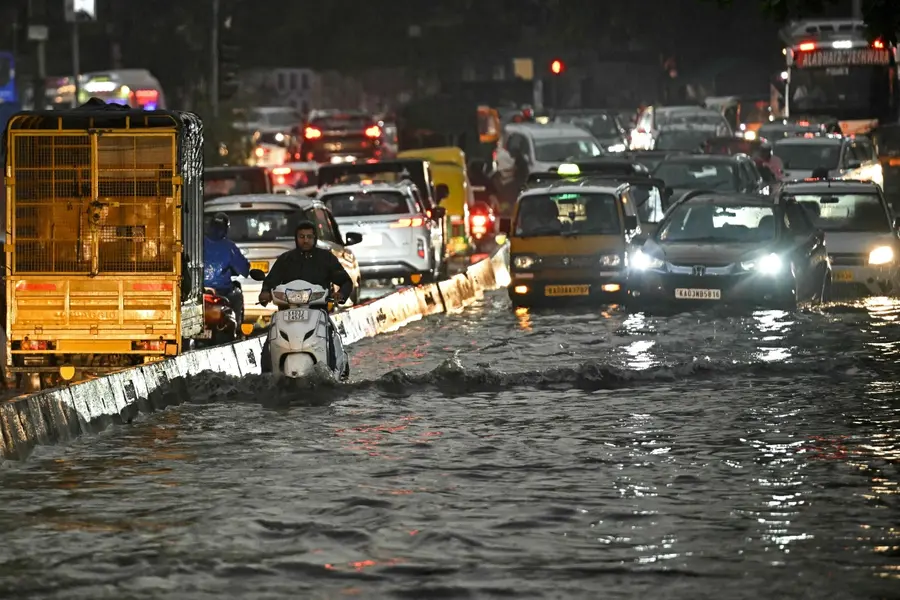
Bengaluru recorded its highest-ever 24-hour rainfall for April at 111 mm, breaking a 15-year-old record of 108.6 mm set on April 19, 2001, as an intense pre-monsoon storm lashed the city and disrupted daily life.
The sudden cloudburst-like conditions, accompanied by hail and strong winds, led to widespread waterlogging, traffic paralysis, and at least seven deaths, including a child after a hospital wall collapse. The scale of the downpour surprised residents, as April is typically one of the hottest and driest months in the city.
Central Bengaluru witnessed rare hail accumulation, with areas such as MG Road, Trinity Circle, and the Mahatma Gandhi Road Metro station covered in ice pellets. Several neighbourhoods, including Indiranagar, Koramangala, BTM Layout, and areas near Jayadeva Hospital, reported severe flooding, with water levels rising up to two to three feet in low-lying stretches.
Clogged storm-water drains quickly overflowed under the pressure of the intense rainfall, worsening urban flooding. Traffic came to a near halt during peak hours, while fallen trees and gusty winds—reported at up to 75 kmph, blocked key roads, including routes leading to the airport. Many commuters turned to metro services to avoid long delays.
Weather experts attributed the extreme event to strong convective activity typical of the pre-monsoon season. Rising heat created atmospheric instability, which, combined with moisture inflow and a low-level wind discontinuity, triggered the rapid development of towering thunderclouds. These systems are capable of producing intense thunderstorms, heavy rain, hail, and strong winds within a short span.
Will the rain continue?
The India Meteorological Department (IMD) had earlier forecast thunderstorms over Bengaluru, but the system intensified more than expected. Officials now say the wet spell is not over, with moderate to heavy rainfall likely in parts of the city later today.
Residents have been advised to stay alert for further waterlogging, traffic congestion, and possible disruptions as weather conditions remain unstable.
While the rain has offered relief from recent heat, it has also exposed the city’s ongoing challenges with drainage and urban flooding during extreme weather events.
Published: 30 Apr 2026, 07:02 pm IST
Related Topics
Disclaimer: Kindly avoid objectionable, derogatory, unlawful and lewd comments, while responding to reports. Such comments are punishable under cyber laws. Please keep away from personal attacks. The opinions expressed here are the personal opinions of readers and not that of Mathrubhumi.
