
A sharp shortage of LPG in Bengaluru has disrupted autorickshaw services, leaving thousands of drivers unable to operate and forcing commuters to rely heavily on CNG-run vehicles.
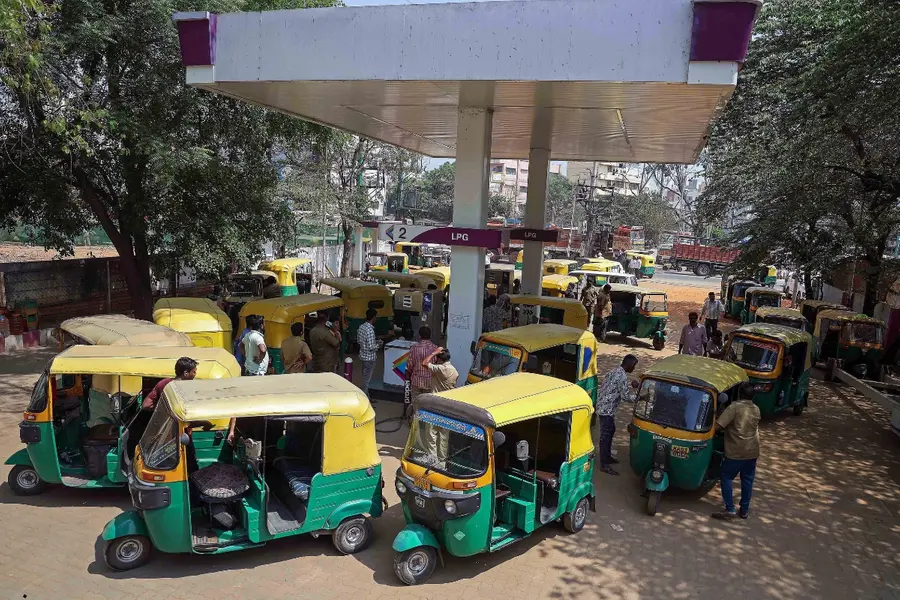
Bengaluru: A sharp shortage of LPG in Bengaluru has severely disrupted autorickshaw services across the city, leaving thousands of drivers struggling to operate and forcing commuters to rely more heavily on CNG-run vehicles.
The crisis has nearly pushed LPG-powered autorickshaws off the roads. Several fuel stations have either run out of supply or shut down, including Bowring Service Station, one of the few functioning outlets, which recently reported no LPG availability. As a result, long queues of autorickshaws have become a common sight, often stretching up to two to three kilometres, particularly during morning hours.
Also Read

Drivers say the situation is unpredictable and financially stressful. Many depend on informal updates about fuel availability, which often leads to confusion and overcrowding at specific stations. Some drivers have chosen not to travel long distances to refill LPG due to the uncertainty of supply and the risk of returning without fuel after hours of waiting.
According to drivers’ unions, the shortage is being worsened by structural issues. A significant number of LPG fuel stations in the city have been shut down or converted into CNG outlets, reducing access for LPG-dependent vehicles. In addition, there are allegations of LPG hoarding by a section of drivers, further limiting availability for others.
Estimates suggest that around 80,000 autorickshaws in Bengaluru operate on LPG, while approximately 1,00,000 run on CNG. With LPG supply constrained, CNG-operated autos have become the primary mode of transport for many commuters, offering some temporary relief amid the disruption.
The shortage has also had a financial impact. While public sector fuel stations have not significantly increased LPG prices, private suppliers have reportedly raised rates. In response, some autorickshaw drivers, including those operating through app-based platforms, have increased fares to cope with rising costs and reduced working hours.
Despite Indian Oil Corporation announcing an increase in LPG supply to the city, the situation on the ground remains largely unchanged, with several fuel stations still closed and supply inconsistent.
Drivers’ unions have called for urgent government intervention to stabilise supply, regulate prices and ensure fair distribution of LPG. The ongoing crisis has raised broader concerns about fuel accessibility and its impact on daily commuting, highlighting the challenges faced by urban transport systems when essential fuel supplies are disrupted.
Published: 05 Apr 2026, 02:36 pm IST
Related Topics
Disclaimer: Kindly avoid objectionable, derogatory, unlawful and lewd comments, while responding to reports. Such comments are punishable under cyber laws. Please keep away from personal attacks. The opinions expressed here are the personal opinions of readers and not that of Mathrubhumi.