
The billboard scans license plates, retrieves data from the VAHAN database, and publicly displays violations within seconds
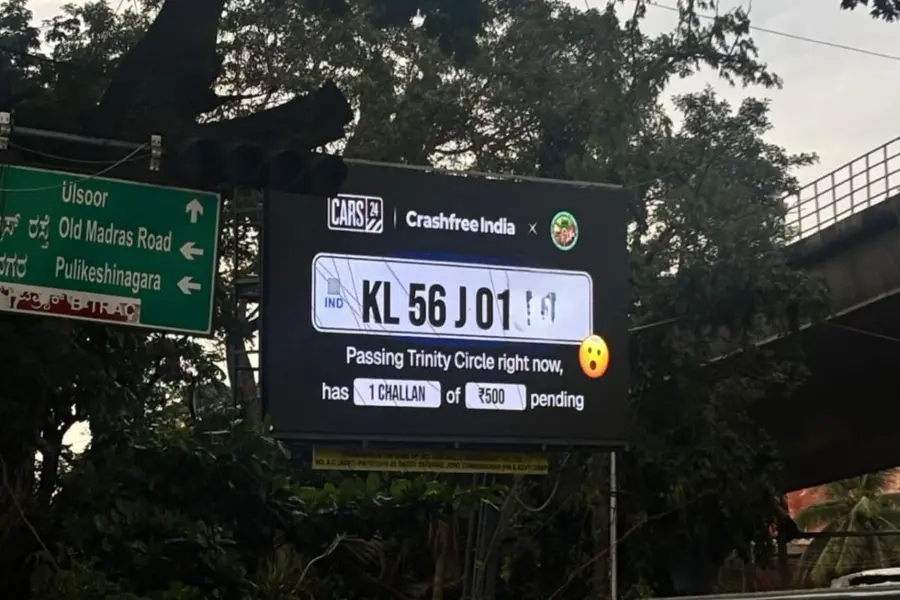
Bengaluru has taken a pioneering step by launching India’s first AI-powered digital billboard that publicly displays the pending traffic challans and expired vehicle documents, such as Pollution Under Control (PUC) certificates. Installed at the busy Trinity Circle junction, the billboard is part of a new strategy to promote road discipline and accountability through technological innovation.
How It Works: Instant Data Retrieval and Public Display
The AI-enabled billboard is equipped with advanced cameras capable of scanning vehicle license plates from up to 100 meters away. Within just 10 seconds, the system fetches relevant vehicle information—including unpaid fines and expired documents—from the national VAHAN database and flashes the details on a large public screen as vehicles pass by.
The system also recognises vehicles with no pending violations, acknowledging compliance and turning the billboard into a dual-purpose tool: deterring violations while rewarding responsible behaviour.
Addressing Chronic Traffic Violations
Bengaluru’s traffic volume is staggering, with more than one crore vehicles on the road daily and roughly 30,000 traffic violations recorded every day. Last year alone, 82.9 lakh violations were logged, resulting in ₹849 crore in fines collected. In 2025, the state has already seen 45 lakh violations and ₹1,150 crore in penalties.
Despite multiple awareness campaigns and fines, traffic violations have remained persistently high. The AI billboard aims to shift behaviour by making these violations publicly visible, creating social pressure on defaulters to comply.
Public and Official Reactions
Joint Commissioner (Traffic) Karthik Reddy described the initiative as a supplement to existing enforcement efforts, designed to encourage reflection and responsible citizenship. The billboard has evoked mixed reactions from citizens and social media users, while many praise the innovative deterrent, concerns about privacy and public shaming have been raised.
Gajendra Jangid, co-founder of Cars24 (a key partner in the initiative), said, “Every act of responsibility on the road, no matter how small, is what keeps an entire city alive. Safety doesn’t come from systems alone; it comes from choices.”
Future Prospects
The AI billboard pilot at Trinity Circle is seen as an experimental step that, if successful, could extend to other congestion-prone intersections across Bengaluru and eventually other Indian metros. This fusion of technology and public accountability represents a bold new paradigm in road safety management.
Published: 25 Sept 2025, 09:03 pm IST
Related Topics
Disclaimer: Kindly avoid objectionable, derogatory, unlawful and lewd comments, while responding to reports. Such comments are punishable under cyber laws. Please keep away from personal attacks. The opinions expressed here are the personal opinions of readers and not that of Mathrubhumi.
