
What began as early leads on counting day quickly turned into a sweeping wave for the party, which surged past the 200-seat mark, while the TMC was reduced to around 80 seats
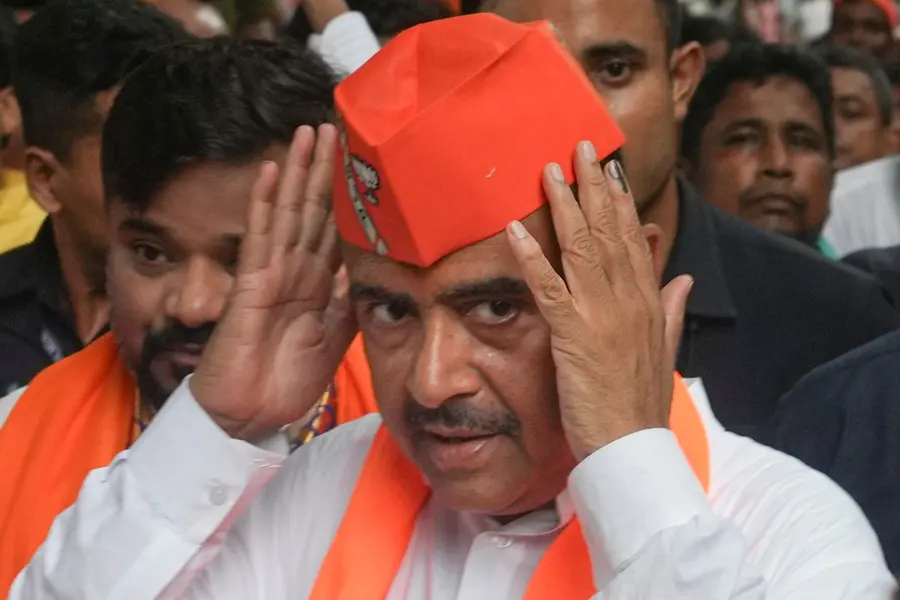
Kolkata: The Bharatiya Janata Party (BJP) further cemented its historic victory in West Bengal, with its tally rising to 207 seats in the 294-member Assembly after a recount win in the Rajarhat-New Town constituency.
The additional seat came after BJP candidate Piyush Kanodia edged past sitting two-term All India Trinamool Congress (TMC) MLA Tapash Chatterjee by a narrow margin of 309 votes following a recount. With this, the BJP’s tally increased from 206 to 207, while the TMC’s numbers dropped sharply compared to its 2021 performance.
According to Election Commission sources, after 18 rounds of counting, Kanodia secured 1,06,564 votes, while Chatterjee polled 1,06,255 votes. The BJP candidate is expected to be formally declared the winner shortly.
Also read | ‘I will not resign’: Mamata Banerjee refuses to step down, alleges 100 seats were 'looted'
The development comes a day after the BJP swept to power in the state with a decisive mandate, crossing the two-thirds mark and ending the TMC’s 15-year rule for the first time.
The verdict also carried major political significance, with Chief Minister Mamata Banerjee losing the high-profile Bhabanipur seat to BJP’s Suvendu Adhikari.
With 207 seats now in its kitty, well above the majority mark of 148, the BJP has underlined the scale of its dominance in the state Assembly.
What began as early leads on counting day quickly turned into a sweeping wave for the party, which surged past the 200-seat mark, while the TMC was reduced to around 80 seats, reflecting a sharp reversal of fortunes.
Also read | From 215 to 80: The brutal anatomy of the Trinamool Congress’s institutional collapse
The outcome signals not just a change in government but a deeper political realignment in West Bengal. For the first time since 1972, the state is set to be governed by a party that is also in power at the Centre.
The BJP’s campaign was spearheaded by Prime Minister Narendra Modi, whose high-energy rallies and direct outreach played a central role, while Union Home Minister Amit Shah led the party’s organisational push on the ground.
The party’s rise in Bengal, from a marginal presence to the ruling force, has been gradual but strategic. In contrast, the TMC’s resistance appeared weakened, with losses reported across key regions, including north Bengal and Junglemahal.
Vote share trends further highlighted the shift, with the BJP’s share rising to around 45 per cent from 38 per cent in 2021, while the TMC’s declined to nearly 40.94 per cent from 48 per cent.
Published: 05 May 2026, 06:48 pm IST
Related Topics
Disclaimer: Kindly avoid objectionable, derogatory, unlawful and lewd comments, while responding to reports. Such comments are punishable under cyber laws. Please keep away from personal attacks. The opinions expressed here are the personal opinions of readers and not that of Mathrubhumi.
