
West Bengal has intensified its ‘detect-delete-deport’ drive, with officials claiming nearly 2,000 Bangladeshi infiltrators have been identified so far; detention and deportation procedures are now underway across multiple districts.
The West Bengal government has intensified its crackdown on illegal infiltrators, with nearly 2,000 Bangladeshi nationals identified across the state as part of an ongoing ‘detect-delete-deport’ drive, according to administrative sources.
Officials said the state has already begun setting up holding centres in multiple districts to detain identified Bangladeshi and Rohingya infiltrators before their eventual deportation through the Border Security Force (BSF).
Sources claimed that till Tuesday, around 2,000 alleged illegal infiltrators had been identified, while the process of verification and identification will continue in phases.
According to officials, 63 detainees are currently being housed at a holding centre in Murshidabad, while nine others have been kept at a similar facility in Malda.
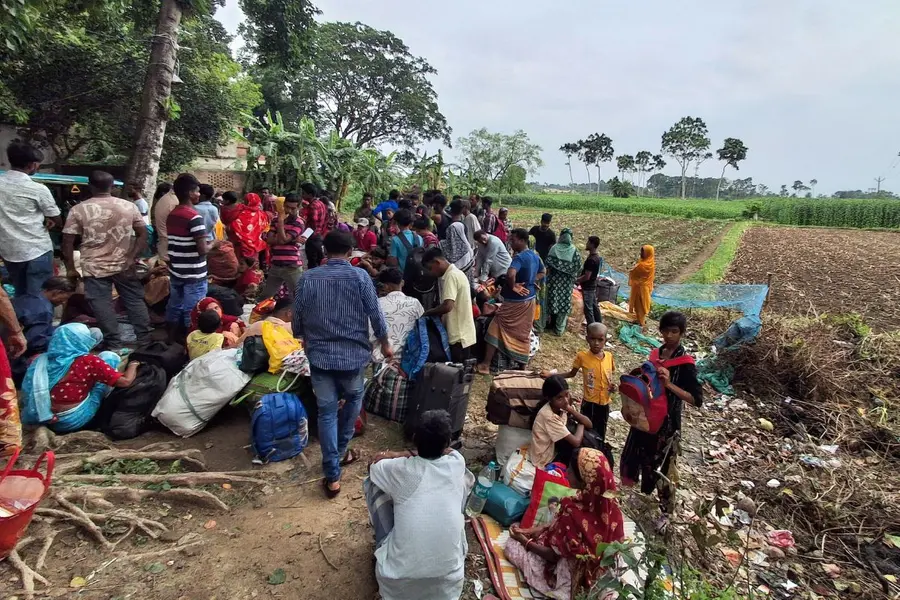
Authorities are also monitoring a separate situation at the Hakimpur border in North 24 Parganas, where around 100 to 150 Bangladeshi nationals reportedly gathered seeking to return to Bangladesh voluntarily. However, officials said complications have emerged regarding their entry into Bangladesh, prompting the BSF and the Centre to examine possible legal and diplomatic options.
Administrative sources said the identification process was accelerated using records provided by the Foreigners Regional Registration Office (FRRO).
The agency reportedly shared details of Bangladeshi nationals whose visas had expired but who allegedly continued residing illegally in the state.
These records were subsequently cross-verified by the police and the Election Commission.
Officials claimed that intelligence agencies have also been asked to assist in tracking suspected infiltrators.
Nabanna sources further stated that Bangladeshi nationals currently lodged in different state prisons will be deported in accordance with legal procedures once their sentences are completed.
A senior state official said the Special Intensive Revision (SIR) exercise also played a role in identifying suspected infiltrators.
According to the official, several individuals allegedly returned to Bangladesh on their own after the revision process began, leading to reports of vacant slum settlements in parts of New Town and other areas.
The administration has also raised concerns over nearly five lakh people who reportedly did not appear for SIR hearings.
Officials suspect that a significant section of them could be illegal infiltrators, though verification is still underway.
A senior Nabanna official alleged that organised agent networks had facilitated illegal entry into Bengal in exchange for money and later arranged Aadhaar, PAN, and voter identity cards for infiltrators.
The official claimed such cases had surfaced in Murshidabad, Malda, Cooch Behar, North Dinajpur, and North and South 24 Parganas districts.
Published: 28 May 2026, 09:59 am IST
Related Topics
Disclaimer: Kindly avoid objectionable, derogatory, unlawful and lewd comments, while responding to reports. Such comments are punishable under cyber laws. Please keep away from personal attacks. The opinions expressed here are the personal opinions of readers and not that of Mathrubhumi.
