
Baglihar Dam opened three gates after rising Chenab River levels triggered by heavy rainfall in Jammu and Kashmir, even as India maintains the suspension of the Indus Waters Treaty with Pakistan.
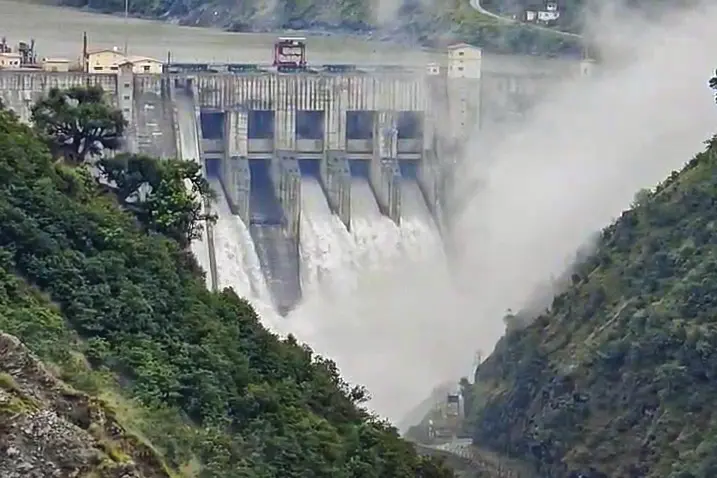
Jammu and Kashmir: Authorities have opened three gates of the Baglihar Dam in Ramban district after a sharp increase in water levels in the Chenab River triggered by persistent rainfall across parts of the Doda-Kishtwar region. Officials said the release was carried out as a precautionary measure to regulate river flow and maintain dam safety amid changing weather conditions.
The development has drawn attention because it comes at a time when the Indus Waters Treaty (IWT) between India and Pakistan remains suspended by New Delhi following the April 2025 Pahalgam terror attack.
According to local authorities, teams are closely monitoring rainfall activity, inflow levels and river conditions across the Chenab basin. Disaster management agencies and other departments have been placed on alert to respond swiftly should the situation worsen.
The decision was taken after continuous rain in the upper catchment areas led to a significant rise in water entering the Chenab River system. Opening selected gates allows excess water to be released in a controlled manner, helping maintain safe reservoir levels while reducing pressure on dam infrastructure.
ALSO READ: Flash floods in Jammu and Kashmir: Doda-Kishtwar highway damaged, vehicles buried under debris
Officials have urged residents living along vulnerable river stretches to remain cautious and follow advisories issued by local administrations.
Indus Waters Treaty still in abeyance
The opening of the dam gates comes against the backdrop of India's continued suspension of the 1960 Indus Waters Treaty.
Last week, Ministry of External Affairs spokesperson Randhir Jaiswal reiterated that India's position on the agreement remains unchanged. He said the treaty will continue to remain in abeyance until Pakistan takes credible and irreversible steps to end support for cross-border terrorism.
New Delhi first announced the suspension following the Pahalgam terror attack in April 2025, describing it as a response to Pakistan's continued backing of terrorism targeting India.
India Rejects Arbitration Ruling
About Baglihar Dam
The Baglihar Hydroelectric Power Project, situated on the Chenab River in Ramban district, is one of the most significant hydropower installations in Jammu and Kashmir. Apart from generating electricity, the project plays an important role in regulating water flow along the river.
In recent months, the project has remained at the centre of discussions related to India's management of western river waters following the suspension of the Indus Waters Treaty.
Understanding the Indus Waters Treaty
Signed in 1960, the Indus Waters Treaty governs water-sharing arrangements between India and Pakistan across the Indus river system.
Under the agreement, India enjoys exclusive rights over the eastern rivers — Ravi, Beas and Sutlej, while Pakistan primarily receives waters from the western rivers, Indus, Jhelum and Chenab. India, however, retains specific rights on the western rivers for domestic use, irrigation and run-of-the-river hydropower generation within prescribed limits.
Over the decades, India has developed major projects such as the Bhakra Dam, Pong Dam, Pandoh Dam and Ranjit Sagar Dam to utilise waters allocated to it under the treaty framework.
With monsoon activity intensifying in parts of Jammu and Kashmir, authorities are expected to continue monitoring the Chenab River closely, while the larger diplomatic and strategic debate surrounding the Indus Waters Treaty remains unresolved.
With ANI inputs
Published: 06 Jul 2026, 03:00 pm IST
Disclaimer: Kindly avoid objectionable, derogatory, unlawful and lewd comments, while responding to reports. Such comments are punishable under cyber laws. Please keep away from personal attacks. The opinions expressed here are the personal opinions of readers and not that of Mathrubhumi.
