
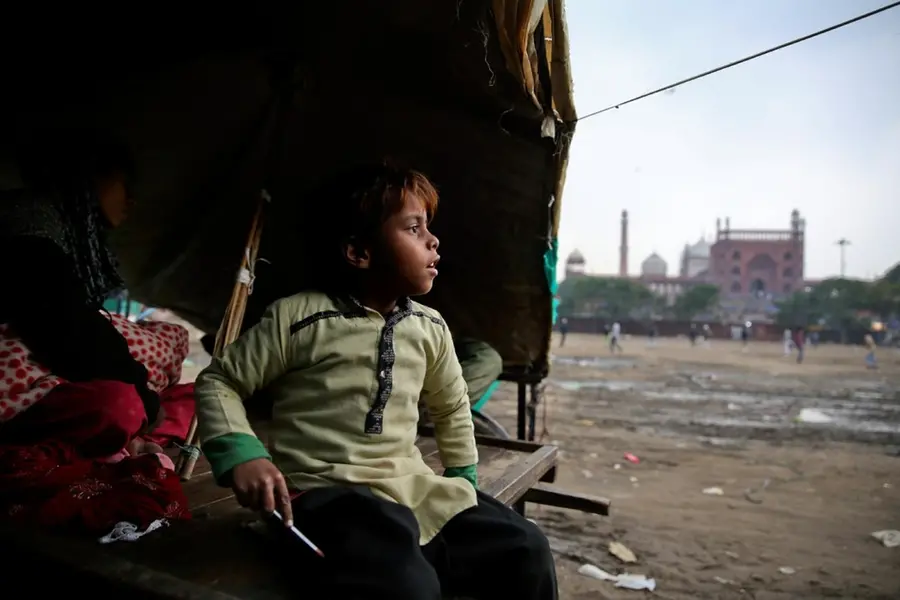
India has achieved a significant reduction in extreme poverty over the past 11 years, with an estimated 269 million people moving above the extreme poverty line, according to the latest data from the World Bank.
The nation's extreme poverty rate has fallen dramatically from 27.1 percent in 2011–12 to 5.3 percent in 2022–23.
This substantial decline means that the number of individuals living in extreme poverty in India plummeted from 344.47 million in 2011–12 to just 75.24 million by 2022–23.
The World Bank's assessment, which uses the international poverty line of $3.00 per day (based on 2021 prices), indicates a broad-based reduction across both rural and urban areas.
When measured against the earlier poverty line of $2.15 daily consumption (based on 2017 prices), the share of Indians in extreme poverty stands at 2.3 percent, a significant drop from 16.2 percent in 2011–12.
Specifically, the number of people living below the $2.15-per-day poverty line decreased from 205.93 million in 2011 to 33.66 million in 2022.
This sharp decline was observed uniformly, with rural extreme poverty falling from 18.4 percent to 2.8 percent and urban extreme poverty reducing from 10.7 percent to 1.1 percent over the 11-year period.
Geographically, states that historically harbored a large portion of India’s extreme poor, including Uttar Pradesh, Maharashtra, Bihar, West Bengal, and Madhya Pradesh, played a crucial role.
These five states, which collectively accounted for 65 percent of India's extreme poor in 2011–12, contributed two-thirds of the overall decline by 2022–23.
Beyond income-based poverty, India has also made notable progress in reducing multidimensional poverty. The Multidimensional Poverty Index (MPI) saw a substantial drop from 53.8 percent in 2005–06 to 16.4 percent by 2019–21, further declining to 15.5 percent in 2022–23.
As the BJP-led NDA government completes 11 years in office, Prime Minister Narendra Modi has emphasized the government's initiatives aimed at poverty alleviation, empowerment, infrastructure development, and inclusion.
Programs such as PM Awas Yojana (housing), PM Ujjwala Yojana (clean cooking fuel), Jan Dhan Yojana (banking), and Ayushman Bharat (healthcare) have expanded access to essential services.
Additionally, the Direct Benefit Transfer (DBT) system, digital inclusion efforts, and robust rural infrastructure are credited with ensuring transparency and faster delivery of benefits, reportedly helping over 250 million people overcome poverty.
Published: 07 Jun 2025, 10:13 am IST
Related Topics
Disclaimer: Kindly avoid objectionable, derogatory, unlawful and lewd comments, while responding to reports. Such comments are punishable under cyber laws. Please keep away from personal attacks. The opinions expressed here are the personal opinions of readers and not that of Mathrubhumi.
