
Emergency-era bans to court battles and streaming takedowns, the films that India’s censors, protesters and governments tried to keep off the screen.
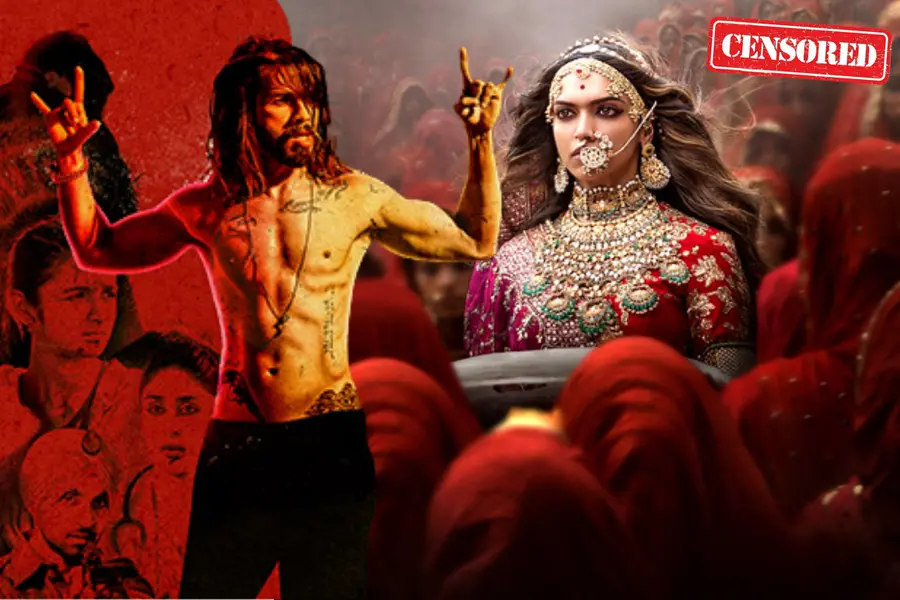
Every so often, a film arrives with a story attached that has nothing to do with its plot. It’s the story of the cuts demanded, the screenings cancelled, the prints destroyed or the release held up for years.
We tend to remember these films for the noise around them. But the noise is worth a second look. When a film is stopped, the question isn’t only what it showed. It’s who was made uncomfortable, and what they feared you might ask once you’d seen it.
Here are 16 Indian films that found out how hard it can be to reach an audience, and what each fight tells us.
1. Kissa Kursi Ka (1975)
Director: Amrit Nahata
A political satire about corruption, opportunism and the misuse of power, with characters who bore a resemblance to influential political figures. During the Emergency, the original film was suppressed and its prints destroyed. Nahata remade it and released the new version in 1978. It remains one of the most documented cases of political censorship in Indian cinema.
2. Aandhi (1975)
Director: Gulzar
A successful woman politician reunites with her estranged husband and confronts what her public career has cost her personally. Because of comparisons between the protagonist and Prime Minister Indira Gandhi, the film was banned during the Emergency. The ban was lifted after the change of government in 1977.
3. Nasbandi (1978)
Director: I. S. Johar
A comedy that took aim at the coercive sterilisation drive of the Emergency’s family-planning policies. Its political caricatures and criticism earned it censorship and exhibition restrictions. Even after the Emergency ended, satire on the subject stayed sensitive.
4. Bandit Queen (1994)
Director: Shekhar Kapur
Also Read: ‘I’m not always flawless’: Sara Arjun gets real about beauty and self-care
Based on the life of Phoolan Devi, the film portrays caste oppression, sexual violence and humiliation, and her transformation into an outlaw. It ran into certification disputes and legal challenges over its explicit content, and Phoolan Devi herself objected to how her life was shown. The controversy raised hard questions about artistic freedom and the ethics of representing someone else’s trauma.
5 & 6. Fire (1996) and Water (2005)
Director: Deepa Mehta
Fire follows two married women who find intimacy and love within a restrictive family. After its Indian release in 1998, protests over its depiction of same-sex love led to attacks on cinemas.
Water, set in colonial India among widows living under harsh religious and social customs, saw protests disrupt its planned shoot in Varanasi. It was eventually filmed in Sri Lanka. Neither faced a straightforward nationwide ban. The opposition was to their subjects, and it came as attempts to disrupt production and exhibition.
7. Black Friday (2004)
Director: Anurag Kashyap
A reconstruction of the 1993 Bombay bomb blasts, the conspiracy and the police investigation that followed. Legal proceedings tied to the ongoing bombings trial delayed its release. Though completed earlier, it reached Indian cinemas only in 2007, a lesson in how cinema, criminal proceedings and freedom of expression can collide.
8. Parzania (2007)
Director: Rahul Dholakia
Also Read: ‘Ranabaali’ box office collection: Vijay Deverakonda-Rashmika Mandanna film gets ₹16.50 Cr start
Inspired by the disappearance of a young boy during the 2002 Gujarat violence, this is the story of a family searching for their missing child. It was certified, but exhibitors feared protests and disruption, and it wasn’t screened in many Gujarat cinemas. There was no nationwide ban, yet its struggle to reach audiences became a censorship controversy of its own.
9. Firaaq (2008)
Director: Nandita Das
Set in the aftermath of the 2002 Gujarat violence, it follows interconnected lives shaped by grief, guilt, fear and communal prejudice. Concerns about opposition and distribution difficulties followed it, but it was certified and never nationally banned. It earns its place here for the challenges politically sensitive cinema faces, even without a formal prohibition.
10. Unfreedom (2014)
Director: Raj Amit Kumar
Two parallel narratives explore same-sex love, religious extremism and the struggle for personal freedom. The Central Board of Film Certification refused to certify it for Indian theatrical exhibition, citing its sexual and violent content. The filmmakers challenged the decision but never secured a conventional Indian release. The case fed the wider debate on how Indian censorship treats sexuality and provocative subjects.
11. Udta Punjab (2016)
Director: Abhishek Chaubey
Four interconnected lives expose the damage of drug addiction, trafficking and institutional failure in Punjab. The censor board demanded 89 cuts, including changes to references to Punjab. The filmmakers fought back, and the Bombay High Court allowed release with one cut and an adult certificate. It became an important example of filmmakers successfully challenging certification demands.
12. Lipstick Under My Burkha (2016)
Director: Alankrita Shrivastava
Also Read: Young director found dead in hotel room after release of debut web series
Four women secretly chase romance, sexuality, independence and ambition within restrictive social expectations. The censor board first refused certification, objecting to sexual content and calling the story “lady-oriented.” After an appeal and modifications, it was certified and released in India in 2017, prompting a wider conversation about how female sexuality is represented in Indian cinema.
13. Padmaavat (2018)
Director: Sanjay Leela Bhansali
A historical drama inspired by the legend of Queen Padmavati and the conflict between Mewar and Sultan Alauddin Khilji. Groups accused the makers of distorting history and dishonouring Rajput traditions, and protests, threats and violence followed. Several states tried to prohibit screenings, but the Supreme Court protected the release. It became a national debate on historical representation, public protest and the right to exhibit certified films.
14. Santosh (2024)
Director: Sandhya Suri
A young widow joins the police in rural North India and investigates a girl’s murder, meeting caste discrimination, misogyny and police violence along the way. Despite international recognition, it faced certification obstacles at home over its portrayal of police conduct and social discrimination, which affected its planned theatrical release. It shows how some internationally acclaimed Indian stories struggle to get domestic approval.
15. Dhadak 2 (2025)
Director: Shazia Iqbal
Two law students fall in love across caste lines and face discrimination, humiliation and threats. The film went through certification scrutiny and was cleared after modifications, reportedly to dialogue, religious references and politically sensitive material. It wasn’t banned, but the process became part of the conversation about how mainstream Hindi cinema handles caste and inequality.
16. Panjab ‘95 / Satluj (2026)
Director: Honey Trehan
Based on human rights activist Jaswant Singh Khalra, who investigated disappearances and alleged extrajudicial killings in Punjab in the 1990s. Originally titled Panjab ‘95, it faced demands for around 127 cuts and years of certification trouble. Retitled Satluj, it premiered on ZEE5 on July 3, 2026, and was withdrawn from Indian availability two days later following government intervention. It raises questions about historical accountability, state institutions and the limits of cinematic representation.
Also Read: ‘Satluj’ controversy explained: Why Diljit Dosanjh's film was removed from OTT
So, why didn’t they want you to watch it?
A film can be banned. A scene can be cut. A story can be silenced. But the most telling part of any censorship battle is rarely what’s on the screen. It’s who didn’t want you to see it, and why.
Published: 17 Oct 2026, 06:43 pm IST
ABOUT THE AUTHOR

Related Topics
Disclaimer: Kindly avoid objectionable, derogatory, unlawful and lewd comments, while responding to reports. Such comments are punishable under cyber laws. Please keep away from personal attacks. The opinions expressed here are the personal opinions of readers and not that of Mathrubhumi.