
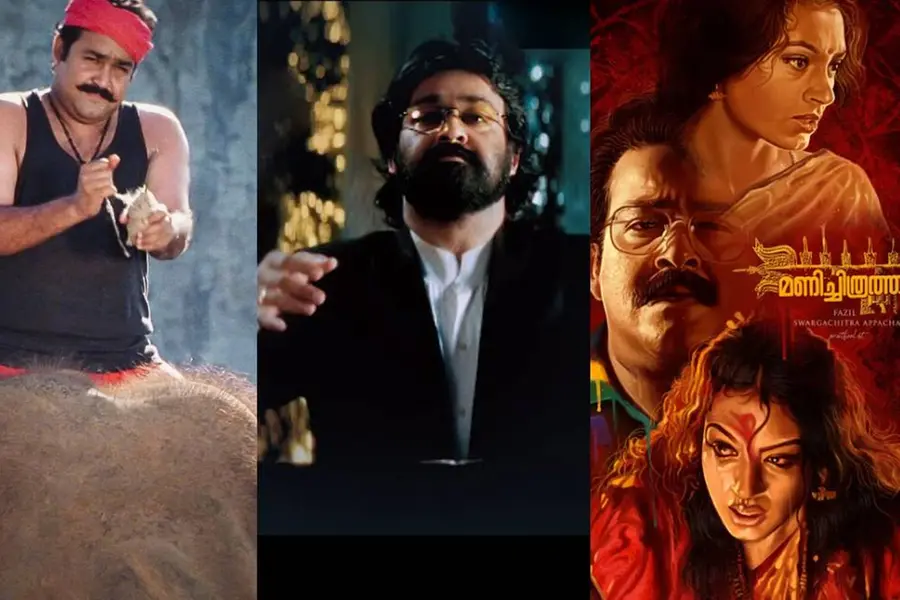
Following the enthusiastic reception of the remastered versions of ‘Devadoothan’ and ‘Spadikam’, movie buffs are eagerly waiting for the release of the 4K remastered ‘Manichitrathazhu’ on August 17. The chance to view classic films in high quality is a thrill for many, but there is a lot of curiosity about what remastering involves and the effort behind it.
Cost and process of remastering
Also Read

Converting an old film into a 4K remastered version typically costs around Rs 4.5 lakh. If the remastered film is intended for theatrical release, costs can rise considerably. For instance, re-releasing ‘Spadikam’ in 2023 reportedly cost around ₹1 crore.
The shift to digital
Malayalam films transitioned entirely from film to digital formats by 2011-2012. Before this shift, after filming and editing, the first copy or negative print was created on film. Positive prints were then made from this negative and used for theatrical showings. These negative prints were typically stored in labs.
In the early days, films were copied onto VHS tapes for TV viewing, but this method lacked clarity. Later, Digibeta cassettes and digital formats improved image quality, though these systems still used standard digital conversion machines. The shift to digital technology allowed for better quality viewing of film images, though it introduced some new challenges.
The four-step remastering process
4K remastering is a detailed and time-consuming process that involves several steps. The entire initial process is carried out in film labs.
Film restoration: The film negative is scanned into a digital format using a high-quality Cintel film scanner. This conversion is done at the highest quality.
Digital cleaning: The digital file is then cleaned up frame-by-frame using several video editing softwares to remove cracks, scratches, and other imperfections. The extent of the work required depends on the quality of the negative received.
Colour correction: Any colour fading or inconsistencies are corrected to ensure uniformity across scenes.
Upscaling and enhancement: The digital file is upscaled and enhanced to maximise image quality. Any necessary graphic changes are made, and sound quality is also improved.
This meticulous process can take months to complete, especially if the film is being prepared for theatrical release. Digital-only remastering, while less intensive, still requires considerable time and effort.
Why remaster old films?
Remastering is not just about enhancing visuals; it also helps preserve films. Film negatives can deteriorate if not stored properly. Reports indicate that 75% of successful Malayalam film negatives are now unusable due to poor storage. Proper temperature regulation and regular inspections are crucial for preserving these films. Many films were reportedly damaged due to disruptions in lab operations during the covid pandemic. Previously, it was common practice to clean, run, and make copies of films. When this process was discontinued, the films began to deteriorate.
By digitising and remastering films, even if the physical prints are lost, high-quality digital versions remain accessible. This ensures that future generations can enjoy classic films in their best possible quality. Remastering also helps those studying and researching cinema to analyse films in greater detail. Leading Malayalam film companies are now actively working to remaster their popular hits to safeguard their cinematic heritage.
Published: 13 Aug 2024, 11:11 am IST
Related Topics
Disclaimer: Kindly avoid objectionable, derogatory, unlawful and lewd comments, while responding to reports. Such comments are punishable under cyber laws. Please keep away from personal attacks. The opinions expressed here are the personal opinions of readers and not that of Mathrubhumi.