
Nana Patekar’s extraordinary dedication emerged as Vishal Bhardwaj revealed he shot an intense O’Romeo action sequence for four hours despite a 102-degree fever and medical advice to stop.
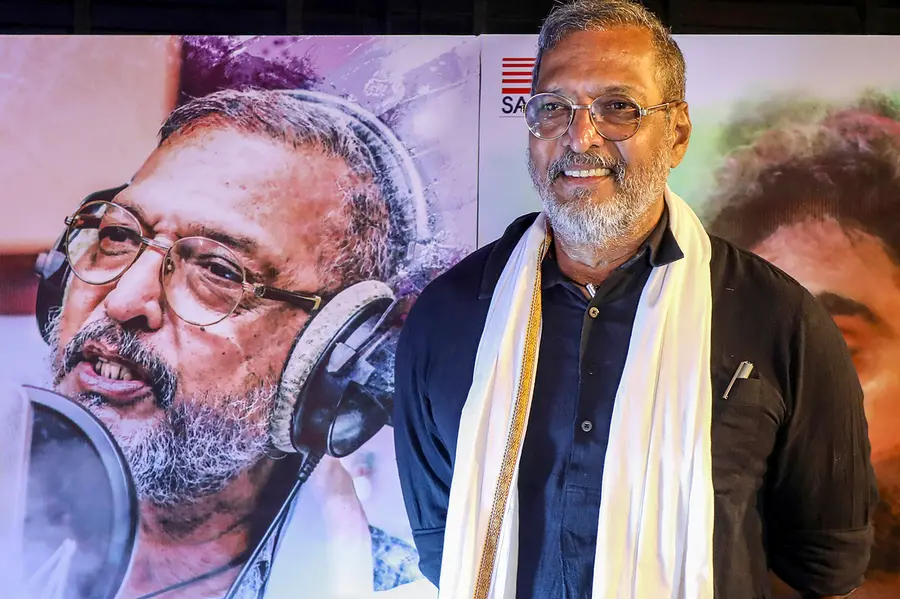
Nana Patekar, one of Indian cinema’s most distinctive actors, died on Thursday at the age of 75 after suffering a severe cardiac arrest at his residence. As tributes pour in for the veteran performer, one recent story about his commitment to acting stands out- an account of how he continued shooting an intense action sequence despite running a 102-degree fever.
The incident took place during the making of O’Romeo, Vishal Bhardwaj’s romantic crime thriller, which was released theatrically on February 13, 2026. In a recent interview, Bhardwaj recalled an extraordinary day on the film’s set, when Patekar refused to stop shooting despite being visibly unwell.
Also Read

Patekar was filming an action sequence on a train set when Bhardwaj learnt that the actor had a temperature of 102 degrees.
A doctor was immediately called to the set. According to Bhardwaj, the doctor was prepared to give Patekar an injection but advised him not to continue shooting.
Patekar refused.
“He said, ‘No, I am not going back. I want to shoot. I want to complete this sequence. I can’t take this on my head ki mere wajah se shooting cancel hui, location cancel ho,’” Bhardwaj recalled.
For the next four hours, Patekar continued shooting.
Also read | Nana Patekar death: Found unconscious at home, 45 minutes of CPR
He would lie down between shots
What made the episode particularly striking was the contrast between Patekar’s condition between takes and the actor audiences eventually saw on screen.
Bhardwaj said Patekar’s body was so hot from the fever that the heat could be felt when someone touched his forehead. Between shots, the exhausted actor would lie down on the train set.
But the moment it was time to perform, he would get up and continue as though the illness had disappeared.
“Between shots, he would lie down on the train set, and when he got up to perform, it felt like jaise bimaari thi hi nahi,” Bhardwaj said, describing the episode as “the commitment of a great artist”.
The anecdote offered an unusually intimate glimpse into the working style of an actor whose performances were often defined by intensity, control and an extraordinary ability to inhabit difficult characters.
It also revealed something about Patekar away from the screen. His refusal to leave the set was not simply about completing an action scene. Bhardwaj’s account suggested that Patekar was deeply concerned about the consequences his absence could have for the production- particularly the possibility of cancelling the shoot and losing the location.
Why do some people push through illness?
The urge to work through illness is often described as “presenteeism” — continuing to work despite being unwell. Research suggests it can be driven by a combination of personal motivation and workplace pressures, including high job demands, stress, job insecurity and strong commitment to work.
A 2016 meta-analysis published in the Journal of Occupational and Organizational Psychology, which examined 109 samples involving more than 175,000 people, found several factors associated with working while ill, including elevated job demands, stress and strong work commitment.
In Patekar’s case, Bhardwaj’s account suggests a particularly strong sense of responsibility. Despite a 102-degree fever and medical advice to stop, he remained determined to complete the sequence rather than let the shoot be cancelled because of him.
Also read | Nana Patekar dies at 75: 7 must-watch films to remember the veteran actor
From Gaman to Krantiveer: A career built on intensity
Born Vishwanath Patekar in Maharashtra on January 1, 1951, Nana Patekar built a career spanning nearly five decades across Hindi and Marathi cinema.
He made his film debut with Gaman in 1978 and gradually established himself as an actor who could command attention without relying on the conventional image of a mainstream leading man.
From the brooding intensity of Ankush and Parinda to the hard-edged performances in Krantiveer and Ab Tak Chhappan, Patekar repeatedly took on characters with psychological and emotional weight. He also showed a very different side of himself in films such as Agni Sakshi, Natsamrat and Welcome.
His performance in Krantiveer earned him the National Film Award for Best Actor. In 2013, he was awarded the Padma Shri for his contribution to the arts.
His work extended beyond Hindi cinema. Patekar remained closely associated with Marathi films and theatre and also appeared in Tamil cinema, including Rajinikanth’s Kaala.
He was also a filmmaker. Patekar directed Prahaar: The Final Attack, in which he also acted and contributed to the screenplay and dialogues.
Published: 08 Oct 2026, 08:49 am IST
ABOUT THE AUTHOR
Related Topics
Disclaimer: Kindly avoid objectionable, derogatory, unlawful and lewd comments, while responding to reports. Such comments are punishable under cyber laws. Please keep away from personal attacks. The opinions expressed here are the personal opinions of readers and not that of Mathrubhumi.