
A look back at how a single directorial project drove Nana Patekar to undertake multi-year military training, earn a commission in the Territorial Army, and serve with an operational unit during the 1999 Kargil conflict.
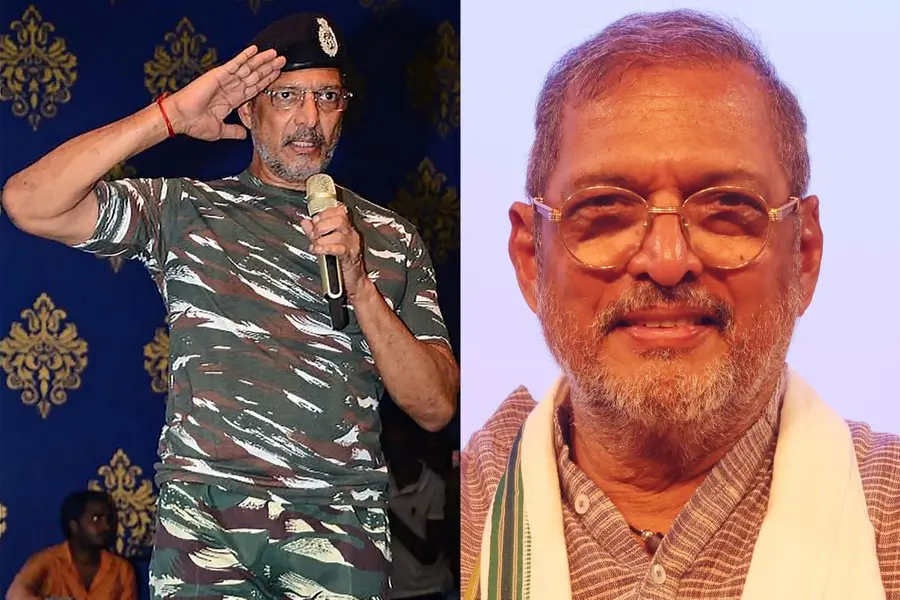
Nana Patekar built an enduring artistic legacy through unyielding discipline and intense commitment. A graduate of Mumbai’s Sir JJ Institute of Applied Art, he honed his craft on the Marathi stage before making his feature film debut in ‘Gaman’ (1978) and earning widespread acclaim in ‘Parinda’ (1989). However, his pursuit of absolute authenticity for a single role altered his life path far beyond the theater.
When preparing to direct and star in his 1991 film ‘Prahaar: The Final Attack’, Patekar rejected cinematic shortcuts. To play an Army commando realistically, he undertook three years of rigorous, practical military training directly alongside the Maratha Light Infantry. That immersion evolved from character preparation into a long-term commitment to tactical training and field service.
In 1990, Patekar formally joined the Indian Territorial Army. His operational training was put to a direct test during the 1999 Kargil conflict. Halting his film career, he secured clearance from then-Defence Minister George Fernandes to deploy to the high-altitude operational zone, serving alongside active troops as part of a Quick Reaction Team.
Patekar maintained a structured association with the armed forces for over two decades, eventually earning the honorary rank of Lieutenant Colonel.
His journey remains a rare example in modern cinema of an actor completely bridging the gap between dramatic portrayal and real-world military service.
His operational training was put to a direct test during the 1999 Kargil conflict. Halting his film career at its peak, Patekar personally contacted then-Defence Minister George Fernandes to secure special clearance to deploy to the high-altitude operational zone. Drawing on his prior three years of military training with the Maratha Light Infantry, he joined active troops in the conflict zone as part of an elite Quick Reaction Team (QRT).
Operating across demanding posts in Srinagar, Dras and Leh, the physical toll of high-altitude tactical duties was severe. Patekar dropped from 76 kilograms to 56 kilograms over the course of his deployment, serving shoulder-to-shoulder with front-line personnel before returning to his artistic career.
Master of the monologue
Long before he ever wore a military uniform, Patekar had already established himself as a dominant force on stage. His craft was forged in the demanding world of Marathi experimental and commercial theatre during the 1970s. Working under strict stage discipline, he developed the razor-sharp dialogue delivery, sudden shifts in cadence and intense facial expressiveness that later became his cinematic trademark.
Unlike conventional leading men of his era, Patekar deliberately avoided cookie-cutter hero tropes. After debuting in Muzaffar Ali’s ‘Gaman’ in 1978, he intentionally chose complex, morally gray characters across both mainstream Hindi cinema and parallel art-house films. His breakout portrayal of the volatile underworld Don Anna Seth in Vidhu Vinod Chopra’s ‘Parinda’ in 1989 redefined the depiction of antagonists in Indian cinema, earning him his first National Film Award.
Throughout the 1990s, he displayed incredible range across deeply demanding roles. He delivered explosive, iconic monologues in ‘Krantiveer’, portrayed complex domestic tension in ‘Agnisakshi’, and offered a poignant, sensitive performance as a speech-and-hearing-impaired father in Sanjay Leela Bhansali’s debut ‘Khamoshi: The Musical’.
His ability to command the screen through raw intensity paired with periods of total silence made him one of the few performers who could single-handedly elevate any narrative. This relentless commitment to realism, demanding complete emotional honesty from every character he took on, was precisely what drove him to reject simulated acting methods when ‘Prahaar’ came along in 1991.
Published: 08 Oct 2026, 08:15 am IST
ABOUT THE AUTHOR

Related Topics
Disclaimer: Kindly avoid objectionable, derogatory, unlawful and lewd comments, while responding to reports. Such comments are punishable under cyber laws. Please keep away from personal attacks. The opinions expressed here are the personal opinions of readers and not that of Mathrubhumi.