
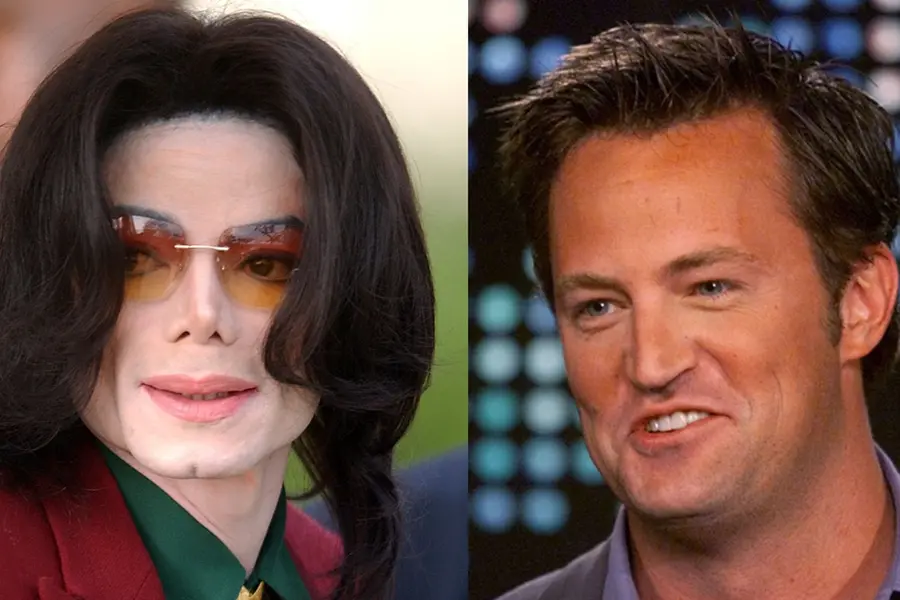
Los Angeles: The recent death of "Friends" actor Matthew Perry has shed light on the troubling relationship between troubled celebrities and the doctors who handle their addiction treatments. Perry, known for his struggles with substance abuse, was found dead in the hot tub of his Los Angeles home last year. High levels of ketamine were detected in his system.
Federal drug officials revealed that Perry, while seeking help for depression, became addicted to ketamine and "turned to unscrupulous doctors" when legal prescriptions were not enough. "Instead of 'do no harm,' they did harm so that they could make more money," Anne Milgram of the Drug Enforcement Administration told a press conference this week.
Also Read

Dr. Salvador Plasencia, who denies the charges, and Dr. Mark Chavez, who has admitted guilt to conspiracy for distributing ketamine, face accusations similar to other high-profile cases.
This situation echoes past incidents, such as Michael Jackson's doctor, Conrad Murray, who was convicted of involuntary manslaughter in 2011 for giving Jackson a fatal dose of anaesthetic. The deaths of celebrities like Elvis Presley, Marilyn Monroe, Prince, and Tom Petty have also been linked to drugs provided by medical professionals.
"The rules go out the window with famous people, and it constantly leads to tragedy," said Harry Nelson, a prominent Los Angeles-based healthcare attorney. "It's crazy."
Plasencia is alleged to have sold vials worth $12 for up to $2,000 to Perry, even messaging Chavez "I wonder how much this moron will pay... Lets [sic] find out."
But Nelson, who has been personally involved in more than a dozen "front-page, headline-news tragedies" involving famous actors, rock stars and athletes, said the full picture is often more complicated.
The allure of fame can lead doctors to exploit celebrities, who often seek privacy and quick access to prescriptions away from public scrutiny. This secrecy, combined with the excitement of dealing with high-profile clients, can result in dangerous practices.
In order to "stay in the good graces of that person and continue to have this privileged role," doctors can end up rationalising: "I'm gonna do what that person wants, even if it's against better judgement," said Nelson.
"But it's a trap. It's a trap for both the celebrity patient, and for the doctor," he added.
Ketamine, originally popularised as a party drug in the 1990s for its hallucinatory effects, is now used for treating depression and PTSD. However, its misuse remains a concern. During the mid-2000s, "ketamine parties" held at private homes around Los Angeles were frequently attended by major stars, according to Nelson.
"You had a handful of doctors around Los Angeles who facilitated these, literally, parties, where everybody would be doing infusions of ketamine in a celebrity home, in Malibu, on the beach," he said.
The medical board has responded by disciplining doctors who abuse their prescribing powers.
Southern California is known for its private rehab centres offering discreet treatment for celebrities, but these services often come at high costs. In Perry's case, Chavez previously ran a ketamine clinic, but the drug's serious side effects, including unconsciousness and breathing issues, require careful medical supervision.
Plasencia is accused of illegally supplying ketamine to Perry's assistant, including a midnight cash exchange for $6,000 shortly before Perry's death.
"The idea that someone would be allowed to just take it at home and get in the hot tub while on this drug is criminal, it's irresponsible," said Nelson.
"The doctors who did this undoubtedly felt that they could take some liberties, because they were dealing with a famous person who had a need for greater privacy."
Agencies
Published: 17 Aug 2024, 03:01 pm IST
Related Topics
Disclaimer: Kindly avoid objectionable, derogatory, unlawful and lewd comments, while responding to reports. Such comments are punishable under cyber laws. Please keep away from personal attacks. The opinions expressed here are the personal opinions of readers and not that of Mathrubhumi.