
The Prime Minister also stressed the need for government officials to look beyond immediate issues and statistics and adopt a long-term perspective while planning for the country's future.
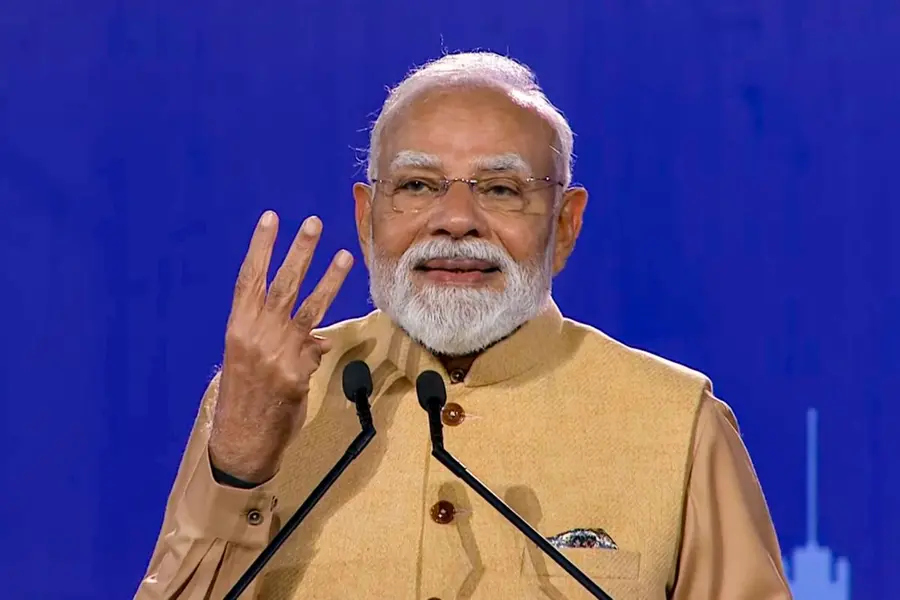
Prime Minister Narendra Modi has called for closer engagement between government departments, universities and young people, stressing the need to bring fresh perspectives into policymaking.
The emphasis on youth engagement comes amid a wider political push by the BJP to strengthen its connect with Gen Z voters, particularly after student protests over irregularities in competitive examinations.
Chairing the third high-level meeting with secretaries on Thursday, Modi said greater interaction between government departments, universities and the youth could generate new and unconventional ideas.
"The Prime Minister called for greater engagement between government departments, universities and young people to bring fresh perspectives in policymaking," a statement from the Prime Minister's Office said.
The Prime Minister also stressed the need for government officials to look beyond immediate issues and statistics and adopt a long-term perspective while planning for the country's future.
He cited the experience of the COVID-19 pandemic and the West Asia crisis to underline the importance of departments working together rather than operating in silos.
"Silos are not merely an organisational problem but also a problem of mindset," Modi said, calling on officials to take greater ownership of their responsibilities.
Outreach comes after student protests
Modi's remarks come against the backdrop of student protests over the NEET paper leak and other examination-related concerns.
The protests, including demonstrations at Jantar Mantar in Delhi, had put the Union government under pressure over the handling of the examination controversy. Education Minister Dharmendra Pradhan subsequently resigned from the post.
Modi had also reached out to students through social media following the protests.
Against that backdrop, the Prime Minister's renewed emphasis on universities and young people gives greater prominence to youth participation in the government's policymaking process.
The BJP, meanwhile, has been working on a broader strategy to reconnect with Gen Z voters. The party is increasingly looking towards digital platforms and targeted communication rather than relying only on conventional political outreach.
Focus on technology, research and jobs
At Thursday's meeting, Modi also discussed the future action agenda of ministries and departments covering infrastructure and connectivity, security and external affairs.
He called for more effective use of data and artificial intelligence, while stressing that human intervention and judgement must remain part of the process.
Modi described data as a national asset and called for greater interoperability in the way data is collected and managed for different purposes.
He also sought greater focus on research and innovation, including in the defence sector, with the aim of making India more competitive globally.
The BJP's youth outreach has similarly included a greater focus on employment and education-related initiatives in states where it is in power, alongside digital content aimed at addressing issues relevant to young voters.
Modi pushes integrated approach to development
The Prime Minister also discussed strengthening India's maritime sector and reviewed whether the decision to accord infrastructure status to shipbuilding was delivering its intended objectives.
He reiterated the need to move from port development to port-led development, while calling for stronger connectivity between manufacturing facilities and export-oriented units.
Modi further urged senior officers to develop closer informal engagement with junior colleagues and build stronger networks across government departments and cadres.
The secretaries shared their views on sectoral priorities, emerging challenges and implementation issues during the meeting.
The government's renewed focus on engaging young people comes as both the Prime Minister and the BJP seek to present a more direct channel for youth participation, at a time when student dissatisfaction has become a visible political issue.
Published: 20 Aug 2026, 11:33 pm IST
Related Topics
Disclaimer: Kindly avoid objectionable, derogatory, unlawful and lewd comments, while responding to reports. Such comments are punishable under cyber laws. Please keep away from personal attacks. The opinions expressed here are the personal opinions of readers and not that of Mathrubhumi.
