
P Stanley, the silent force behind ‘Thoovanathumbikal’ and Kollam’s revolutionary spirit, passes away quietly, leaving a legacy in print, politics and cinema.
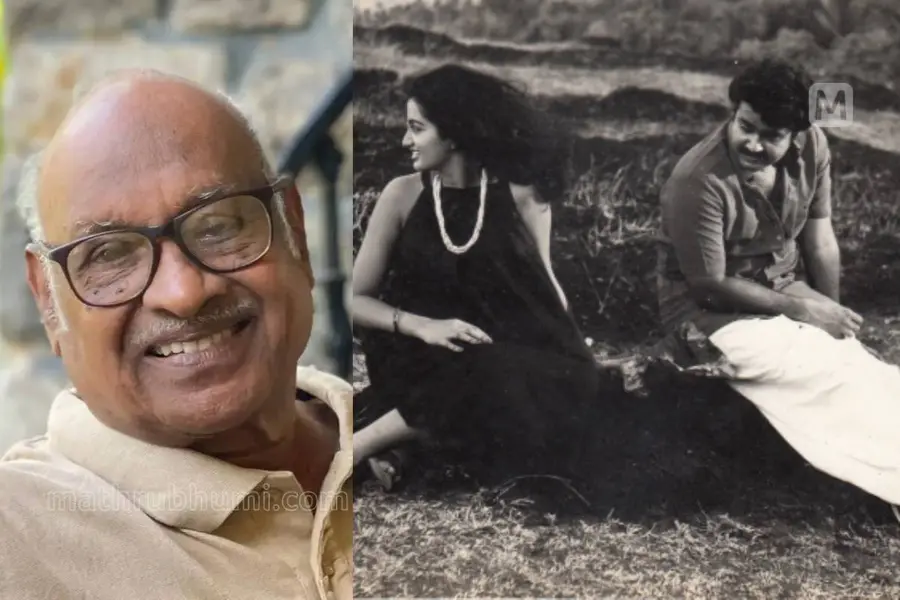
Thiruvananthapuram: P Stanley, the unassuming writer, film producer and printer who quietly shaped Kerala’s political and cultural landscape from Kollam to the capital, passed away on Thursday. Though widely unknown to the younger generation today, Stanley leaves behind a deeply rooted legacy that traverses the golden era of Malayalam cinema, Communist activism and revolutionary publishing.
Many may celebrate ‘Thoovanathumbikal’’, the iconic film by Padmarajan, without ever knowing that its producer was a son of Kollam — P Stanley. But Kollam knew this young man very well. Today, few of those contemporaries remain, yet Stanley’s memory flickers on, like the quiet glow of a fading projector.
In his memoir, ‘Ormmayude Vellithira’ (The Silver Screen of Memory), Stanley recalls a poignant moment, "It was about S K Nair’s last party. During the gathering, S K said — ‘There won’t be a get together again.’ That night, when I returned home, his nephew called me... Uncle can’t go on. He’s terribly weak. We have to take him to the Medical College. The bandh has started. The police are trying to arrange an ambulance. It was midnight, and Kerala's first-ever bandh had just begun."
Veteran journalist and writer P K Srinivasan fondly remembers, “Because of Stanley’s close friendship with S K Nair, I used to jokingly call him Stanley Nair. Whenever I called him on the phone, he would answer, ‘Stanley Nair speaking’, but only to me.”
Stanley began Sithara Printers in Kollam in 1965, after returning from Madras with training in modern printing technologies. That press became a hub of innovation — introducing then-new techniques like cutting and pasting, typesetting and layout design. After the death of his wife Salamma, Stanley turned entirely to writing. He published around nine books — including novels, short stories and memoirs. In 1990, he moved from Kollam to Thiruvananthapuram following a heart surgery, and he continued to write from his residence in Nalanchira.
Memories of a revolution
“My parents and relatives were all Communist sympathisers. We never read the Communist manifesto, but it was the play ‘Ningal Enne Communist aakki’ that turned us into Communists. Thoppil Bhasi was our Karl Marx,” Stanley wrote.
“From our house, which also served as a party office, I used to carry reports to the Janayugam office. I’d watch in awe as editors like Kambisseri and Thengamam edited the material.”
He credited the Janayugam newspaper of Kollam and its journalists with nurturing his early literary and artistic instincts. Kollam was also the birthplace of Navabharatham, founded by freedom fighter A K Bhaskar. His son, B R P Bhaskar, later became a renowned journalist. Stanley was a frequent visitor to both their office and home.
Writer G R Indugopan shares, “One year, I chose ‘Ormmayude Vellithira’ as my favourite book. Perhaps that’s why Stanley entrusted me with writing the foreword to his latest memoir, ‘Aayussinte Adikkurippukal’ (footnotes of a life). It is heartbreaking to be writing this tribute now, even before the printing ink on his final manuscript has dried. His memories mark an era. His life will live on — in letters.”
The silent hero of Thyagabhavanam
Born into a politically active Communist family in Kollam, Stanley's journey took him to Chennai for studies, where his future path intertwined with cinema. With encouragement from M N Govindan Nair, he pursued studies in Chennai. His association with legendary figures like A Vincent and Thoppil Bhasi cemented his footing in the film industry.
His long-standing friendship with filmmaker P Padmarajan led to the production of ‘Thuvanathumbikal’. Stanley also maintained close ties with leading actors and technicians of the era — including Prem Nazir and Adoor Bhasi.
Back in Kollam, he founded the Sithara printing press, which ran for 15 years. When the press eventually closed, Stanley paid the workers their due wages by selling his own house. That was the kind of man he was.
He also collaborated with Malayalanadu, a weekly magazine started by S K Nair. Their shared love of cinema brought them together. With V B C Nair as editor, Stanley launched a magazine titled Vaanampadi from Kollam.
Later in life, he moved to Thiruvananthapuram after a major heart surgery in 1990. The death of his wife Salamma was a huge personal loss. According to Nooranad Mohan, editor of Unma Little Magazine which published Stanley’s books, “He left this world quietly — with no desire for fame, power, or recognition.”
Stanley once lived at Thyagabhavanam, the residence of S Polycarp — a Communist leader and coir industry pioneer — which served as a safe haven for prominent leaders during politically turbulent times. Leaders like C Achutha Menon, M N Govindan Nair, P K Vasudevan Nair, P T Punnose, K R Gowri Amma and N E Balaram all stayed there during their Kollam visits.
Today, P Stanley’s passing marks not just the loss of a writer and producer — but the end of an era. He was a silent torchbearer of Kerala’s revolutionary, literary and cinematic heritage — a name quietly etched in the footnotes of its cultural history.
Published: 10 Oct 2025, 10:28 am IST
Disclaimer: Kindly avoid objectionable, derogatory, unlawful and lewd comments, while responding to reports. Such comments are punishable under cyber laws. Please keep away from personal attacks. The opinions expressed here are the personal opinions of readers and not that of Mathrubhumi.
