
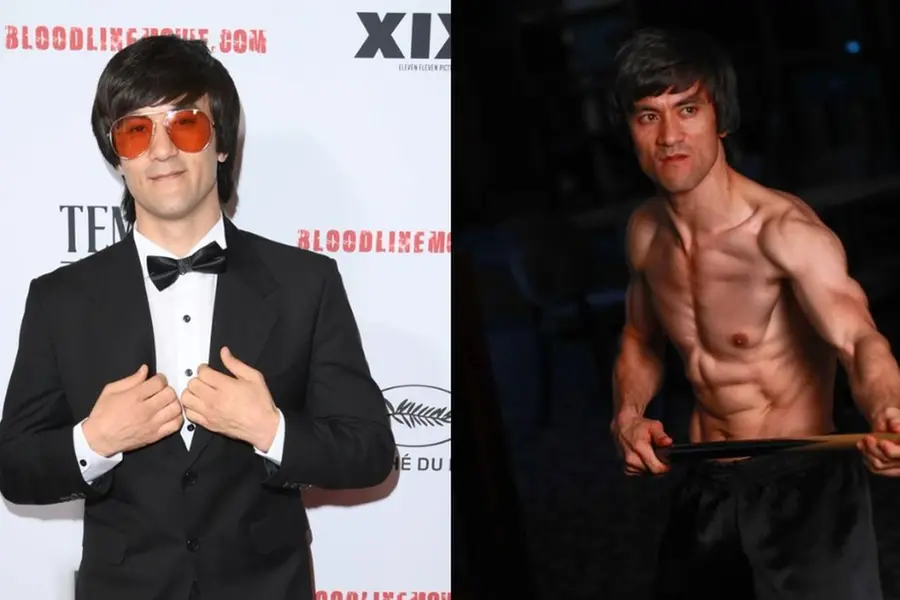
Abbas Alizada, widely known as the ‘Afghan Bruce Lee,’ has captured global attention for his striking resemblance to the martial arts legend. His journey from Afghanistan to the big screen has been remarkable, culminating in his role in the Indo-British action thriller ‘Bloodline’.
The film follows Bella, a police officer from Sydney, who travels to Kerala in search of her missing sister, uncovering a dark family secret along the way. Abbas plays Lee, a martial artist caught between loyalty to his master and a sense of justice.

In this exclusive interview with Mathrubhumi, Abbas shares insights into his martial arts journey, his Kerala experience, and his thoughts on the current situation in Afghanistan.
Can you share a particular moment or memory from your early life that influenced your journey as a martial artist?
Starting martial arts is challenging. It is a tough journey, and becoming a martial artist is not easy. You endure a lot of pain during training and often injure yourself while fighting or practicing. It is painful but also very enjoyable.
Growing up in Afghanistan, how did you first encounter Bruce Lee's films, and what sparked your interest in martial arts?
I began training in martial arts at the age of 12 after watching Bruce Lee’s ‘Enter the Dragon’ at the age of 8. The film left a deep impression on me. Even at home, I started attempting flips and stretching before I started my official training in martial arts.
Can you share the story of how you came to be involved in the movie Bloodline?
I connected with the producer of ‘Bloodline’ through social media. They offered me a supporting role, which I accepted. That led me to India for the film. The experience was exciting but also demanding. It was very tough for me—being an actor is not easy as you have to struggle with a lot of things.
How was your experience shooting in Kerala?
It was my first time in Kerala, though I had been to Mumbai and Delhi before. Kerala felt completely different. The language, tradition and culture were different. The people were welcoming, and I appreciated their kindness.
It felt a bit strange to me, but it was a good journey. I met wonderful people, and I especially appreciated the hospitality of the Indian people. They are incredibly kind, and I loved their warmth and welcoming nature.
How would you describe your overall experience filming in Kerala, and were there any experiences off-set that left a lasting impression on you?
I have many behind-the-scenes memories, especially from the fight sequences involving swords which were intense. During one of the scenes, I was accidentally injured with a sword, and I can still feel the pain from that moment.
How was your experience with Kalari? Was it a new challenge for you?
I had never encountered Kalari before. I never knew about it. It was a completely new martial art for me. Learning it was difficult because it is different from other styles, but it was a valuable experience.
Apart from Bloodline, what other projects do you have in the pipeline that you're excited about?
I am currently working on a project in the UK, but details are confidential.
You have established yourself as a martial artist. Are there any other genres or roles you’d like to explore in acting?
No. I just want to stick to action only. Nevertheless, Acting is not limited to action. If you want to be an actor, you must be open to all genres. I enjoy performing in front of the camera, regardless of the role.
What advice would you give to young people entering martial arts?
If you have a goal, keep working toward it. Keep following your dreams and never give up. Success requires dedication and persistence. No matter how far the goal seems, continuous effort will lead to achievement.
Can you reflect on the current situation in Afghanistan? Can others aspire to achieve what you have?
The situation in Afghanistan is difficult. Opportunities for the younger generation are limited. Martial arts gyms have been shut down, and schools for girls are closed. People in Afghanistan are hard-working, but current conditions make it challenging to pursue dreams.
Published: 12 Feb 2025, 03:00 pm IST
ABOUT THE AUTHOR
Related Topics
Disclaimer: Kindly avoid objectionable, derogatory, unlawful and lewd comments, while responding to reports. Such comments are punishable under cyber laws. Please keep away from personal attacks. The opinions expressed here are the personal opinions of readers and not that of Mathrubhumi.