
Veteran actor Pavan Malhotra reflects on his journey, from ‘Salim Langda’ to ‘Court Kachehri’, revealing why he never stops learning with every role.
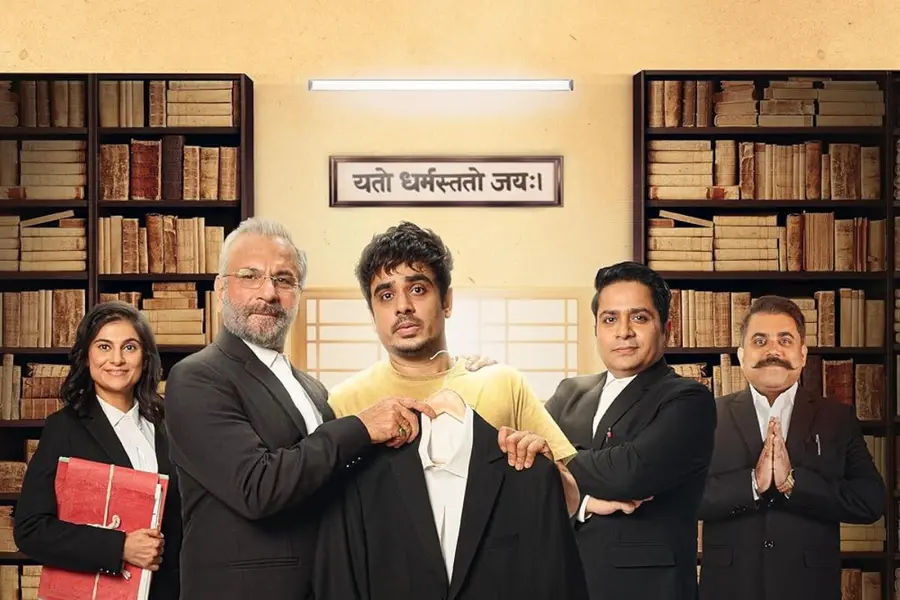
Few actors in Indian cinema embody versatility the way Pavan Malhotra does. From his unforgettable turn as ‘Salim Langda in Salim Langde Pe Mat Ro’ to his powerful performances in ‘Black Friday’, ‘Tabbar’, ‘Bhaag Milkha Bhaag’ and ‘Grahan’, among many others, Malhotra has consistently delivered layered, nuanced characters that resonate with honesty.
Now seen in Sony LIV’s latest legal drama ‘Court Kachehri’, produced by TVF, he sits down for an exclusive conversation with Mathrubhumi English to discuss his new role, his craft and the journey of constantly reinventing himself.
What were the elements that actually drew you to the series? And how is it different from other legal dramas and comedies that already exist?
To begin with—TVF. When they approached me, I didn’t know their entire body of work, but when they mentioned that they had produced ‘Panchayat’ and ‘Gullak’, I immediately felt assured. I had seen parts of those shows and found them clean, heartfelt, entertaining and full of strong performances.
Then came the story, written by Puneet Batra. I really liked it—it wasn’t just about courtroom drama, but also about lawyers’ lives, their internal politics, elections, equations with the police, insecurities and even the struggle of waiting years for a single case. Within all of this, there’s also a very touching father-son story.
The father is a successful lawyer who wants his son to pursue law, like doctors expecting their children to continue the practice or film families encouraging their kids to join the industry. Parents aren’t trying to restrict; they want to keep you secure. They are your safety net, the wind beneath your wings.
I’ve lived that in my own life. When I came to Bombay (now Mumbai) to act, my father was worried. He thought, “There is no work here. Why not stay with the family business in machine tools?” He even made me sweep the office once, just to keep my ego in check. At the time, I didn’t understand, but later I realised he was toughening me up. He always told me, “Never borrow money. Work hard.”
That grounding stayed with me. Slowly, through theatre and films—and with destiny and karma—things started happening. National awards, international recognition and good projects. But I believe you must enjoy your profession, respect it and put in sincerity. Our work deals with human emotions and even if you give your 100%, it never feels enough. That’s what keeps it so interesting.
In your career, you have consistently humanised men with conflicts—whether in ‘Salim Langde Pe Mat Ro’, ‘Tabbar’ or ‘Grahan’. Despite the conflicts being similar, you have never been stereotyped. How do you ensure that?
Conflicts may look similar on the surface, but they’re never the same. Situations differ, surroundings differ, perspectives differ. For instance, ‘Salim Langda’, ‘Black Friday’ and ‘Bhindi Bazaar’ are all underworld stories, yet the characters are worlds apart. The same is true for ‘Tabbar’, ‘Grahan’ and now this lawyer character.
I usually begin with a rough sketch from the director’s brief and the writer’s words. Sometimes a line of dialogue itself hints at the character’s nature. Maybe someone appears loud, but somewhere inside there’s softness—that’s what I try to bring out. Acting isn’t just about speaking lines; it’s about reacting. The eyes, the pauses, the silences—these reveal the inner truth.
Every new project comes with nervousness: Am I understanding the character right? Can I deliver? Will I be able to translate what the director and I imagine onto the screen? That nervousness excites me.
Do you bring gestures or traits from real life into your characters?
Always. In ‘Road to Sangam’, I used a gesture I had seen in someone in my father’s office—he would have pursed lips when saying something he thought profound. I remembered it while reading the script and added it in.
Growing up in Delhi, especially Old Delhi, I met people with unique speech patterns and mannerisms and they’ve all stayed with me. I love talking to strangers—fruit sellers, taxi drivers, anyone. Observing people is a constant exercise, and it always feeds into my work.
Do you get emotionally attached to your films? Or do you let go once the project is over?
Of course, I get attached. I want the whole world to watch the work I’ve done. If a film doesn’t get the reception it deserves, it hurts. I don’t just take the money and forget about it.
For example, I did television at a time when it paid well, but later I stopped because I realised I wanted to enjoy my work, not just earn. Many films I’ve done had modest budgets but were made with great sincerity. Everyone wants a comfortable life, but endless hunger for money is meaningless.
That said, once a project is done, you move on. You carry the learning with you, not the baggage.
Some actors say they need counselling after intense roles. Do you also carry your characters like that?
Not really. I get completely involved during the process, but once the camera cuts, I can move on. In ‘Punjab 1984’, I played a hardcore villain and won awards. Just two weeks later, I played the opposite kind of role in another Punjabi film, and that too was appreciated.
Cinema is also about craft. You may shoot an emotional scene in fragments over days, from multiple angles. You need to balance craft with emotion—understand with your mind, perform with your heart. That balance helps you detach when the work is over.
Your early films like ‘Bagh Bahadur’, ‘Antardwand’ and ‘Black Friday’ explored India’s socio-political reality with honesty. Do you think Indian cinema still has that space today?
It depends on the filmmaker. Take ‘The Kashmir Files’—it was made and many people watched it. Some dismissed it as false, but that either comes from ignorance or denial. Films can come from different perspectives—some show terrorists as victims, some push an agenda, some just tell stories.
No one is stopping anyone. ‘Article 15’ was an important film on caste. Recently, we’ve had ‘Article 370’ and ‘Veer Savarkar’. Honest films continue to be made—it all depends on the storyteller’s intent.
Of course, as actors, we’re always striving. You can never get it 100% right. Even after shooting a scene, I sometimes keep thinking for days, “Maybe I should have delivered that line differently.” But that’s the beauty of it—acting is a lifelong process of learning. No one can teach you everything. They can give you the basics, like martial arts training, but the courage to fight has to come from within.
If somebody were to watch your work and learn from it, which is the one film you would recommend they watch to learn from a character you’ve played—and why?
It’s never about one character—it’s always about the body of work. No role is better or worse than another. What matters is that an actor keeps trying new things.
When you experiment, you make mistakes and that’s fine. Like I say, if a chef makes the same dish every day, he won’t make mistakes. But the chef who experiments will have ups and downs. An artist has the right to failure.
Learning comes from understanding a character through the script, the dialogues, the reactions and the way a person changes in different situations. For example, ‘Salim Langda’ and ‘Black Friday’ both deal with the underworld, but the body language, energy and psyche of the two characters are completely different. Similarly, ‘Grahan’, ‘Tabbar’ and ‘Jab We Met’—though all three have me as a Sikh character—demanded different behaviours. Just a turban and beard don’t make them the same.
Take that scene in ‘Black Friday’ where my character threatens 50 people if they leak about his plan to anyone, and then suddenly lightens the mood by suggesting they should all eat biryani together. Or when he vows to burn Mumbai but later rages helplessly when his own office is destroyed. Those contrasts, those shifts—that’s what makes characters real.
Every film, every role is like opening a new shop or digging a new well. And every well has different water. That’s what keeps this profession so exciting.
Published: 23 Aug 2025, 05:40 pm IST
Disclaimer: Kindly avoid objectionable, derogatory, unlawful and lewd comments, while responding to reports. Such comments are punishable under cyber laws. Please keep away from personal attacks. The opinions expressed here are the personal opinions of readers and not that of Mathrubhumi.
