
From breast lumps and nipple changes to skin abnormalities and treatment options, understanding symptoms early can make a major difference in outcomes
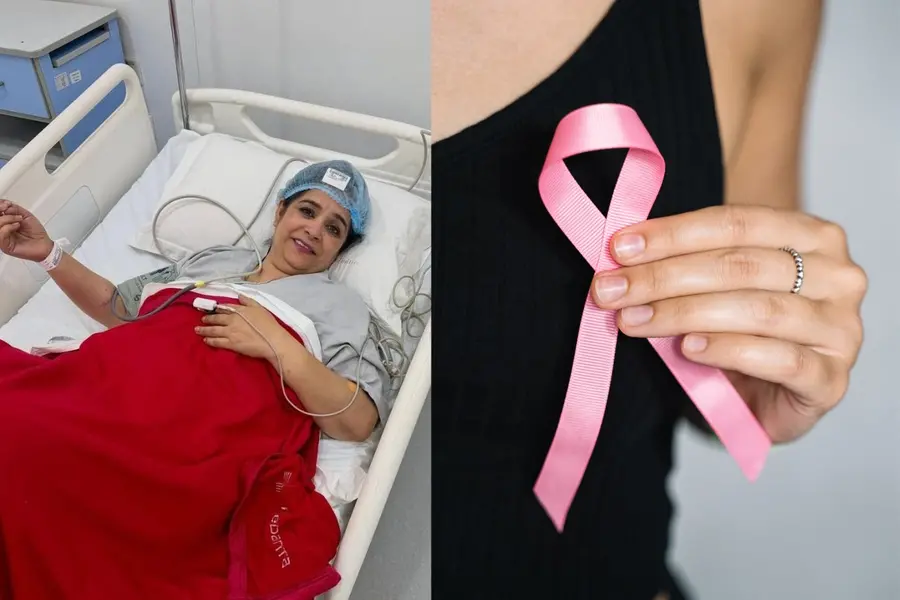
Celebrity chef and television personality Pankaj Bhadouria has revealed that she has been diagnosed with breast cancer, sharing a hospital-bed photograph on social media as she begins treatment.
Actors such as Hina Khan, Sonali Bendre and Chhavi Mittal have also used their personal experiences to highlight the importance of recognising symptoms early and seeking timely medical care.
Breast cancer is one of the most common cancers affecting women worldwide, yet many cases are still detected late because early warning signs are often ignored, misunderstood or mistaken for harmless changes.
Doctors say awareness remains one of the strongest tools in improving survival rates. While not every lump or breast change means cancer, recognising unusual symptoms early and seeking medical attention promptly can make a major difference in treatment outcomes.
Importantly, breast cancer does not affect only older women. Although risk increases with age, younger women can also develop the disease. In rare cases, men can develop breast cancer too.
What exactly is breast cancer?
Breast cancer develops when cells in the breast begin growing abnormally and uncontrollably. Over time, these abnormal cells can form a lump or tumour and may spread to nearby lymph nodes or other parts of the body if left untreated.
The disease can begin in different parts of the breast, including the milk ducts, lobules or surrounding tissues.
Doctors stress that breast cancer is not a single disease. There are different types, stages and hormone-related variations, which is why treatment differs from person to person.
The most common early sign: A breast lump
One of the earliest and most recognised symptoms is a lump in the breast or underarm area.
However, not every lump is cancerous. Some lumps may be harmless cysts or non-cancerous growths. Still, doctors advise that any new lump should always be checked.
Cancer-related lumps are often:
- hard or firm
- irregular in shape
- painless in many cases
- fixed in place rather than movable
But symptoms can vary widely, which is why self-diagnosis is risky.
Other breast cancer symptoms people often ignore
Many people wrongly assume breast cancer always begins with a lump. In reality, several subtle symptoms may appear much earlier.
Changes in breast size, shape or appearance can sometimes be an early warning sign. Some women notice swelling in part of the breast, unusual heaviness or visible asymmetry.
Skin changes are another important symptom. The breast skin may appear red, thickened, flaky or dimpled, sometimes resembling the texture of an orange peel.
Nipple-related changes should also never be ignored. This may include:
- sudden nipple inversion
- nipple pain
- unusual discharge, especially blood-stained discharge
- crusting or peeling around the nipple
Some women may experience persistent breast pain, although breast cancer is not always painful.
Swelling or lumps near the collarbone or underarm area may also indicate enlarged lymph nodes.
Why regular self-checks matter
Doctors encourage women to become familiar with the normal appearance and feel of their breasts.
This does not mean obsessively checking for disease, but rather noticing unusual or persistent changes.
Breast self-awareness can help women recognise symptoms earlier, especially changes that gradually develop over time.
Experts usually recommend checking the breasts once a month, ideally a few days after the menstrual cycle ends, when hormonal swelling is lower.
When should someone see a doctor?
Any persistent or unusual breast change should be medically evaluated, even if it seems minor.
Doctors recommend consulting a healthcare professional if symptoms last beyond a few weeks or if a lump, nipple change, swelling or skin abnormality appears suddenly.
Early diagnosis greatly improves treatment success.
Who is at higher risk of breast cancer?
Breast cancer can affect anyone, but certain factors may increase risk.
These include:
- increasing age
- family history of breast or ovarian cancer
- inherited genetic mutations such as BRCA1 and BRCA2
- obesity
- alcohol consumption
- smoking
- hormonal factors
- lack of physical activity
Women who began menstruating early, entered menopause later or used long-term hormone therapy may also face slightly increased risk.
However, many women diagnosed with breast cancer may not have obvious risk factors at all.
How breast cancer is diagnosed
If doctors suspect breast cancer, several tests may be recommended.
A clinical breast examination is usually the first step. Imaging tests such as mammograms, ultrasounds or MRI scans may then be used to examine suspicious areas more closely.
The final confirmation usually comes through a biopsy, where a small tissue sample is removed and tested in a laboratory.
Doctors may also perform hormone receptor testing and staging investigations to understand how aggressive the cancer is and whether it has spread.
Understanding breast cancer stages
Breast cancer is generally classified into stages from 0 to 4.
Early-stage cancers are usually confined to the breast and are often highly treatable. Advanced stages indicate spread to lymph nodes or distant organs.
The stage helps doctors decide the most suitable treatment approach.
Breast cancer treatment options
Treatment depends on multiple factors including the cancer type, stage, hormone status, overall health and age of the patient.
Most patients require a combination of treatments rather than a single approach.
Surgery
Surgery is one of the most common treatments.
Some patients undergo lumpectomy, where only the tumour and nearby tissue are removed. Others may require mastectomy, which involves removal of the breast.
In some cases, lymph nodes are also removed for testing.
Chemotherapy
Chemotherapy uses powerful drugs to destroy cancer cells.
It may be given before surgery to shrink tumours or after surgery to reduce recurrence risk.
Common side effects may include hair loss, nausea, fatigue and lowered immunity, although supportive medications have improved symptom management significantly.
Radiation therapy
Radiation therapy uses high-energy rays to target and destroy remaining cancer cells after surgery.
It is commonly recommended after breast-conserving surgery and sometimes after mastectomy depending on cancer spread.
Hormone therapy
Some breast cancers grow in response to hormones such as oestrogen or progesterone.
Hormone-blocking medications may help slow or prevent cancer growth in these cases.
Treatment may continue for several years depending on the risk of recurrence.
Targeted therapy and immunotherapy
Modern breast cancer treatment has evolved rapidly in recent years.
Targeted therapies focus on specific proteins or genetic features within cancer cells. Immunotherapy helps the body’s immune system recognise and attack cancer more effectively.
These treatments are especially useful in certain aggressive or advanced breast cancer types.
Can breast cancer be cured?
Many breast cancers are highly treatable, especially when detected early.
Survival rates have improved significantly because of better awareness, earlier diagnosis and advances in treatment.
Doctors emphasise that early-stage breast cancer often has excellent outcomes.
Even advanced breast cancer can sometimes be controlled for long periods with modern therapies.
Life after breast cancer treatment
Recovery does not end after treatment finishes.
Many survivors experience emotional stress, anxiety, fatigue, body image concerns or fear of recurrence.
Support from family, counselling, survivor groups and rehabilitation programmes can play an important role in long-term recovery and quality of life.
Healthy lifestyle habits such as regular exercise, balanced nutrition, limiting alcohol and avoiding smoking may also support overall wellbeing after treatment.
Why awareness still matters
Despite growing awareness campaigns, many women still delay seeking medical help because of fear, stigma or lack of information.
Doctors say breast cancer should not be viewed with shame or silence. Recognising symptoms early and getting timely screening can save lives.
Paying attention to changes in the body, attending recommended screenings and encouraging open conversations around breast health remain some of the most effective ways to improve outcomes.
Published: 28 May 2026, 05:44 pm IST
Related Topics
Disclaimer: Kindly avoid objectionable, derogatory, unlawful and lewd comments, while responding to reports. Such comments are punishable under cyber laws. Please keep away from personal attacks. The opinions expressed here are the personal opinions of readers and not that of Mathrubhumi.
