
If your recorded voice has ever made you ask, 'Is that really me?', you're not alone. Here's the science behind one of the most common everyday mysteries.
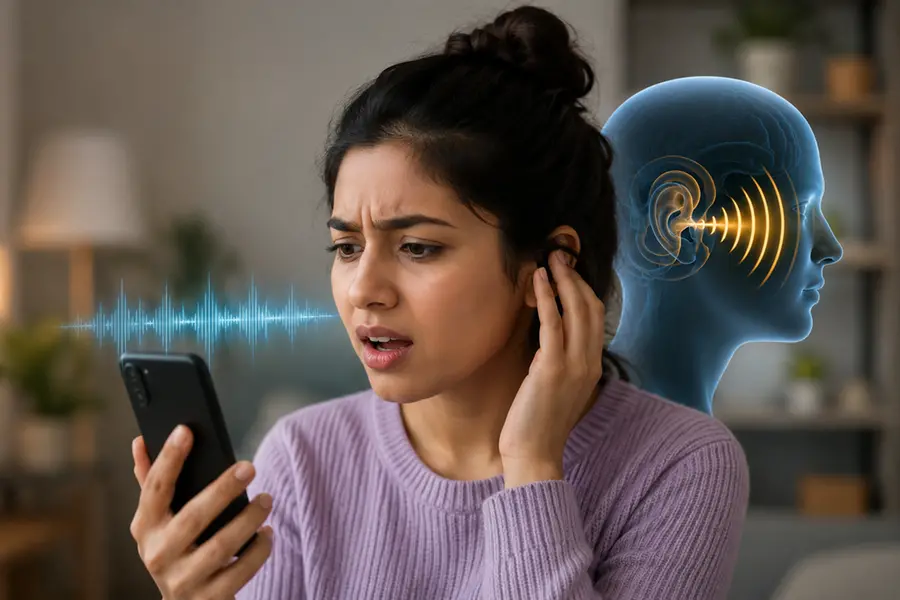
Have you ever played back a voice note and wondered, “Do I really sound like that?” For many people, hearing their own voice in a recording can feel surprisingly unfamiliar, sometimes deeper, thinner, or completely different from the voice they hear while speaking.
The reaction is so common that it has become a familiar internet joke: people often dislike the sound of their recorded voice, even though it is the same voice others hear every day. But the reason lies not in the recording device or a sudden change in vocal tone. It comes down to the way humans hear themselves.
While speaking, people hear their voices through a combination of sound travelling through the air and vibrations conducted through the bones and tissues inside the head. A recording, however, captures only the sound waves travelling through the air, removing the internal vibrations that usually shape how a person perceives their own voice.
The hidden pathway that changes how we hear ourselves
When a person talks, the sound created by the vocal cords travels outward through the air and reaches the ears. This is called air conduction. At the same time, vibrations from the vocal cords and surrounding structures move through the skull, reaching the inner ear through bone conduction.
According to the American Speech-Language-Hearing Association (ASHA), sound reaches the inner ear through both air and bone pathways, and bone conduction can make a person perceive their own voice differently from how others hear it.
The combination gives a person’s voice a fuller and often lower quality when they hear themselves while speaking. Once the voice is recorded, only the air-conducted sound remains, which can make the voice appear higher or less familiar.
The ASHA explains that bone conduction transmits sound vibrations directly through the bones of the skull to the inner ear, allowing people to perceive their own voices differently from how others hear them.
Why recordings often sound higher
The human brain is constantly interpreting sounds based on previous experiences. Since people usually hear their own voices internally throughout their lives, the recorded version can feel almost like hearing a stranger.
Research published in the journal Perception has explored this phenomenon, showing that people often struggle to recognise their own voices when hearing recordings because their usual internal sound experience is missing.
The difference is not because microphones distort voices in a major way. Instead, the recording presents a version closer to what other people hear during everyday conversations.
Audio engineer and vocal experts have also pointed out that factors such as microphone quality, recording distance, room acoustics and audio processing can influence how a voice sounds. A phone microphone, for example, may capture certain frequencies differently compared with a professional recording setup.
The brain plays a role in the ‘strange voice’ reaction
The discomfort people feel when listening to their recorded voice is linked to a mismatch between expectation and reality.
Neuroscientists say the brain builds a personal “sound identity” based on years of hearing one’s own voice through internal and external pathways. When a recording removes the bone-conducted component, the brain receives information that does not match its stored version.
A study by researchers at the University of California, San Diego, published in Current Biology, examined how people respond to hearing their own voices and found that self-recognition involves complex processing rather than simply identifying a familiar sound.
Can people learn to like their recorded voice?
Experts say repeated exposure can reduce the surprise. Singers, actors, podcasters and broadcasters often become comfortable hearing recordings because listening to their own voices becomes part of their training.
Voice coaches frequently use recordings to help performers improve tone, pronunciation and delivery. Over time, the brain adjusts to the difference between the internal voice people are used to and the external voice heard by others.
For most people, the discomfort is temporary and does not mean there is anything unusual about their voice. In fact, the recorded version is usually much closer to what everyone else has been hearing all along.
Published: 27 Jul 2026, 02:56 pm IST
ABOUT THE AUTHOR

Related Topics
Disclaimer: Kindly avoid objectionable, derogatory, unlawful and lewd comments, while responding to reports. Such comments are punishable under cyber laws. Please keep away from personal attacks. The opinions expressed here are the personal opinions of readers and not that of Mathrubhumi.