
Office frogging is emerging as one of the most talked-about workplace trends of 2026, reflecting a deeper shift in how employees measure success
Picture a 23-year-old graduate joining their first company full of excitement. The role looks good on paper, but within six months the reality sets in: long hours, little feedback, no clear growth path, and a salary that barely keeps up with rent and commuting costs.
When a friend mentions a similar role elsewhere offering hybrid work, better pay, and clearer learning opportunities, the decision is quick. Instead of “sticking it out”, the employee updates their CV, switches jobs, and moves on without guilt.
Also Read

This is the everyday reality behind office frogging. For many new employees, especially Gen Z, staying in a role that drains energy or offers limited growth feels riskier than leaving. With rising living costs, constant layoffs in the news, and better opportunities visible on LinkedIn and WhatsApp groups, loyalty is increasingly tied to value, not time served.
What is office frogging
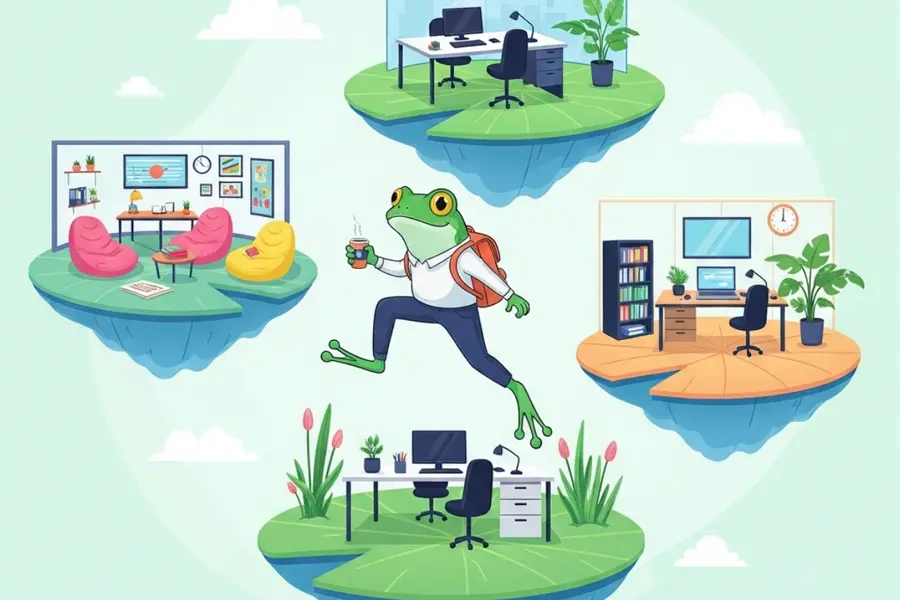
Office frogging refers to the deliberate decision by employees to leave a role as soon as it stops offering learning, growth, flexibility or mental peace. Unlike traditional job hopping, which is often reactive or pay-driven, office frogging is strategic. Workers assess their role continuously and “leap” to a new opportunity when the value equation no longer works for them.
Labour economists describe it as a behavioural response to a changing employment contract, where long-term loyalty no longer guarantees job security, promotions or inflation-matching pay.
How office frogging differs from job hopping
Job hopping has historically been associated with short tenures and résumé instability. Office frogging, by contrast, is outcome-focused.
Data from global hiring platforms shows that professionals who switch roles every 18–30 months now report faster skill acquisition and higher cumulative salary growth than those staying five years or more in the same role. The emphasis is less on tenure and more on momentum.
Why the trend is accelerating in 2026
- Wages lag behind living costs
Multiple workforce surveys in 2025–26 show that internal annual increments, averaging 2–4 percent, often fail to match inflation. External job switches, however, continue to deliver salary jumps of 15–30 percent in many sectors, particularly tech, data, finance, media and healthcare.
- Career growth has flattened
Organisational hierarchies have become leaner, reducing promotion opportunities. Younger employees, especially early- and mid-career professionals, are choosing to change companies rather than wait years for a single upward move.
- Flexibility is now a deal-breaker
Hybrid and remote work options strongly influence retention. Studies from occupational research bodies indicate that employees denied flexibility are nearly twice as likely to seek a new role within a year.
- Layoff culture reshaped loyalty
Mass layoffs across industries over the past few years have altered perceptions of corporate loyalty. Behavioural research suggests workers now prioritise self-preservation, employability and income security over long-term attachment to a single employer.
Who is driving office frogging
While Gen Z is most closely associated with the trend, workforce data shows that millennials and even mid-career professionals in their 40s are increasingly adopting the same mindset. The common thread is not age but exposure to unstable job markets and rising financial pressure.
Mental health impact of office frogging
- Positive effects
Leaving unhealthy work environments earlier reduces prolonged exposure to burnout, anxiety and chronic stress. Psychologists note that a sense of agency over career decisions is linked to improved self-esteem and lower workplace-related depression.
- Emerging risks
Frequent transitions can also create fatigue. Constant onboarding, performance pressure and lack of long-term workplace relationships may contribute to emotional exhaustion if not managed carefully. Experts advise balancing strategic movement with periods of stability.
What office frogging means for employers
From a business perspective, office frogging is forcing companies to rethink retention strategies. Research from organisational behaviour institutes suggests that employees are more likely to stay when companies offer:
- Transparent career progression
- Continuous skill development
- Mental health support
- Fair and timely pay revisions
- Genuine flexibility, not symbolic policies
Firms that fail to adapt face higher turnover costs and loss of institutional knowledge.
The bigger picture
Office frogging reflects a deeper redefinition of work itself. The traditional promise of loyalty in exchange for security has weakened. In its place, employees are forming value-based relationships with employers, staying only as long as growth, wellbeing and compensation remain aligned.
For many workers in 2026, stability no longer means staying put. It means staying employable.
(Disclaimer: This article discusses a workplace trend based on observed patterns, surveys, and expert commentary. Individual career choices, job experiences, and employer practices may vary widely across industries, regions, and organisations. The views expressed are for informational and lifestyle analysis purposes only and should not be interpreted as career advice or a judgement on any specific company or employee.)
Published: 21 Jan 2026, 09:02 pm IST
Related Topics
Disclaimer: Kindly avoid objectionable, derogatory, unlawful and lewd comments, while responding to reports. Such comments are punishable under cyber laws. Please keep away from personal attacks. The opinions expressed here are the personal opinions of readers and not that of Mathrubhumi.