
A viral internet claim suggests that scrambled words are easy to read if the first and last letters are correct, but scientists say the real explanation lies in how the brain processes language.
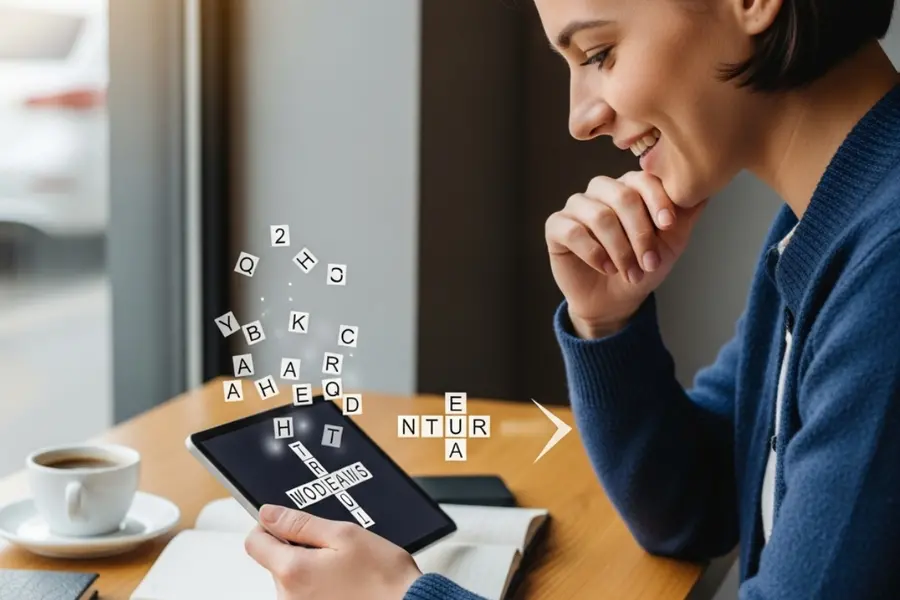
Have you ever scrolled through social media and stopped to read a paragraph where the words look completely scrambled, yet somehow still made perfect sense? It feels almost like a trick, but your brain is doing something far more fascinating in the background.
What looks like chaos on the screen is quickly turned into meaning by how we naturally read and understand language every day.
Also Read

The viral idea that scrambled words are easy to read as long as the first and last letters are in the right place is popular online, but it does not fully explain what is happening. While many people can still read jumbled text surprisingly well, the real reason is far more complex and lies in how the human brain processes written language.
How the brain actually reads scrambled words
When we read, we do not decode text letter by letter in a slow, linear way. Instead, the brain rapidly recognises whole word patterns and uses context to interpret meaning almost instantly. It constantly predicts what a word is likely to be based on the sentence structure and then matches that expectation with the visual input.
This predictive system is why scrambled words often remain readable. Even when letters are rearranged, enough of the original structure is preserved for the brain to make an educated guess. Familiar word shapes, common spelling patterns and surrounding words all help guide understanding without conscious effort.
However, the popular claim that only the first and last letters matter is an oversimplification. Language research shows that readers rely on the entire word structure, not just its outer letters. If internal letters are heavily distorted or the word is unfamiliar, comprehension quickly becomes difficult. This is why some jumbled sentences are easy to decode while others feel almost unreadable.
Also read | Can acne drugs endanger pregnancy and baby? Kerala study warns risks; experts urge caution
Why is some scrambled text easier than others?
Context plays an equally important role. Short, common function words like “the”, “and” or “is” often remain unchanged in scrambled text, which helps maintain grammatical flow. Once a sentence begins to make sense, the brain uses that structure to fill in missing or unclear parts. This is similar to how we understand speech in noisy environments, where gaps are mentally completed based on expectation.
There are limits to this ability. As scrambling becomes more extreme or as words become less predictable, reading slows down and understanding breaks apart. This shows that readability is not governed by a simple rule about letter positions, but by a combination of memory, pattern recognition and contextual prediction.
Ultimately, the reason we can still read scrambled words is not because spelling rules are flexible, but because the brain is highly efficient at turning incomplete information into meaning.
Published: 03 May 2026, 09:54 am IST
Related Topics
Disclaimer: Kindly avoid objectionable, derogatory, unlawful and lewd comments, while responding to reports. Such comments are punishable under cyber laws. Please keep away from personal attacks. The opinions expressed here are the personal opinions of readers and not that of Mathrubhumi.