
As India faces intense heatwaves, experts warn that wet-bulb temperature is the real measure of danger
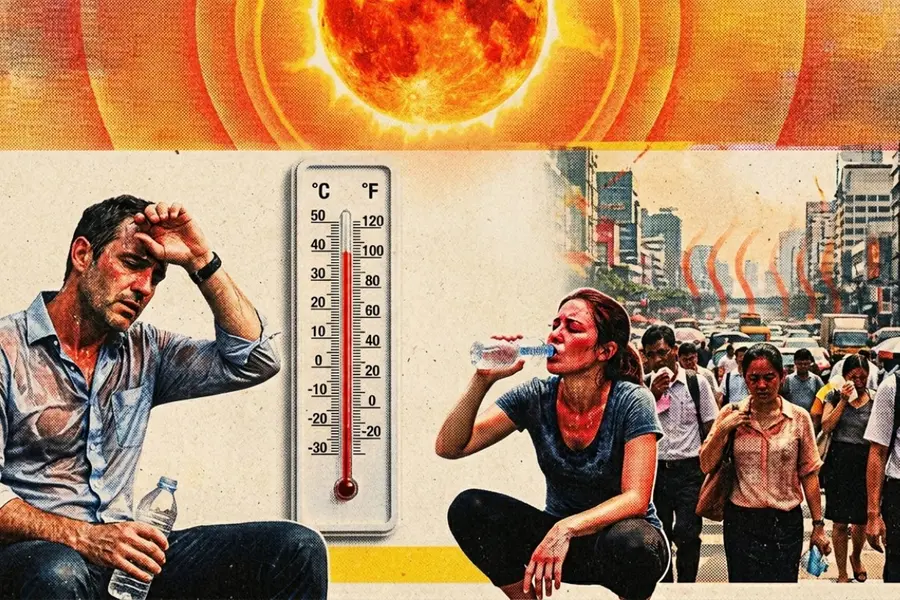
You step outside, feel the heat hit your face and think, “It’s going to be a tough day.” But what if the real threat is not just the temperature? Scientists say something called wet-bulb temperature gives a much clearer picture of how dangerous the weather is for your body.
What is wet-bulb temperature?
Wet-bulb temperature is different from the normal air temperature. It is measured using a thermometer wrapped in a wet cloth, with air allowed to pass over it. As the water evaporates, it cools the thermometer.
Also read: Heat stroke or just dehydration? Here’s how to know
The final reading shows a mix of both heat and humidity. In simple terms, it tells you how well your body can cool itself.
Think of it this way. A regular thermometer tells you how hot the air is. Wet-bulb temperature tells you how hot it feels to your body and whether your body can cope.
Why humidity changes everything
The human body cools itself by sweating. But sweating only works if it can evaporate.
In dry places, sweat evaporates easily and helps cool the body
In humid places, the air is already full of moisture, so sweat cannot evaporate properly
When that happens, the body begins to overheat. This overheating can lead to serious conditions such as heatstroke.
Same temperature, very different danger
Two cities can show the same temperature but feel completely different.
A 45°C day in Rajasthan may still allow the body to cope because the air is dry
A 38°C day in Kolkata or Mumbai can be far more dangerous because high humidity stops sweat from doing its job
That is why people sometimes feel more exhausted and unwell in coastal cities even when the temperature looks lower.
The survival limit scientists worry about
Researchers closely monitor a critical number: 35°C wet-bulb temperature.
At this level, even a healthy person sitting in the shade with water may not survive long. The body simply cannot lose heat fast enough.
Also read: Why your nose bleeds in summer and how to stop it
However, danger begins much earlier:
Around 28 to 30°C wet-bulb: long exposure outdoors becomes risky
Around 31°C: the body starts struggling to control its temperature
Between 31 and 33°C: the chances of heat exhaustion and heatstroke increase sharply
This means you do not need extreme numbers to be at risk.
Why India faces a bigger risk
Experts say India is particularly vulnerable because of its climate, geography and daily life patterns.
Research by Akshay Deoras from the University of Reading, while speaking to Al Jazeera, highlights that humid heatwaves are often overlooked. People may not realise how dangerous they are until it is too late.
Three reasons the threat is growing
Coastal and eastern cities
Cities such as Chennai, Bhubaneswar, Mumbai and Kolkata face both high heat and high humidity. This combination pushes wet-bulb temperatures into dangerous ranges even when the air temperature seems manageable.
The monsoon effect
Rainy seasons do not always bring relief. During active monsoon periods, moisture levels rise sharply. Instead of cooling things down, this can make heat stress worse.
Outdoor workers
Millions of people in India, including construction workers, farmers, delivery staff and street vendors, spend long hours outdoors. Many do not have access to cooling systems, and in some areas electricity supply is not reliable.
Cities make it worse
Urban areas trap heat. Concrete, glass and asphalt absorb and hold warmth, raising temperatures further. This is known as the urban heat island effect.
Also read: How to keep your home cool without AC during extreme summer heat
In crowded cities, airflow is also limited. As a result, wet-bulb conditions in cities can be more severe than in nearby rural areas.
What the future looks like
The long-term outlook is concerning. A study led by Elfatih Eltahir from the Massachusetts Institute of Technology suggests that by the end of this century:
- Around 70 percent of India’s population could experience wet-bulb temperatures of 32°C or higher
- About 2 percent of the population, which is tens of millions of people, could face conditions crossing the 35°C survival limit
Climate experts are also raising alarms. Intergovernmental Panel on Climate Change author Anjal Prakash has pointed out that rising humidity will make heat feel far worse.
A temperature of 40°C could feel closer to 50°C in humid conditions, making life without cooling systems increasingly difficult in the coming decades.
What current warnings say
The India Meteorological Department has already warned that large parts of India will face severe heatwaves between April and June 2026.
It has also noted that 19 of the world’s 20 hottest cities are currently located in India, highlighting just how intense the situation has become.
Why this matters to everyone
Wet-bulb temperature may sound technical, but it is simply about how your body handles heat.
As summers become hotter and more humid, understanding this concept can help people recognise danger earlier, take precautions and stay safe.
Published: 28 Apr 2026, 09:36 am IST
Related Topics
Disclaimer: Kindly avoid objectionable, derogatory, unlawful and lewd comments, while responding to reports. Such comments are punishable under cyber laws. Please keep away from personal attacks. The opinions expressed here are the personal opinions of readers and not that of Mathrubhumi.
