
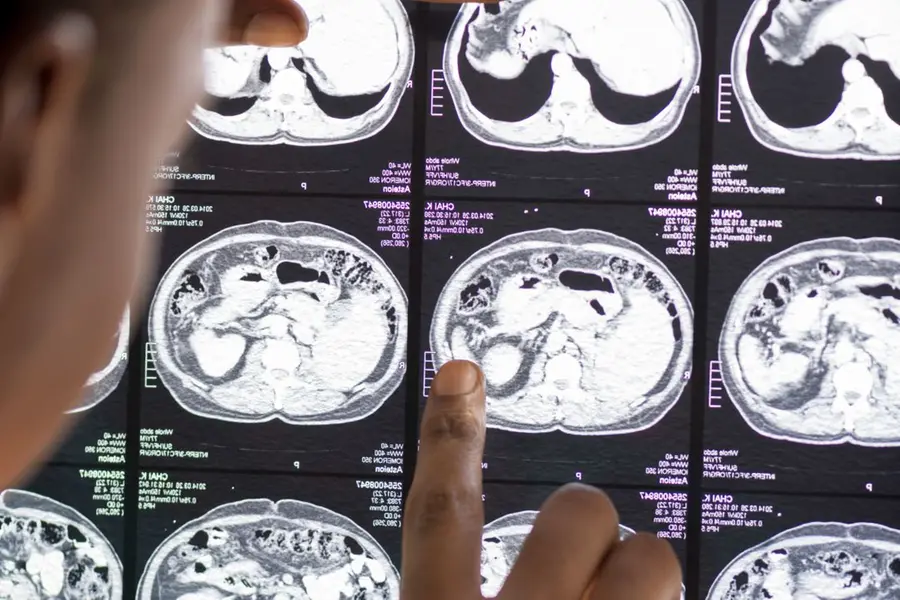
Stroke is a time dependent medical emergency all over the world. It is currently the single largest cause of disability and the 3rd largest cause of death globally. Individuals’ lifetime risk of stroke is currently one in four.
To put it in perspective, stroke is a neurological deficit attributed to an acute focal injury of the central nervous system by a vascular cause.
Also Read

Globally 1 in 4 adults over the age of 25 will have a stroke in their lifetime. Latest estimates show that about 15 million strokes occur worldwide each year leading to five million deaths. Also, five million people are left disabled by stroke every year.
In India, incidence of strokes occurrence is 148 per 1,00,000 people a year.
In Kerala, one study from Thiruvananthapuram found that the incidence of stroke is 120-140 per 1,00,000 people per year. Mortality rate was 25% and moderate to severe disability was 40-50 per cent. Another study conducted at Kochi in 2022 showed that 12 per cent of people affected were under the age of 45. The study also mentioned a shocking finding that 85.7% of people were unaware of stroke symptoms.
Therefore, understanding strokes and its symptoms is important since in majority of the cases the patient can be saved with timely medical attention.
Broadly there are two main types of strokes.
The first is an ischemic stroke. It occurs when the blood supply to part of the brain is blocked or reduced. This prevents brain tissue from getting oxygen and nutrients and the brain cells begin to die in minutes. About 85% of the strokes are ischemic stroke.
The second type of stroke is hemorrhagic. It occurs when a blood vessel in the brain leaks or bursts and causes bleeding in the brain. Transient ischemic attacks (TIA) are often called 'mini strokes'. It resembles an ischemic stroke but lasts a short time of five minutes to few hours.
Because of quick recovery, TIA may not cause permanent damage, but it is often a warning sign of a full ischemic stroke in future.
Symptoms of a stroke are the following
F. Face -- Unilateral facial weakness or drooping of face. Ask the patient to smile or show the teeth to find out the weakness.
A. Arm -- Arm or leg weakness, mostly one side, inability to raise the arm fully or inability to hold or squeeze something.
S. Speech -- Inability or difficulty to understand speech or produce speech slurred speech, or difficulty to repeat simple sentence as 'sky is blue' and 'now raining'
T. Time -- If any of the above symptoms call the emergency services or reach immediately to the nearby hospital where stroke treatment is available.
Time is brain, time lost is brain lost
Remember to note the time of the first sign and inform this time to the emergency physician.
After arriving at the hospital, the emergency team will evaluate immediately and call the stroke team. Necessary blood work-up, imaging studies like CT SCAN/MRI with or without angiography will be carried out depending on the type of stroke. If arriving within four to five hours clot lysing like thrombolysis will be initiated.
The stroke team will decide further management such as, thrombectomy, medical management, surgical intervention if there is hemorrhagic stroke. Simultaneously, taking care to control the risk factors if any. Post stroke rehabilitation also will start early.
The key takeaway is that act fast at the first sign of stroke. Use the letters 'FAST' to spot the signs of stroke and seek medical attention immediately.
Dr Manorama Devi K Rajan is senior consultant-Neurology, SP Medifort
Published: 29 Oct 2024, 04:30 am IST
Related Topics
Disclaimer: Kindly avoid objectionable, derogatory, unlawful and lewd comments, while responding to reports. Such comments are punishable under cyber laws. Please keep away from personal attacks. The opinions expressed here are the personal opinions of readers and not that of Mathrubhumi.