
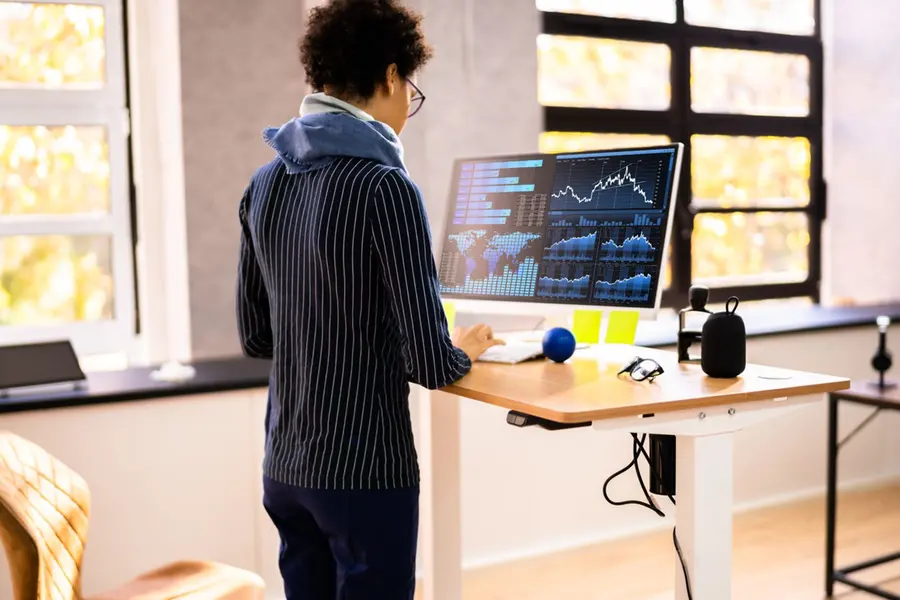
Many office workers have turned to standing desks, believing it to be a healthy way to combat the negative effects of sitting for long periods. Alternating between sitting and standing has been thought to improve posture and reduce health issues linked to sitting for extended hours. But a recent study reveals a potential downside to this growing trend.
Standing for too long could Lead to circulatory issues
A new study conducted by researchers at the New University of Sydney has shown that standing for over two hours at a time can cause circulatory problems. Their findings suggest that extended periods of standing, much like prolonged sitting, may not benefit cardiovascular health in the long run. In fact, it could increase the risk of varicose veins and deep vein thrombosis (DVT).
The research, which followed 83,013 UK adults over a period of 7 to 8 years, found that standing more often than sitting didn’t improve outcomes for heart-related health issues, such as coronary heart disease, stroke, or heart failure.
The study highlights how standing has gained popularity as an alternative to sitting, particularly among office workers using standing desks. In other sectors, like retail, standing for long periods is also common. However, according to the researchers, this effort to offset the harm caused by a sedentary lifestyle may not have the desired effect.
"Standing desks have become a popular option among office workers," the researchers noted. "However, their efforts may not produce the intended result."
Balance is key
If standing for long periods can be just as harmful as sitting, what's the solution?
Experts highlight the importance of balancing posture and incorporating movement throughout the day. Alternating between sitting and standing, combined with regular breaks, is essential for promoting good health.
The study emphasises that neither prolonged sitting nor standing is beneficial for health. Instead, the key lies in balancing movement and posture throughout the workday.
For those who sit for extended hours, standing up and stretching every 30 to 60 minutes can improve circulation and relieve muscle tension. On the other hand, for workers who stand for long periods, sitting down occasionally or shifting weight can help reduce pressure on the lower back and legs.
Adjustable workstations and movement
Using adjustable desks or sit-stand workstations can encourage frequent changes in posture, promoting better health. Incorporating gentle exercises like walking, stretching, or light yoga can also help combat the effects of inactivity.
"The data used in the study was not explicitly collected on standing desk usage," the researchers clarified.
"It measured the cardiovascular and circulatory impacts of increased standing. Standing desk use in this study likely contributed a very small fraction of total standing."
Published: 18 Oct 2024, 08:35 pm IST
Related Topics
Disclaimer: Kindly avoid objectionable, derogatory, unlawful and lewd comments, while responding to reports. Such comments are punishable under cyber laws. Please keep away from personal attacks. The opinions expressed here are the personal opinions of readers and not that of Mathrubhumi.
