
A newly identified Covid-19 lineage, PJ.2.1, is being closely tracked after appearing in several countries
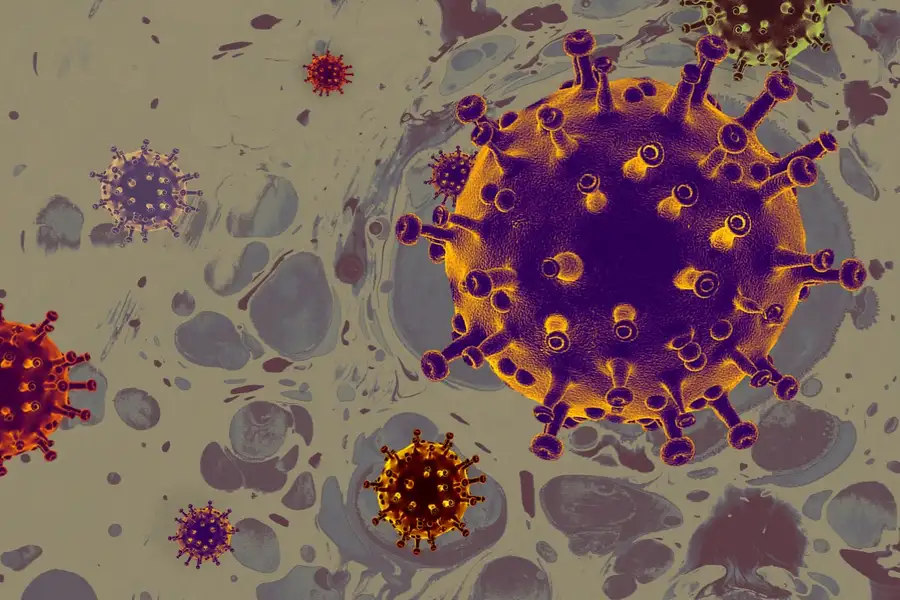
A new Covid-19 lineage is adding another development to the ongoing monitoring of SARS-CoV-2.
Identified as PJ.2.1, it carries several changes in the spike protein when compared with its parent lineage. The first recorded sample came from Ontario in May 2026, with subsequent detections reported in the US, Spain, France, Singapore, Australia, New Zealand and Israel.
What makes PJ.2.1 different?
PJ.2.1 is described as a saltation variant, a term used for a virus that emerges with an unusually large number of genetic changes compared with its earlier form. In this case, researchers have identified substantial mutations in the spike protein, the part of SARS-CoV-2 that helps it attach to and enter human cells.
The lineage developed from MC.10.1.7, a descendant of the JN.1 family that circulated until May 2025. Its genetic changes have become a focus of laboratory research because they may influence how efficiently the virus interacts with human cells.
A study published in the Journal of Infection on October 24, 2026, examined PJ.2.1 alongside other circulating variants. Laboratory experiments found that its spike protein had a stronger ability to bind to the ACE2 receptor, a protein found on the surface of human cells. This could help explain its growth advantage, although laboratory findings alone cannot establish how readily it spreads between people in everyday settings.
What symptoms are associated with PJ.2.1?
So far, researchers have not established a distinct set of symptoms that can be used to identify PJ.2.1. People infected with it may experience symptoms commonly associated with Covid-19, such as:
- Fever
- Cough
- Sore throat
- Runny or blocked nose
- Headache
- Muscle and body aches
- Tiredness or fatigue
Some people with Covid-19 may also experience changes in their sense of taste or smell, breathing difficulties or digestive complaints. However, these symptoms are not unique to PJ.2.1 and can occur with other respiratory infections.
The symptoms of Covid-19 can overlap with those of influenza and the common cold. This makes it difficult to determine which infection a person has based on symptoms alone.
A diagnostic test can help identify Covid-19, while genomic sequencing is needed to establish whether an infection is caused by PJ.2.1.
Does PJ.2.1 cause more severe illness?
The available research has not established that PJ.2.1 causes more severe Covid-19 than other circulating variants. However, this should not be interpreted as proof that its severity is identical to that of earlier strains. The study provides an early assessment of its genetic and laboratory characteristics, not a comprehensive comparison of hospitalisations or deaths.
The researchers also examined whether the variant could escape antibodies produced following vaccination. Their findings did not show substantially greater immune evasion. In tests involving antibodies from people who had received an LP.8.1-adapted Covid-19 vaccine, PJ.2.1 showed only a 1.8-fold reduction in neutralisation compared with the LP.8.1 reference variant.
Are existing Covid-19 vaccines effective against PJ.2.1?
Initial laboratory findings offer some reassurance about the ability of existing vaccine-induced antibodies to recognise the variant. The October 2026 study found that antibodies generated after the LP.8.1-adapted vaccine could still neutralise PJ.2.1.
A separate study examining the XFG-adapted vaccine also reported an increase in neutralising antibodies against PJ.2.1 following vaccination. However, researchers point out that laboratory results do not necessarily translate into the same level of protection against infection or severe illness in real-world conditions.
Vaccination therefore remains an important part of Covid-19 protection, particularly for people at greater risk of severe disease. Public health guidance and vaccine recommendations should be followed.
How widely has PJ.2.1 spread?
The lineage has been detected in several countries, including Canada, the US, Spain, France, Singapore, Australia, New Zealand and Israel. Surveillance data from Ontario also indicate a notable increase in its presence.
According to Public Health Ontario's November 2, 2026 genomic surveillance report, PJ.2.1 accounted for 25.2 per cent of the sequenced cases between September 20 and October 17. This was up from 16.9 per cent in the preceding four-week period. It was the most frequently identified lineage in that reporting period.
Researchers are continuing to study its growth and genetic characteristics to understand what is driving its spread and whether further mutations could alter its behaviour.
(Disclaimer: This article is for general information and should not replace medical advice. Consult a healthcare professional before making any new changes)
Published: 11 Nov 2026, 10:45 am IST


ABOUT THE AUTHOR

Related Topics
Disclaimer: Kindly avoid objectionable, derogatory, unlawful and lewd comments, while responding to reports. Such comments are punishable under cyber laws. Please keep away from personal attacks. The opinions expressed here are the personal opinions of readers and not that of Mathrubhumi.