
The petition had referenced the Kerala government's mass distribution of Arsenicum Album 30CH among school children, stating that the medicine contained arsenic and that the Kerala government had distributed it to between 38 lakh and 50 lakh school students
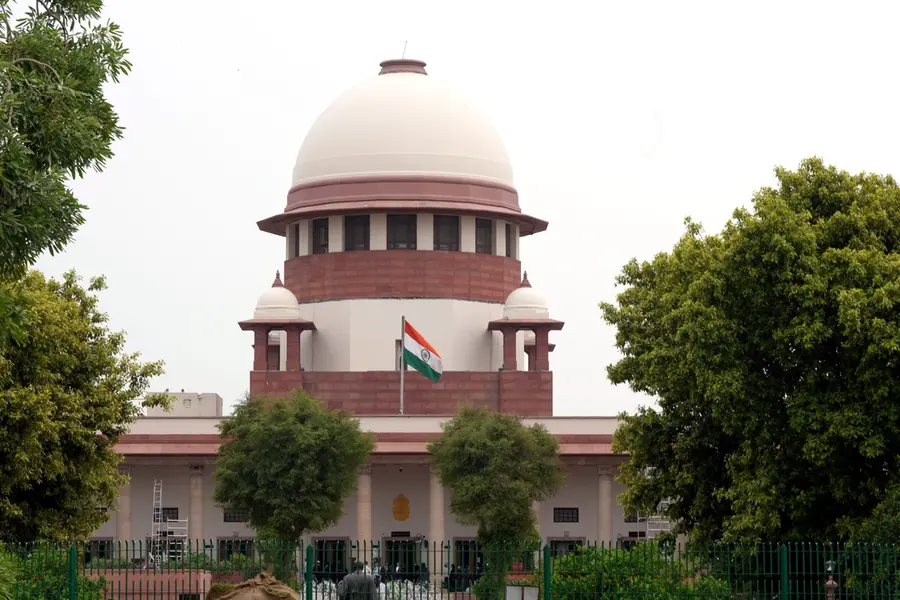
Kerala-based physician-scientist Dr Cyriac Abby Philips, popularly known as 'The Liver Doctor' on social media, has withdrawn his writ petition before the Supreme Court challenging the Ministry of Ayush's guidelines permitting the administration of the homeopathic medicine Arsenicum Album 30 as a preventive measure against Covid-19 or for boosting immunity.
In a detailed post on X (formerly Twitter) on Saturday, Philips explained that the withdrawal was not due to threats or because the Ayush ministry provided evidence, but because he had "lost faith in the judiciary system" and understood that "sometimes, justice is delayed, to deny it."
Also Read

"This was not because we were threatened. This was not because Ayush (Center or State) provided us proper evidence to shut us up. This was not because Homeopathy works," Philips wrote. "The response from the State and Center Ayush departments were idiotic, nauseating, ad-hominem and utterly rubbish, it was an insult to our intelligence."
The petition: A four-year legal battle
The writ petition, filed in 2022 (WP(C) No 1352/2021), challenged the Ministry of Ayush's guidelines, advisories and fact sheets issued on January 29, 2020, which permitted the administration of Arsenicum Album 30 -- a homeopathic preparation derived from arsenic—as a prophylactic against Covid-19.
A bench comprising Chief Justice of India Surya Kant, Justice Joymalya Bagchi and Justice V Mohana took note of a letter dated August 2, 2026, sent by the petitioner's counsel and dismissed the petition as withdrawn on September 25, 2026.
The petition had sought to restrain the administration of Arsenicum Album 30 to children and persons above 65 years of age, arguing that the advisories issued by the Ministry of Ayush had become the basis for different state governments to prescribe "irrational medicines in the name of boosting immunity" during the Covid-19 outbreak.
Core questions left unanswered
In his social media post, Philips outlined the fundamental questions his petition had posed to the Centre and state governments:
"Why was arsenicum album homeopathy given on mass public scale even to children when there is no proof of studies and no evidence of safety?" he wrote.
"The Ayush would say, it is safe, because there is nothing in it -- so then why are they giving nothing? Or they would claim arsenic in it is useful to boost immunity -- so then why are you giving the king of poisons to children without evidence to show for boosting or safety?"
According to Philips, answering this core question "would have thrown Homeopathy out of this country." Instead, he alleged, "delayed tactics made us run on fumes and ultimately the case got cold."
Government responses 'idiotic, nauseating'
Philips claimed that responses from the Centre and state Ayush departments came three years after the petition was filed. In the interim, a homeopathy group from Kerala impleaded with the Centre and State and submitted an affidavit that he described as "pure ad-hominem, to which responding was also beneath our status."
The petition had referenced the Kerala government's mass distribution of Arsenicum Album 30CH among school children, stating that the medicine contained arsenic and that the Kerala government had distributed it to between 38 lakh and 50 lakh school students.
According to Philips, the case ultimately became "infructuous" as per legal terms because it pertained to Covid-19 time and Covid-19 related interventions which the Court, at present, found "no value in reasoning with."
"We were advised to start a fresh petition against the guidelines issued by Ayush -- and not focus on what happened during Covid-19. We simply did not have the money or the legal power to do this afresh," he wrote.
LiveLaw reported that when the matter was called out, Additional Solicitor General Aishwarya Bhati informed the bench that there was a letter seeking withdrawal of the petition. Advocate Mukund P Unny, counsel for the Indian Homoeopathic Medical Association, criticised the conduct of the PIL petitioner, stating that he had made statements against the Court and the judiciary, describing the petitioner's conduct as "very serious" and "very contemptuous."
Justice Bagchi, however, told the counsel, "Nothing bothers us. You don't bother yourself. Assist us to administer justice. That is the only focus."
Before approaching the Supreme Court, the petitioner had challenged the proposed administration of Arsenicum Album 30CH to school students before the Kerala High Court. The High Court had granted him liberty to make a representation before the state government.
The petitioner subsequently approached the Supreme Court against the High Court's order, but the Supreme Court dismissed that challenge on December 17, 2021. The Supreme Court thereafter issued notice in the writ petition in March 2022.
In March 2022, a bench of justices Vineet Saran and Aniruddha Bose had issued notice on the petition to the Union Ministry of Ayush, Central Council for Research in Homoeopathy (CCRH) and Kerala government.
In July 2023, the Supreme Court sought response from the Centre and Kerala government in connection with the petition raising safety concerns over the Ministry of Ayush prescribing Arsenicum Album 30 as an antidote against Covid-19 without conducting any clinical tests.
More recently, in August 2026, the Supreme Court refused to entertain a separate plea challenging the continued distribution of Arsenicum Album in Kerala, with the bench noting that homeopathic medicines must be clinically tested under the Drugs and Cosmetics Act before they can be administered en masse, but declining to examine the continued use in the present proceedings.
TheLiverDoc's response to criticism
Addressing criticism that the withdrawal indicated weakness or capitulation, Philips wrote: "We feel horrible about this situation. But we don't want to stop. We want to start fresh a petition against Homeopathy use among children and for public health. We want the Government to stop funding Homeopathy."
He announced plans to file a fresh petition as a Public Interest Litigation and called for lawyers and citizen funding to support the legal battle. "We want citizens to pool in funds so that we can at least pay the people who will fight for us in the court," he wrote.
"So we are not backing out. We are taking a few steps back to gather energy and force to make sure the next cut, is the final cut," Philips stated. "We want to work on it...lay the strongest foundation and fight pseudoscience, not just through medical communication, but also through legal channels."
The Scientific Context
The petition had cited a Randomized Double-Blind, Placebo-Controlled Feasibility Study done by researchers from Mumbai and USA, published in the journal Homeopathy in September 2021, which evaluated the efficacy of Arsenicum Album 30C in the prevention of Covid-19 in a quarantined population of close to 2,300 persons and "did not show benefits, usefulness or effectiveness of the said Homeopathic drug in preventing Covid-19."
The petition had argued that although clinical trials are required when a drug is repurposed, with respect to its efficacy and for safety, no such trial was conducted for Arsenicum Album 30, and the guidelines by the Ayush ministry did not show that any study had been done.
"All studies registered in the clinical trials registry related to Arsenicum Album and Covid-19 are not completed. Therefore, the guidelines are arbitrary, violative of Article 14 and Article 21," the petition had stated.
Broader homeopathy debate in India
The withdrawal comes amid ongoing debates about the regulation and scientific validation of homeopathic medicines in India. In January 2026, the Supreme Court sought responses from key Union ministries on a separate PIL seeking to recognise AYUSH doctors as registered medical practitioners under a 1954 law governing drug advertisements.
In June 2026, Philips alleged that the government had blocked his social media posts as retaliation for his remarks that allegedly insulted homeopathic practitioners, highlighting the contentious nature of the debate around traditional medicine systems in India.
The controversy has also drawn in public figures, with actor Anushka Sharma, Shark Tank India judge Namita Thapar and celebrated homeopath Dr Rajan Sankaran becoming part of a broader social media debate about homeopathy's scientific basis and regulatory oversight.
Published: 26 Sept 2026, 05:08 pm IST
Related Topics
Disclaimer: Kindly avoid objectionable, derogatory, unlawful and lewd comments, while responding to reports. Such comments are punishable under cyber laws. Please keep away from personal attacks. The opinions expressed here are the personal opinions of readers and not that of Mathrubhumi.