
Onions and potatoes may be kitchen staples, but storing them together could make both spoil faster.
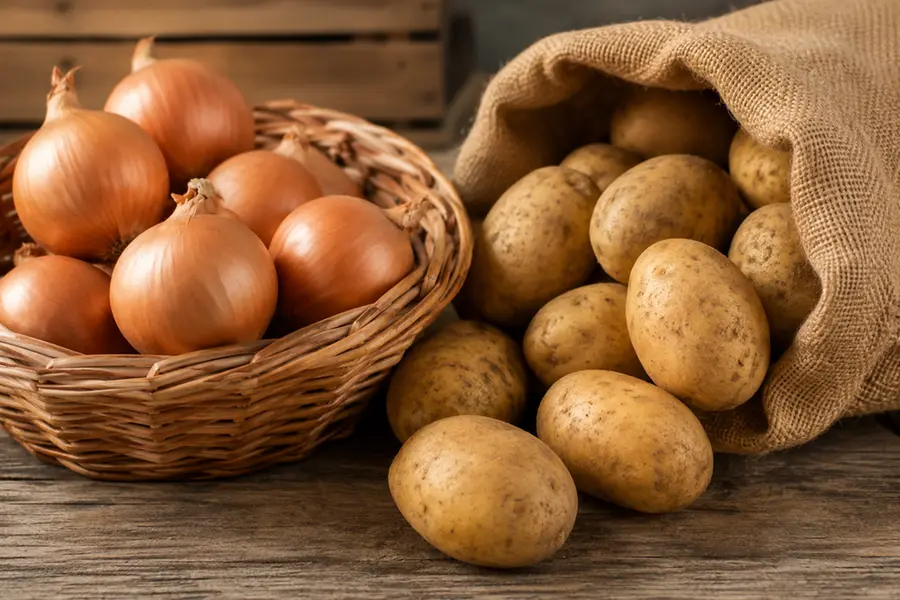
Potatoes and onions are among the most commonly stocked kitchen staples, often stored side by side in baskets or pantry shelves. But food storage experts say keeping the two together could shorten their shelf life, encouraging sprouting, softening and spoilage long before either would naturally deteriorate.
Although both vegetables thrive outside the refrigerator and can last for weeks or even months when stored correctly, they require different storage conditions to stay fresh. More importantly, they can influence each other's ageing process, making the familiar practice of storing them together less practical than it seems.
Experts say separating potatoes and onions is one of the easiest ways to reduce food waste and keep both ingredients in good condition for longer.
Why onions and potatoes don't belong together
Despite appearing to have similar storage needs, potatoes and onions behave very differently after harvest.
Potatoes remain living tubers that continue responding to their environment, including temperature, humidity, light and naturally occurring plant gases. Onions, by contrast, are cured bulbs designed to lose excess moisture before storage, allowing them to keep for extended periods in dry conditions.
One of the biggest issues is ethylene gas. As onions naturally age, they release ethylene, a plant hormone that can influence nearby produce. In enclosed or poorly ventilated storage spaces, that gas may stimulate potatoes to sprout earlier than expected.
The two vegetables also prefer different humidity levels. Potatoes perform better in slightly more humid conditions, while onions stay fresher in dry environments. When stored together, neither receives its ideal conditions, increasing the likelihood of spoilage.
How potatoes should be stored
Food storage specialists recommend keeping potatoes in a cool, dark and well-ventilated location, ideally between 7°C and 10°C.
Exposure to sunlight can trigger the formation of green patches beneath the skin, while warmer temperatures encourage sprouting. Refrigeration is also discouraged because cold temperatures convert the potato's starch into sugars, altering both flavour and cooking performance.
Good airflow is equally important. Paper bags, woven baskets or other breathable containers help release excess moisture while preventing condensation, reducing the risk of mould and rot. Potatoes should also be checked regularly, with any bruised or sprouting tubers removed before they affect the rest of the batch.
Why onions need different conditions
Unlike potatoes, onions undergo a curing process after harvest that removes moisture from their outer layers, helping extend their shelf life.
To stay in the best condition, onions should be kept somewhere cool, dark and, most importantly, dry. Mesh bags, wire baskets and other ventilated containers allow air to circulate while preventing moisture from building up around the bulbs.
Experts also note that not all onions store equally well. Pungent varieties generally last longer because their higher sulphur content naturally slows deterioration. Sweet onions, which contain more water, have a shorter shelf life and are best used sooner.
Other foods to keep away from potatoes and onions
Ethylene is not produced only by onions. Many ripening fruits, including apples and bananas, also release the gas, which can accelerate ageing in nearby vegetables.
For that reason, experts recommend storing potatoes and onions separately from fruit whenever possible. Likewise, potatoes should also be kept away from garlic and other produce that may alter storage conditions or encourage sprouting.
A small change that can reduce food waste
While onions and potatoes may be natural companions in countless recipes, experts say they should not be neighbours in storage.
Keeping the two apart helps create the conditions each vegetable needs to stay fresh, reducing sprouting, mould and premature spoilage. It is a simple kitchen habit that can extend shelf life, preserve flavour and cut down on unnecessary food waste without requiring any specialised equipment.
Published: 14 Jul 2026, 11:35 am IST
Related Topics
Disclaimer: Kindly avoid objectionable, derogatory, unlawful and lewd comments, while responding to reports. Such comments are punishable under cyber laws. Please keep away from personal attacks. The opinions expressed here are the personal opinions of readers and not that of Mathrubhumi.
