
Tired of throwing away wilted herbs? These easy kitchen hacks can help keep your favourite herbs fresh for longer while reducing food waste.
There are few kitchen disappointments greater than opening a bunch of fresh coriander or mint only to find it wilted before you've had a chance to use it. With food prices rising and households looking to cut waste, throwing away herbs after just a few days has become an expensive habit.
While refrigeration is the most common way to prolong their life, it is not the only option. Gardening experts say that understanding how herbs behave after they are harvested can help keep them fresh for much longer, even if you do not have access to a refrigerator. The trick lies in treating them more like living plants than cut vegetables.
Why herbs spoil so quickly
Once herbs are cut, they continue to lose moisture through their leaves. At the same time, they remain alive and continue to respire, meaning they still use oxygen and release carbon dioxide and water vapour. Without enough moisture or airflow, the leaves rapidly become soft, yellow and eventually rot.
According to the Royal Horticultural Society (RHS), culinary herbs thrive when they have the right balance of moisture and air circulation, and excessive dampness can be just as harmful as drying out.
Easy ways to keep herbs fresh without a fridge
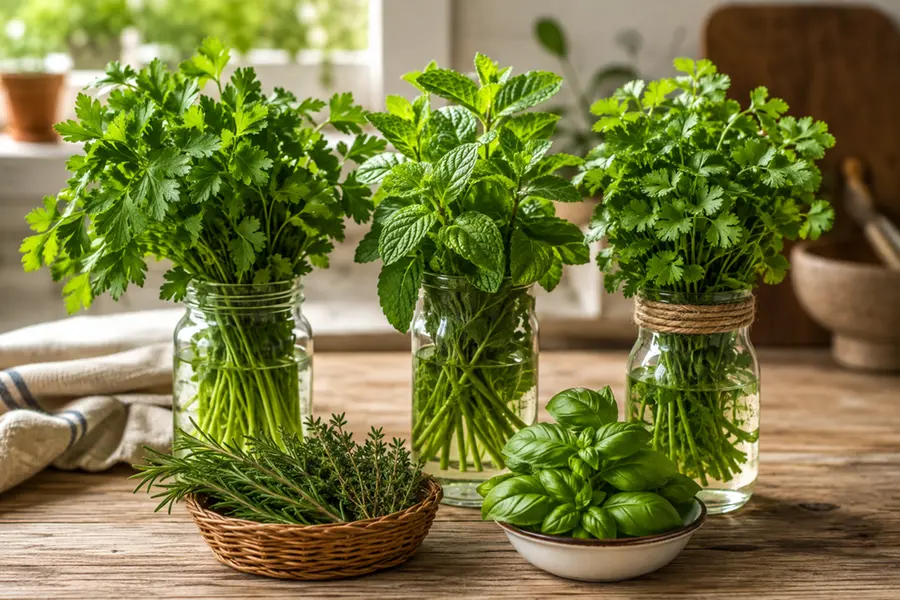
- Treat leafy herbs like fresh flowers: Soft-stemmed herbs such as coriander, parsley and mint stay fresher when their stems are placed upright in a glass or jar containing a small amount of clean water. Trim the ends slightly before placing them in water and change the water every day or two. Keep the container in a cool, shaded spot away from direct sunlight. This allows the stems to absorb moisture naturally instead of drying out.
- Cover loosely to reduce moisture loss: Rather than sealing herbs in an airtight container, loosely drape a clean cloth or paper bag over the leaves. This helps reduce evaporation while still allowing air to circulate. Good airflow prevents trapped humidity, which encourages mould growth.
- Remove damaged leaves: Inspect the bunch daily and discard any leaves that are yellowing or turning slimy. Decaying leaves release moisture and microorganisms that can speed up spoilage in the rest of the bunch.
- Avoid washing until needed: If herbs are clean, leave them unwashed until just before cooking. Excess water trapped on the leaves can encourage fungal growth, particularly in warm kitchens. If washing is unavoidable, dry the herbs thoroughly before storing them.
- Keep them away from heat: Place herbs in the coolest part of the kitchen, away from cookers, ovens and sunny windows. High temperatures accelerate water loss and shorten their usable life.
- Separate different herbs: Different herbs lose moisture at different rates. Storing basil, mint, coriander and rosemary together may reduce their overall freshness. Keeping them in separate containers helps each variety last longer.
- Keep herbs upright rather than lying flat: Standing herbs upright prevents leaves from being crushed under their own weight. Less bruising means slower moisture loss and reduced browning.
Why herbs need to ‘burp’
Just like many fresh fruits and vegetables, herbs continue to respire after harvest. They take in oxygen and release carbon dioxide, moisture and small amounts of natural gases.
When herbs are stored inside closed jars, containers or reusable bags for several days, these gases and excess humidity build up. Opening the container briefly once or twice a day, a practice some food storage enthusiasts call "burping", allows stale air and excess moisture to escape while letting fresh air in.
This simple step can reduce condensation, slow mould growth and help herbs remain crisp for longer. It is particularly useful if herbs are being stored in reusable containers at room temperature.
Choose healthy herbs from the start
Storage begins at the shop. Select bunches with firm stems, vibrant green leaves and no signs of wilting, yellow patches or sliminess. Herbs that are already stressed at the time of purchase are unlikely to recover, regardless of how carefully they are stored.
The RHS also advises that healthy herbs perform best when grown or kept under suitable conditions with adequate moisture but not excessive wetness, reinforcing the importance of balanced hydration.
The next time you bring home a bunch of coriander or mint, think of it less as an ingredient and more as a living plant that's still trying to survive. A little attention after purchase could be the difference between vibrant garnishes all week and unnecessary food waste.
Published: 03 Aug 2026, 09:04 am IST
ABOUT THE AUTHOR

Related Topics
Disclaimer: Kindly avoid objectionable, derogatory, unlawful and lewd comments, while responding to reports. Such comments are punishable under cyber laws. Please keep away from personal attacks. The opinions expressed here are the personal opinions of readers and not that of Mathrubhumi.