
Ever wondered why chocolate bars come divided into neat little squares? The answer lies in food science, manufacturing and a touch of psychology.
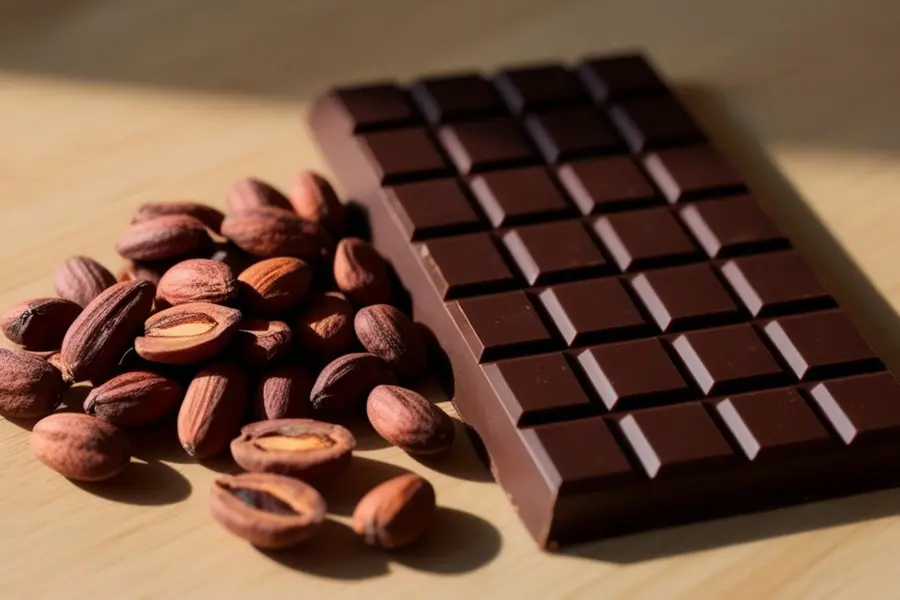
By the time you've finished reading this story, chances are you'll never break off a piece of chocolate the same way again.
Think about it. Almost every chocolate bar you have ever unwrapped has one thing in common. Before you take your first bite, you instinctively press along a tiny groove until you hear that unmistakable snap.
It is a ritual so ordinary that most people never question it. Why not make the bar one solid block? Why squares instead of circles or strips? And why has this design survived for well over a century while almost everything else about chocolate, from flavours to packaging, has changed?
The answer lies at the intersection of engineering, psychology, craftsmanship and even a little bit of physics. Those little squares are not simply decorative, they are one of the cleverest pieces of product design hiding in plain sight.
The groove that solved a practical problem
Long before chocolate bars lined supermarket shelves, chocolate was sold in irregular blocks or prepared as a drink. Archaeological research and artifacts curated by the Smithsonian's National Museum of the American Indian track chemical evidence of liquid cacao use back to Olmec pots from 1500 BC.
As manufacturers began producing solid bars on a large scale during the late 19th century, they faced a surprisingly simple challenge: how could people eat them without making a mess?
A solid slab was inconvenient. It cracked unpredictably, crumbled easily and rarely broke into equal pieces.
The solution was to mould shallow grooves into the bar. Those score lines act like controlled fault lines, directing the pressure exactly where manufacturers want the chocolate to break.
Instead of wrestling with a stubborn block, consumers could separate one neat piece at a time.
It is the same principle engineers use when designing perforated paper or scored glass, create a weak point so the material breaks precisely where intended rather than wherever it chooses.
Every square is a tiny measuring cup
Look closely at a chocolate bar and you'll notice another advantage.
Each square is almost identical in size.
That consistency is not just for appearance. During production, liquid chocolate is poured into moulds that contain dozens of identical cavities. Equal sections help ensure every bar has the same weight, thickness and dimensions, making quality control much easier.
For manufacturers producing thousands of bars every hour, even tiny variations matter. Uniform sections cool at a similar rate, reducing defects and helping every bar look virtually identical when it reaches the shop shelf.
Why chocolate sounds different when it breaks
That satisfying snap is no accident either.
According to confectionery experts at Hershey, real milk chocolate snaps when it is cool, softens as it warms and melts near body temperature because of the way cocoa butter behaves.
Chocolate owes its texture to cocoa butter crystals. During manufacturing, chocolate is carefully heated and cooled in a process known as tempering. The goal is to encourage stable crystal structures that give chocolate its glossy appearance and firm texture.
Chocolate maker Valrhona explains that tempering organises cocoa butter crystals into a stable form, producing the shine and clean break associated with high-quality chocolate.
Without that process, a chocolate bar would feel softer, develop white streaks known as bloom and lose the crisp break consumers expect.
The grooves simply make that perfect snap easier to achieve.
A design that quietly encourages sharing
Before individually wrapped snack-sized chocolates became common, one bar was often intended for several people.
Breaking a bar into equal pieces meant everyone received roughly the same amount without arguments over who got the biggest bite.
That social function remains today.
Whether it's a family passing around a Dairy Milk after dinner or colleagues sharing a treat during a coffee break, the squares act as ready-made portions.
The design requires no instructions. The grooves naturally tell your hands where to break.
Few products communicate their use so intuitively.
Your brain is counting the squares
Interestingly, those little pieces influence more than how chocolate breaks, they can shape how much people eat.
Behavioural scientists have long found that people rarely estimate food by weight alone. Instead, they rely on visual markers.
One square feels like one serving.
Two squares feel like a small indulgence.
An entire bar suddenly feels like a conscious decision.
The boundaries create natural stopping points, giving the brain moments to pause before reaching for another piece. While they do not guarantee self-control, they make portioning far easier than eating from a solid block.
In other words, the chocolate is quietly helping you negotiate with yourself.
Why manufacturers never abandoned the squares
If squares are so practical, why haven't companies replaced them with something more modern?
Because the design still works.
The grooves help reduce accidental breakage during transport by directing stress along predetermined lines rather than allowing random cracks to spread across the bar.
They also simplify packaging, stacking and quality inspection on high-speed production lines.
For manufacturers, changing such a successful design would offer little benefit while risking consumer familiarity.
Sometimes the simplest solution proves impossible to improve.
Not every bar follows the rules
Of course, there are famous exceptions.
Toblerone traded squares for mountain-shaped peaks inspired by the Swiss Alps, turning the chocolate itself into part of the brand's identity.
KitKat uses connected fingers that invite consumers to "have a break".
Other premium chocolatiers emboss logos, geometric patterns or artistic designs onto each piece.
Yet despite their different appearances, they all rely on the same underlying principle: create deliberate break points that make chocolate easier to divide and more enjoyable to eat.
The shape changes.
The idea remains remarkably consistent.
A century-old design that still feels modern
In an age when companies constantly redesign products to chase the next trend, chocolate bars are surprisingly resistant to change.
The wrapper may evolve. New flavours appear every year. Sugar levels rise and fall with consumer preferences.
But open almost any traditional chocolate bar and you will still find those familiar grooves waiting to guide your fingers.
It is a reminder that great design often disappears into everyday life.
People rarely stop to admire a well-designed staircase or wonder why a keyboard looks the way it does. Chocolate squares belong in that same category, solutions so effective that they become invisible.
The next time you unwrap your favourite bar, take a second before breaking off the first piece.
That tiny square is doing far more work than you ever realised.
Published: 27 Jul 2026, 12:09 pm IST
ABOUT THE AUTHOR

Related Topics
Disclaimer: Kindly avoid objectionable, derogatory, unlawful and lewd comments, while responding to reports. Such comments are punishable under cyber laws. Please keep away from personal attacks. The opinions expressed here are the personal opinions of readers and not that of Mathrubhumi.