
Find out why they're there, whether you should remove them, and if they really are more nutritious than the banana itself
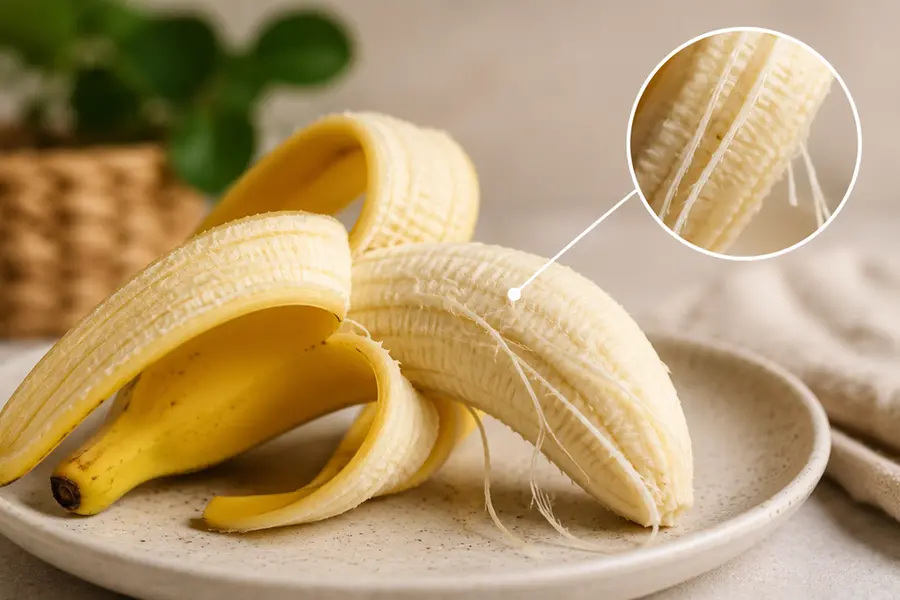
Have you ever found yourself absent-mindedly picking those white strings off a banana before taking the first bite? We assume they're just leftover bits of the peel. But they're actually part of the fruit itself, and they've been there for a reason all along.
So what exactly are they? And do they serve a purpose?
They're called phloem bundles. In simple terms, they're part of the banana's transport system.
Just as our bodies have blood vessels that carry nutrients where they're needed, plants have specialised tissues that move water and nutrients from one part of the plant to another. The phloem carries sugars and other nutrients produced during photosynthesis to different parts of the plant, including the developing fruit.
Also Read: Is guava healthier than apples and oranges?
The strings you see on a peeled banana are the remains of that transport network. They helped the banana grow before it was picked.
They're there for a reason
The banana doesn't grow evenly all by itself. As it develops on the plant, it needs a constant supply of nutrients to grow larger, sweeter and softer. The phloem bundles help deliver those nutrients throughout the fruit during its development.
Are they safe to eat?
The white strings are completely edible. In fact, they're made of the same kinds of plant tissues found throughout the fruit. They might have a slightly firmer texture than the soft flesh of the banana, but they aren't harmful.
So if you've accidentally eaten them all these years, there's no reason to worry.
Are they more nutritious than the banana itself?
This is where social media sometimes gets ahead of the science. You may have seen claims that banana strings are packed with vitamins and should never be removed because they're far healthier than the rest of the fruit.
Also Read: Do you really need probiotics? The truth about gut health and supplements
There's no strong scientific evidence to suggest they're significantly more nutritious than the banana flesh itself.
While the phloem bundles contain plant tissues involved in transporting nutrients during growth, there isn't reliable research showing that eating them provides unique health benefits compared with eating the rest of the banana.
Why do some bananas seem to have more strings?
If you've noticed that some bananas are easier to peel cleanly than others, you're not imagining it.
The visibility of the phloem bundles can vary depending on factors such as the banana variety, how ripe it is and how the peel separates from the fruit. Some bananas shed the strings neatly with the peel, while others leave more behind.
Why do people remove them?
The strings can feel slightly fibrous compared with the creamy flesh of the banana. Some people simply prefer a smoother bite. Others remove them out of habit because they think they're leftovers from the peel.
There's no right or wrong way to eat a banana. If the texture doesn't bother you, you can leave them on.
Also Read: The fruits your gut wishes you ate every day
Whether you eat the strings or not, bananas remain a nutritious snack. They're a good source of potassium, vitamin B6, vitamin C and dietary fibre. They're also naturally convenient, making them one of the easiest fruits to include in a balanced diet.
For many people in India, bananas are part of everyday life. They're sliced into breakfast cereal, blended into milkshakes, offered after workouts or simply eaten with an evening cup of tea
Published: 29 Jul 2026, 03:05 pm IST
ABOUT THE AUTHOR

Disclaimer: Kindly avoid objectionable, derogatory, unlawful and lewd comments, while responding to reports. Such comments are punishable under cyber laws. Please keep away from personal attacks. The opinions expressed here are the personal opinions of readers and not that of Mathrubhumi.