
Nvidia dismissed the smuggling allegations, maintaining that clients receive no national security secrets, while China condemned the claims as baseless smears.
Washington: A senior executive at Singapore-based data centre firm Megaspeed faced intense scrutiny over her alleged involvement in diverting advanced Nvidia artificial intelligence chips to China, according to a report published by The New York Times.
US intelligence officials reportedly determined that the executive operated as an asset for Beijing, transmitting sensitive information back to Chinese state security services.
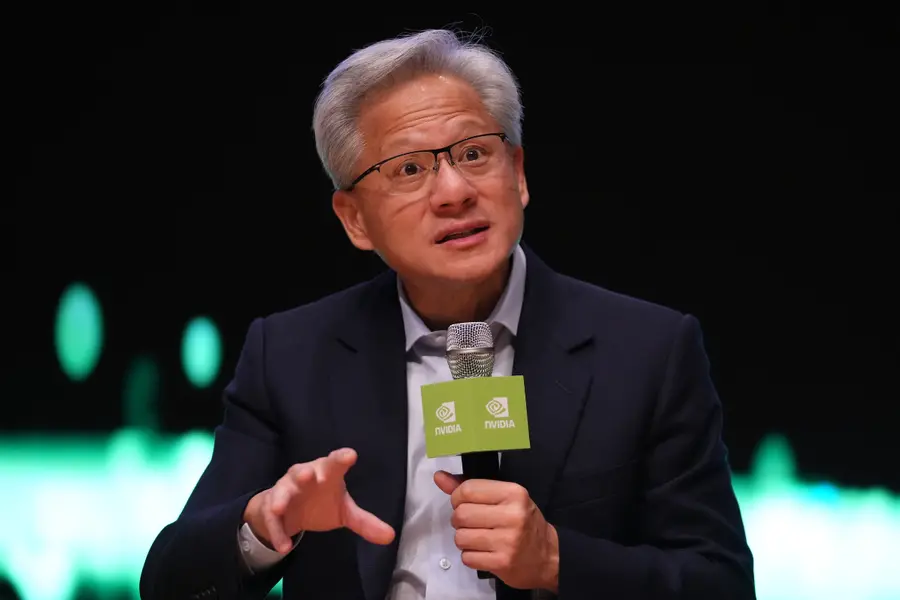
According to the report, surveillance targeting the executive, identified as Chinese national Alice Huang, also known as Huang Le, revealed that she maintained a close relationship with Nvidia Chief Executive Officer Jensen Huang.
In what the newspaper described as a startling revelation, US President Donald Trump received briefings regarding the intelligence findings but chose not to intervene. The president remained cautious about disrupting Nvidia's lucrative semiconductor sales, which continue to support US economic growth and stock market performance, or introducing fresh friction into trade relations with Beijing.
Washington has consistently attempted to restrict China's access to critical technology required to rival or surpass American capabilities in artificial intelligence. The realisation that Beijing was obtaining information from an individual with direct access to Jensen Huang, a key ally of President Trump, raised severe concerns within the White House.
The Nvidia chief executive successfully lobbied the administration during Trump's second term to roll back tighter export restrictions governing the company's semiconductor shipments to China. He also finalised an agreement allowing the US government to take a 25 per cent stake in specific Nvidia processors approved for export to Chinese markets.
As the Trump administration evaluated a comprehensive ban on Nvidia chip exports to China, Huang and his wife travelled to Trump's Mar-a-Lago estate to convince the president to permit technology firms to continue commercial operations with Beijing.
Nvidia subsequently donated more than $20 million toward Trump's ballroom construction fund, according to a person familiar with the matter. The technology firm also committed $500 billion toward expanding domestic manufacturing facilities within the United States.
The details regarding Alice Huang's activities were compiled from interviews with sources briefed on the intelligence operations, who spoke on condition of anonymity. The report noted that surveillance targeting Alice Huang remained ongoing, and that corporate entities previously linked to her continued purchasing Nvidia hardware throughout the current year.
Nvidia stated that it had previously investigated and dismissed allegations that Megaspeed was involved in illicitly smuggling chips into China. John Rizzo, a spokesperson for Nvidia, stated that clients such as Megaspeed "receive ordinary business information - not sensitive Nvidia trade secrets - and zero information relevant to national security".
Megaspeed operates as one of several commercial entities that purchase high-performance processors to build data centres before leasing computing power to technology firms operating in China.
The White House, the Central Intelligence Agency, and the National Security Agency declined to comment on the report. Alice Huang did not respond to requests for comment.
In a statement provided to The New York Times, Megaspeed noted that its "current leadership" treats the matter "extremely seriously and is committed to getting to the facts behind allegations".
Liu Chang, a spokesperson for the Chinese Embassy in Washington, said the United States was conducting a campaign of "groundless smears and slanders" targeting Beijing.
ANI
Published: 30 Oct 2026, 09:31 am IST


ABOUT THE AUTHOR

Related Topics
Disclaimer: Kindly avoid objectionable, derogatory, unlawful and lewd comments, while responding to reports. Such comments are punishable under cyber laws. Please keep away from personal attacks. The opinions expressed here are the personal opinions of readers and not that of Mathrubhumi.